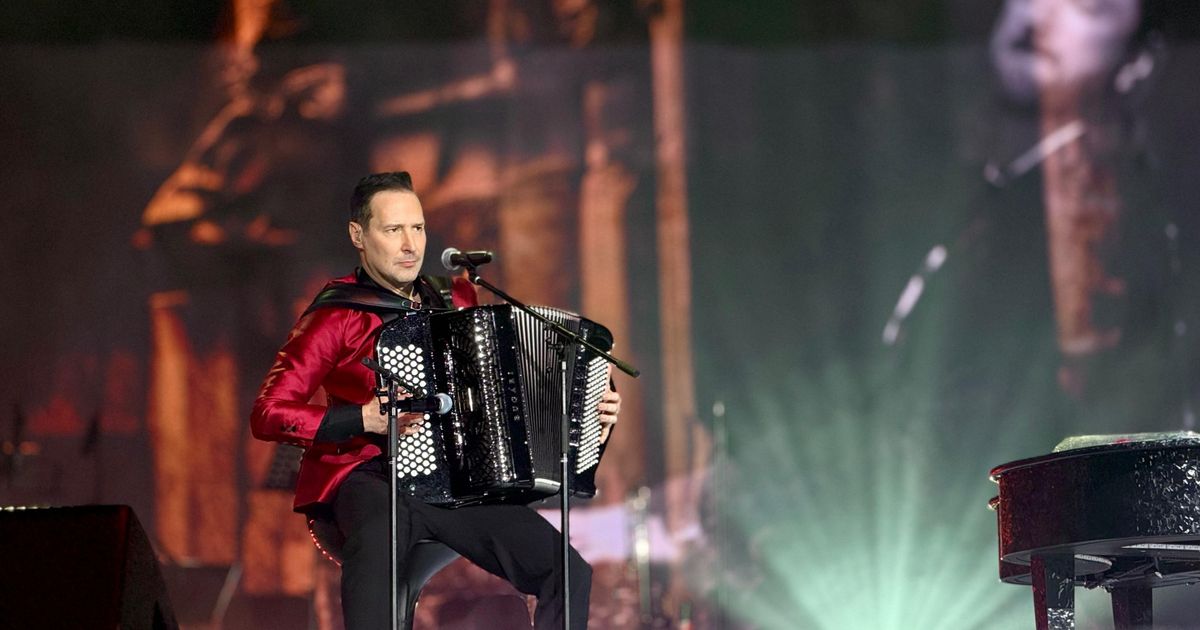


Peđa Jovanović’s major solo concert at Arena Zagreb is consistently described as a large-scale spectacle held in Croatia’s capital, building on his earlier success with three sold-out performances at the Vatroslav Lisinski hall. Coverage agrees that the Arena event, framed as his biggest concert to date and a highlight of his career, drew a massive audience—reports converge around more than 15,000 people—who sang along to his well-known hits in an atmosphere marked by strong energy and emotion. All sides note that Jovanović openly acknowledged pre-concert nervousness, portraying it as a kind of positive euphoria rather than debilitating fear, and that he has an active release schedule planned, with multiple songs ready and an intention to publish roughly one track per month.
There is also agreement that young Serbian singer Anđela Ignjatović, known as Breskvica, appeared as a special guest at the Arena concert, performing a duet with Jovanović and treating the event as an important milestone in her own regional career. Media from both sides describe her participation as a premiere-style, high-visibility appearance at Arena Zagreb, emphasize that the show was billed as a spectacle, and note that she is simultaneously working on a new solo album without duets while enjoying the opportunity to connect with Croatian audiences. Across coverage, the concert is situated within the broader regional pop-folk and trap-pop scene, with Arena Zagreb and Belgrade arenas referenced as key institutional stages that signal an artist’s transition from rising act to established star.
Points of Contention
Framing of significance. Opposition-aligned sources tend to frame the concert, when they mention it, as just one stop in a broader regional entertainment industry cycle, downplaying its uniqueness and portraying it as part of a highly commercialized turbo-folk circuit. Pro-government media, by contrast, spotlight the event as a national-level spectacle and a cultural achievement, repeatedly stressing that it is Jovanović’s biggest concert so far and that the entire country was “waiting” for it. While opposition outlets are more likely to treat Arena Zagreb as a routine venue for such acts, pro-government reporting uses the same setting to underscore state-adjacent narratives of cultural success and regional influence.
Portrayal of performers. Opposition-leaning coverage generally casts Jovanović and Breskvica in more neutral or even mildly skeptical terms, describing them as products of a commercial scene, sometimes hinting at overexposure or formulaic hits, and giving little weight to their personal emotions or anxieties. Pro-government outlets, in contrast, humanize both performers, focusing on Jovanović’s nervousness as relatable “positive euphoria” and quoting Breskvica’s excitement, affection for Zagreb, and behind-the-scenes work on a new album. Where opposition pieces may highlight stage outfits or spectacle in a detached tone, pro-government stories present the same details as expressions of charisma and star power that audiences purportedly embrace enthusiastically.
Cultural and political subtext. Opposition-aligned media are more inclined to contextualize such concerts within concerns about cultural policy, commercialization, and the dominance of turbo-folk aesthetics, sometimes implying that state-favored outlets amplify these shows at the expense of alternative or critical art. Pro-government coverage avoids overt cultural critique and instead treats the concert as an uncontroversial celebration of regional music, subtly linking the packed arena and cross-border appeal to narratives of stability, normalcy, and soft power. Thus, while opposition sources may hint that this kind of spectacle reflects structural imbalances in cultural funding or taste-making, pro-government sources depict the same spectacle as organic, apolitical public demand.
Audience and reception. Opposition coverage, when it addresses events like this, often questions official or promotional attendance figures and may suggest that media hype inflates the perceived impact, framing the crowd as large but not unprecedented in the regional arena circuit. Pro-government outlets, however, highlight the “more than 15,000” figure as proof of overwhelming popularity, describing the audience as unified, emotional, and fully engaged, with the entire arena singing in chorus. While opposition narratives might subtly imply that such concerts mainly serve a narrow demographic or fan base, pro-government narratives present the reception as broad-based and national in character, suggesting that the performers speak for a wide swath of the public.
In summary, opposition coverage tends to normalize or downplay the Arena Zagreb concert as one commercial spectacle among many and uses it to gesture at broader concerns about cultural policy and media hype, while pro-government coverage tends to elevate the event into a celebratory national moment, emphasizing emotional resonance, mass attendance, and the performers’ personal journeys as symbols of cultural success.