
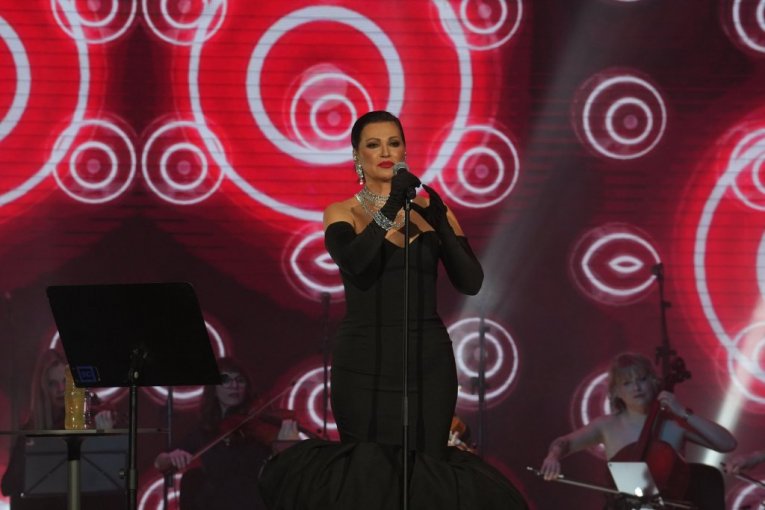
Nina Badrić, the Croatian pop singer and long‑time regional star, held a major concert at the Sava Center in Belgrade, which both sides describe as well attended and framed as an important cultural event. Reports agree that she performed a set built around her biggest hits and ballads, that the hall was full of fans and public figures, and that the atmosphere was emotionally charged. A standout moment, highlighted across coverage, occurred when Badrić interrupted the concert program to address Serbian songwriter Aleksandra Milutinović in the audience, recalling their first meeting and the creation of the song "Da se opet tebi vratim". Media on all sides also note that numerous celebrities, entertainment figures, and other well‑known personalities were present in the audience, underscoring the concert’s status as a high‑profile regional show.
Shared context in the coverage presents Badrić as a long‑established regional pop icon whose career has been closely followed in Serbia and the broader former Yugoslav space. Outlets broadly situate the Sava Center as a symbolic and prestigious Belgrade venue whose renovation and reopening have turned it into a marquee location for major concerts and public events. The event is described as part of a wider pattern of regional performers maintaining close cultural and commercial ties with Serbian audiences, with Belgrade continuing to function as a central market and stage for such artists. Across the spectrum, the concert is placed within the ongoing tradition of cross‑border entertainment and shared pop culture in the Balkans, rather than being framed as a one‑off or purely local happening.
Points of Contention
Framing of significance. Opposition-aligned outlets are likely to downplay the broader social or political significance of the concert, treating it as routine entertainment and avoiding any suggestion that it reflects government achievements or national prestige. Pro-government outlets instead emphasize the concert as proof of Belgrade’s status as a regional cultural hub and a confirmation of Badrić’s and Serbia’s place in the regional entertainment scene. They highlight the full hall and emotional atmosphere as markers of success that reflect positively on the city and, implicitly, on current cultural policy.
Role of institutions and infrastructure. Opposition sources, when covering such events, typically separate the artist’s success from official institutions and may stress that performers attract audiences regardless of who is in power or how venues are managed. Pro-government media tend to foreground the renovated Sava Center as a flagship project, using the concert to showcase improvements in urban infrastructure and cultural facilities and to suggest that state or city support enables such high-profile gatherings. The same event is thus either presented as institutionally neutral or as evidence of effective governance and investment.
Celebrity and elite presence. Opposition-leaning coverage usually treats the presence of celebrities and elites as a standard feature of major concerts, avoiding celebratory depictions that might appear to bolster the social image of the political milieu linked to pro-government media. Pro-government outlets, by contrast, stress the number and status of famous attendees, portraying the concert as a glamorous meeting point of regional stars and local public figures, thereby reinforcing a narrative of prosperity, normality, and social vibrancy under current conditions.
Cultural politics and regional ties. Opposition media commonly highlight regional cultural ties in a depoliticized or even subtly critical way, pointing out that cross-border concerts thrive regardless of official rhetoric and sometimes contrasting this with nationalist discourse from authorities. Pro-government coverage tends to present these same regional ties as a positive outcome of stability and diplomatic pragmatism, suggesting that Belgrade’s ability to host stars like Badrić reflects its openness and growing soft power. Thus, where opposition narratives might use the concert to show culture transcending politics, pro-government narratives lean on it as an illustration of successful regional positioning.
In summary, opposition coverage tends to normalize the concert as a standard entertainment event and detach it from government credit or larger triumphal narratives, while pro-government coverage tends to magnify its importance, link it to infrastructural and cultural achievements, and present it as evidence of Belgrade’s and the government’s regional stature.
Story coverage