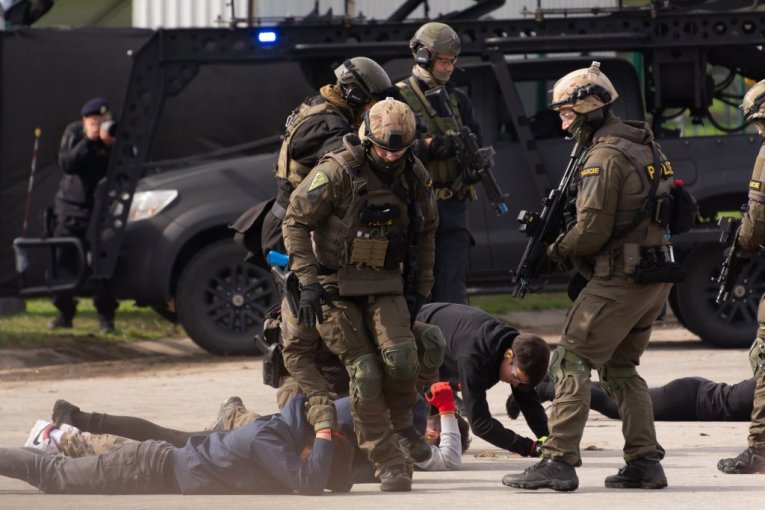

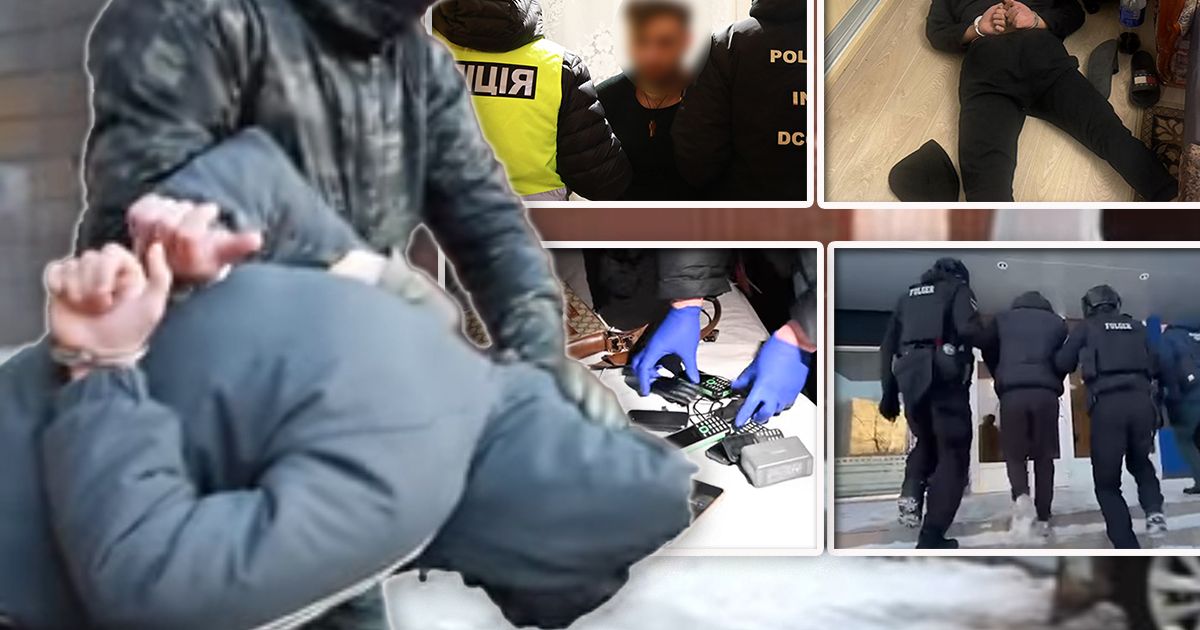
Ukrainian security and law-enforcement agencies are widely reported to have dismantled an alleged Russian-organized assassination network operating on Ukrainian territory and partly in Moldova. Across outlets, it is agreed that around ten suspects were detained in a coordinated operation involving raids in multiple locations, that the group is accused of plotting to kill high-profile public figures such as military intelligence officers and journalists, and that they allegedly received or were promised substantial payments per target, variously described in coverage as tens of thousands of euros or up to roughly $100,000. Both opposition and pro-government sources describe the group as using or preparing methods like close-range shootings, explosives, and car bombs, and say investigators have found evidence of communication with handlers traced back to Russia.
Coverage from both sides also converges on the broader wartime context: Ukraine remains under sustained Russian military pressure, and its security institutions—particularly the security service and military intelligence—are central to countering both battlefield threats and clandestine operations. There is agreement that Russia has a track record of extraterritorial operations and targeted killings, and that Ukrainian authorities have been running multi-stage counterintelligence efforts, of which this operation—often referenced as Enigma or Enigma 2.0—is part. Both perspectives acknowledge that assassinations and sabotage form a key component of the hybrid war between Russia and Ukraine, and that Ukrainian authorities are attempting to demonstrate institutional resilience, legal process, and international cooperation, including coordination with Moldovan counterparts.
Points of Contention
Framing of the threat. Opposition-aligned outlets typically stress the seriousness of the assassination plots but may describe the uncovered network as one of several fragmented Russian efforts, implying that the threat is significant yet manageable if institutions function properly, and sometimes highlighting that domestic vulnerabilities enabled such cells to operate. Pro-government outlets tend to adopt more dramatic language, branding the suspects as a “death squad” or “liquidation squad” and emphasizing detailed “price lists” for targets to underscore the cruelty and systematic nature of Russian plans. While opposition coverage presents the episode as part of a broader pattern of Russian covert activity that must be met with structural reforms, pro-government coverage more often casts it as proof that the state faces existential terror yet is firmly in control.
Role and image of Ukrainian institutions. Opposition sources are more inclined to balance praise for the security services’ success with questions about prior intelligence lapses, corruption risks, or the need for judicial oversight to prevent abuses, framing the operation as both a victory and a stress test of rule-of-law standards. Pro-government outlets overwhelmingly frame the same institutions as highly competent and almost heroic, focusing on the efficiency and sophistication of Operation Enigma 2.0 and steering away from discussions of procedural weaknesses or accountability. Where opposition reporting might spotlight institutional reforms or past failures as context for why such networks can emerge, pro-government reporting mostly highlights seamless inter-agency cooperation and the leadership’s role.
Political implications and narrative use. Opposition-aligned media often treat the case as evidence of ongoing Russian interference but remain cautious about using it to justify broad crackdowns, warning against conflating genuine threats with political dissent and advising against exploiting the case for domestic political gain. Pro-government outlets, by contrast, tend to link the foiled assassinations to broader themes of national unity around the current leadership and may implicitly legitimize tougher security measures, sometimes hinting that critics underestimate the scale of Russian subversion. Opposition voices thus situate the event within debates on civil liberties and checks on power, whereas pro-government voices mainly leverage it to reinforce a rally-around-the-flag narrative.
Evidence, transparency, and legal process. Opposition coverage is more likely to stress the need for transparent trials, verifiable evidence of Russian direction, and precise legal qualification of the suspects’ actions to maintain international credibility and avoid show-trial optics. Pro-government outlets tend to foreground the most incriminating claims—such as specific bounty amounts, courier disguises, or graphic attack methods—while paying less attention to evidentiary standards or the presumption of innocence, instead privileging dramatic video footage and security-service briefings. As a result, opposition media frame the case as something that must be proven rigorously in court and communicated carefully abroad, while pro-government media emphasize publicizing the plot quickly and forcefully to expose Russian aggression.
In summary, opposition coverage tends to recognize the operation as an important counterintelligence success while simultaneously emphasizing institutional accountability, legal rigor, and the risks of political overreach, while pro-government coverage tends to highlight the episode as dramatic proof of Russian terroristic intent and as validation of the current leadership’s security apparatus, with less focus on procedural concerns.