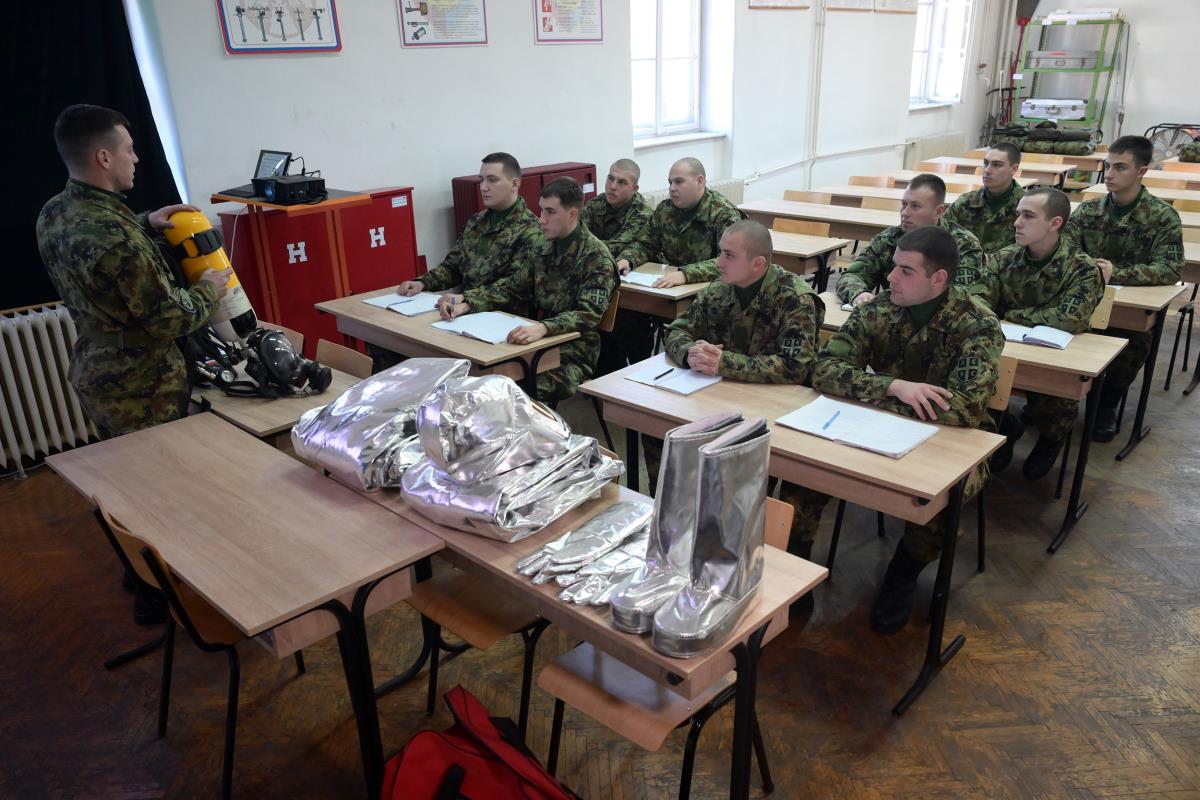

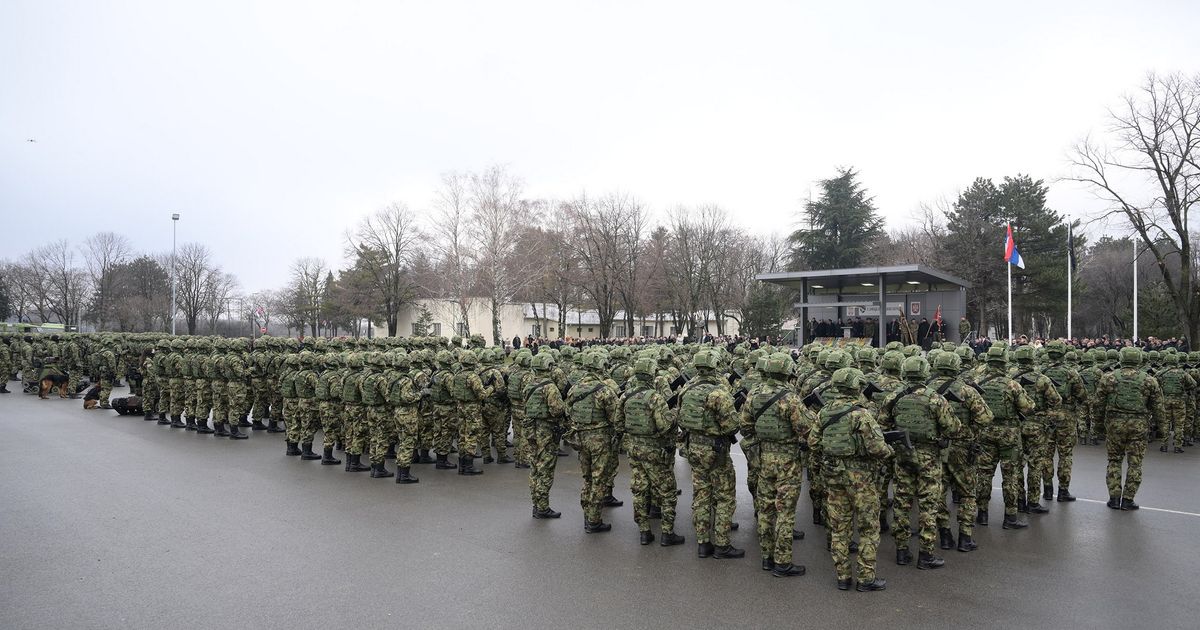
Soldiers on voluntary military service in the Serbian Army are currently undergoing specialist logistics training at the Logistics Training Center, according to pro-government outlets, with opposition-aligned commentators broadly accepting the basic outline of the program. Coverage converges on the fact that the course prepares recruits for more than 20 distinct duties across the logistics branch, combining theoretical classroom instruction with practical field exercises and culminating in evaluations that determine their subsequent unit assignments. Both sides report that the training is aimed at roles such as medics, firefighters, drivers, mechanics, and cooks, and that successful candidates may be offered contracts for professional military service, making this a key recruitment and workforce development pipeline for the army.
The shared context across the spectrum highlights the Logistics Training Center as a central institution for building the army’s rear-support capabilities, which are essential for sustaining regular units in both peacetime and crisis scenarios. Outlets agree that the program fits into a longer-running effort to modernize and professionalize the Serbian Army through structured training for volunteers, aligning with state policies to strengthen defense capacity without full-scale conscription. Reports also concur that the breadth of specialties reflects the army’s need for a wide range of technical and support skills, and that the training is framed as part of broader reforms to make military careers more attractive, with clear pathways from voluntary service into stable professional roles.
Points of Contention
Framing of purpose. Opposition-aligned sources tend to frame the logistics specialist training as part of a wider militarization trend and a tool for political image-building by the government, questioning whether the breadth of specialties truly reflects strategic needs or simply serves recruitment statistics. Pro-government media, by contrast, present the program as a rational, technical response to real logistical gaps in the army, emphasizing efficiency, professionalism, and alignment with modern defense standards. Where opposition coverage hints that the training’s public promotion is timed to bolster the ruling parties’ narrative of strength and stability, pro-government outlets depict it as routine institutional development that would occur regardless of political cycles.
Quality and conditions of training. Opposition-oriented commentary often raises doubts about the actual quality of instruction, equipment, and living conditions, suggesting that official descriptions of well-rounded theoretical and practical modules may mask underinvestment or infrastructure problems. Pro-government outlets, however, stress that the Logistics Training Center is well-equipped and that soldiers receive up-to-date education, highlighting the variety of duties—medics, firefighters, drivers, mechanics, cooks—as evidence of comprehensive preparation. While critics ask whether instructors, facilities, and safety standards match the glowing official narrative, supportive media almost exclusively feature polished imagery and quotes from satisfied soldiers and officers.
Motives and career promises. Opposition sources typically scrutinize the promise of professional military employment after training, warning that such guarantees may be overstated and that many volunteers could face precarious contracts or limited advancement opportunities once publicity fades. Pro-government coverage underscores the training as a genuine jobs pathway, stressing that successful trainees are actively encouraged to sign professional service contracts and that logistics roles offer stable, socially respected careers. Skeptical pieces question whether the state is using economic insecurity to steer young people into the army, while loyalist outlets portray volunteers as motivated by patriotism and personal development rather than primarily by economic necessity.
Transparency and oversight. Opposition voices call for greater transparency on selection criteria, attrition rates, and post-training placements, implying that data on how many trainees effectively transition into long-term roles is either incomplete or selectively presented. Pro-government media largely omit such scrutiny, focusing instead on official statements and carefully curated statistics that suggest steady growth and success of the logistics branch. Where critical coverage presses for independent monitoring and parliamentary oversight of defense-sector training programs, supportive outlets treat the army’s internal reporting as sufficient assurance that the system is functioning properly.
In summary, opposition coverage tends to treat the specialist logistics training as a politically instrumentalized program whose quality, transparency, and employment promises require scrutiny, while pro-government coverage tends to showcase it as a modern, well-run training pipeline that strengthens the army’s capabilities and offers credible career opportunities for volunteers.