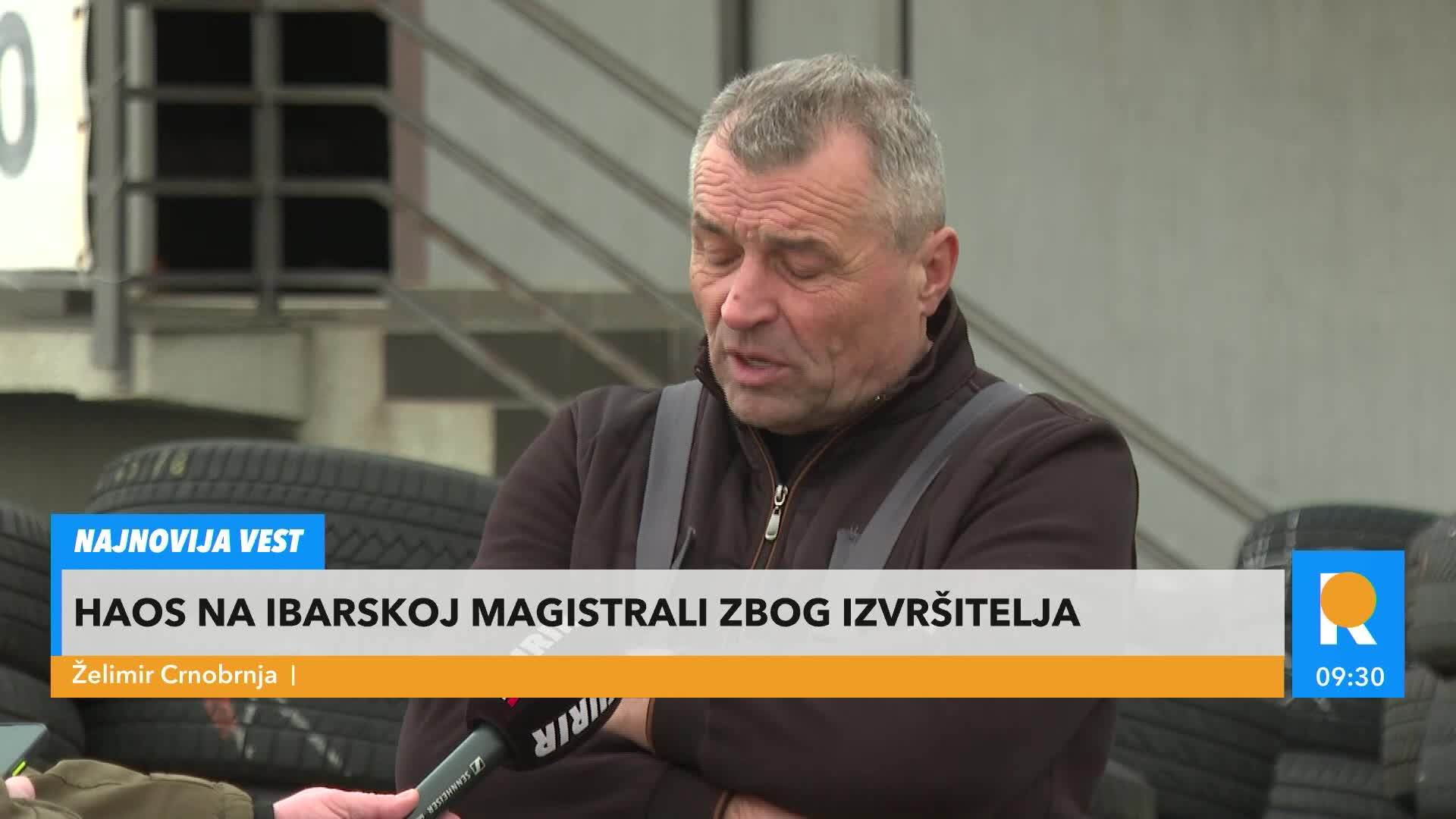


A man identified as Želimir Crnobrnja, the owner of a car repair shop, threatened to set himself on fire after dousing himself with gasoline when bailiffs arrived at his property. The incident occurred during what he says was the tenth attempt by enforcement officers to enter and seize the disputed premises, part of a long-running enforcement procedure linked to a contested property sale and debt claim. Both sides describe the core sequence similarly: bailiffs came to execute a court-ordered action, Crnobrnja reacted dramatically with a threat of self-immolation on the spot, and the situation was defused without the threat being carried out.
Coverage across the spectrum agrees that the dispute centers on a complex and protracted property and debt case involving previous owners, an allegedly manipulated sale, and court judgments that have enabled repeated bailiff visits. Both sides acknowledge that formal legal and enforcement institutions (courts, bailiffs, enforcement officers) are acting on the basis of existing legal decisions, while the current occupant insists he is not the debtor and that the underlying legal process is flawed. There is broad agreement that the case illustrates how drawn-out civil and enforcement proceedings can push individuals into extreme protests and highlights widespread concerns about property security, transparency of enforcement, and the social consequences of unresolved legal disputes.
Points of Contention
Framing of the event. Opposition-aligned outlets are likely to present the incident primarily as a desperate act of a citizen pushed to the edge by an oppressive and politically captured enforcement system, highlighting the threat of self-immolation as a symbol of systemic injustice. Pro-government outlets instead frame it as a dramatic but individual protest arising within an otherwise routine, legally grounded enforcement procedure, emphasizing that it was the tenth visit in a long legal process rather than a spontaneous clash. While opposition sources focus on the emotional and symbolic weight of a man willing to die to protect his property, pro-government sources stress the continuity and legality of the bailiffs’ actions and treat the threat as an exception, not a norm.
Responsibility and blame. Opposition media tend to shift responsibility upward, blaming ruling authorities, judicial elites, and politically connected creditors for creating a system where ordinary people face dispossession with little recourse, suggesting the bailiffs are mere instruments of a deeply unjust order. Pro-government media, by contrast, pin responsibility mainly on past transactions and private disputes between the original seller, his associates, and Crnobrnja, presenting the conflict as a personal legal entanglement rather than a failure of state governance. In opposition narratives, the state is culpable for allowing alleged manipulations and ignoring cries for help, whereas in pro-government narratives the state appears as an impartial enforcer trapped between conflicting private claims.
Portrayal of institutions. Opposition outlets are likely to stress a pattern of abusive or selective enforcement, questioning the independence of courts and bailiffs and suggesting that repeated visits indicate harassment or collusion with powerful interests. Pro-government coverage presents the bailiffs and courts as procedural actors following established rulings, implying that the frequency of visits reflects the occupant’s refusal to comply rather than institutional overreach. Where opposition sources might highlight other similar cases to argue that institutions routinely fail small property owners, pro-government sources narrow the lens to this specific dispute, portraying institutions as largely neutral and rule-bound.
Systemic implications and reforms. Opposition media usually use such incidents to argue for sweeping reforms of enforcement law, protections against eviction and seizure, and mechanisms to revisit allegedly tainted privatizations or sales, framing this case as symptomatic of a broader social and economic crisis. Pro-government outlets tend instead to acknowledge hardship but underscore the need to respect final court decisions, implying that any reforms should fine-tune procedures without undermining legal certainty or the enforceability of contracts. Thus, while opposition narratives treat the drama as evidence that the current model of debt enforcement is unsustainable, pro-government narratives caution against politicizing individual cases in ways that could destabilize property and legal relations.
In summary, opposition coverage tends to depict the man’s threat of self-immolation as a powerful indictment of an unjust, politically skewed enforcement system and a call for structural change, while pro-government coverage tends to frame it as an extreme reaction within a lawful, individualized property dispute that should not be generalized into a systemic crisis.
Story coverage