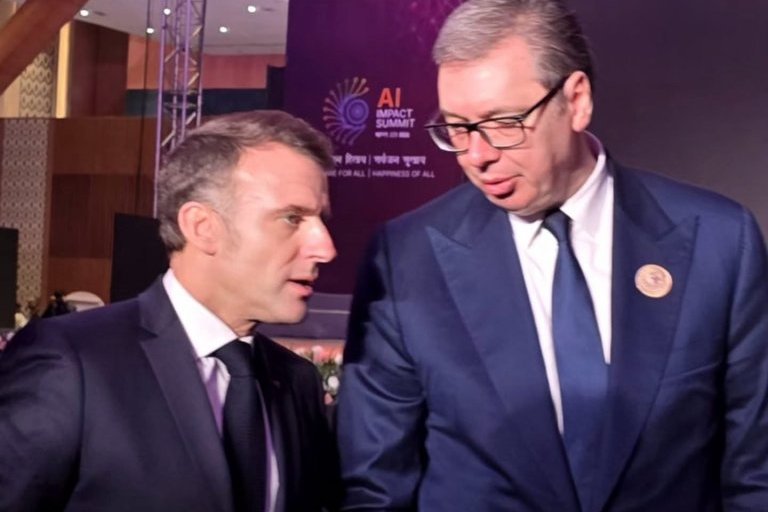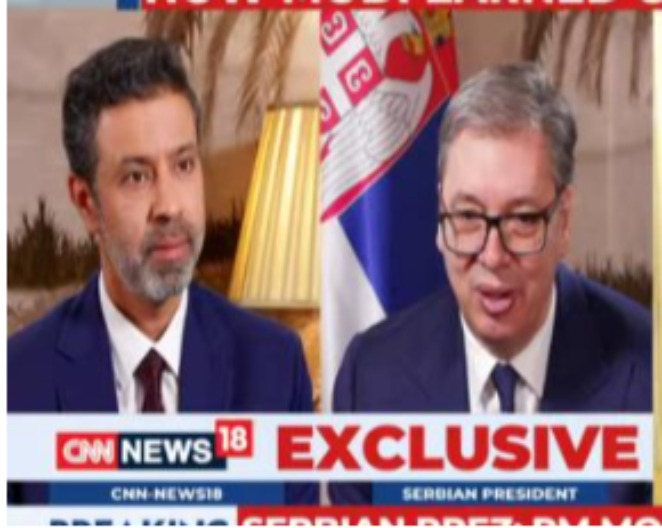


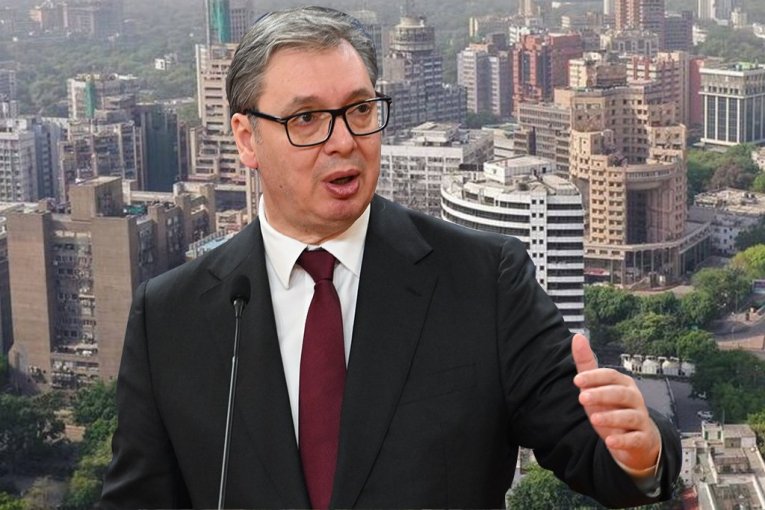
President Aleksandar Vučić’s trip to New Delhi centers on his participation in an international summit on artificial intelligence, during which he met both Indian Prime Minister Narendra Modi and French President Emmanuel Macron. Across outlets, reports agree that Vučić and Modi discussed expanding bilateral cooperation in areas such as artificial intelligence, the digital and IT sectors, pharmaceuticals, the military industry, technology transfer, and broader trade and investment opportunities, with Vučić inviting Modi to visit Serbia. Coverage also concurs that Vučić spoke with Macron at a dinner hosted by Modi for summit participants, where more than 500 global AI figures, including political leaders and tech executives, were present, and that the Serbian president used his visit to give interviews to Indian media and publish an op-ed in the Indian press.
Both opposition and pro-government sources situate these meetings within the long-standing ties between Serbia and India, including their shared heritage in the Non-Aligned Movement and history of mutual support in international forums. There is agreement that India is presented as a strategic partner for Serbia, with an emphasis on India’s rapid technological development and rising global status as a reason for deepening links. Coverage also converges on the notion that France is a significant European interlocutor for Serbia at such global gatherings, and that Vučić is leveraging multilateral events like the AI summit to maintain dialogue with both established EU powers and major non-Western actors, in the context of Serbia’s multi-vector foreign policy and efforts to attract investment and diversify partnerships.
Points of Contention
Framing of diplomatic success. Opposition-aligned outlets acknowledge Vučić’s meetings with Modi and Macron but portray them in a restrained, transactional way, emphasizing routine diplomatic engagement and potential economic projects without dramatizing the encounters. Pro-government media, by contrast, frame the same meetings as major diplomatic victories and personal achievements for Vučić, using emotional headlines, photos, and anecdotes to underscore his proximity to global leaders. While opposition sources underscore the formal agenda and long-term interests, pro-government reporting stresses symbolism, stature, and the narrative that Serbia is “on the map” thanks to Vučić personally.
Domestic political messaging. Opposition coverage largely treats the New Delhi meetings as foreign-policy events and avoids linking them to domestic political battles, aside from implicitly questioning how concrete or immediate the promised cooperation will be. Pro-government outlets weave domestic narratives into the trip, highlighting Vučić’s comments on inflation, agriculture, internal political tensions, and even alleged attempts at “color revolutions” in both Serbia and India, using the foreign visit to reinforce his image as a besieged but steadfast leader. As a result, opposition media separate diplomacy from internal legitimacy, whereas pro-government media use the summit to bolster Vučić’s standing at home.
Assessment of strategic partnerships. Opposition sources describe India primarily as a promising economic and technological partner, focusing on sectors like AI, digital transformation, and pharmaceuticals and stressing the need to convert political goodwill into real investments and jobs. Pro-government outlets go further, presenting India as a near-ideal strategic ally whose independent foreign policy and growth model dovetail with Vučić’s vision for Serbia, and highlighting Modi’s charisma and strong leadership as something Vučić admires and seeks to align with. Where opposition outlets are cautious about over-selling the partnership, pro-government media portray it as a pivotal axis in Serbia’s global positioning.
Portrayal of Vučić’s role and personality. Opposition-aligned reporting describes Vučić in institutional terms as Serbia’s president conducting standard high-level talks, with limited emphasis on his personal history or emotions. Pro-government coverage devotes significant space to Vučić’s personal recollections (such as early work experiences in London), his emotional praise for Indian values and Modi’s leadership, and photo-driven narratives of him sitting next to Macron or engaging in long conversations with European and regional leaders. Opposition media thus downplay personalization and cult-of-personality elements, while pro-government outlets foreground Vučić himself as the central actor through whom Serbia’s international relevance is achieved.
In summary, opposition coverage tends to treat Vučić’s New Delhi meetings as routine diplomacy that should be judged by tangible economic and policy outcomes, while pro-government coverage tends to cast the same events as proof of Vučić’s personal stature, Serbia’s rising global clout, and the alignment of foreign engagements with his domestic political narrative.
Story coverage