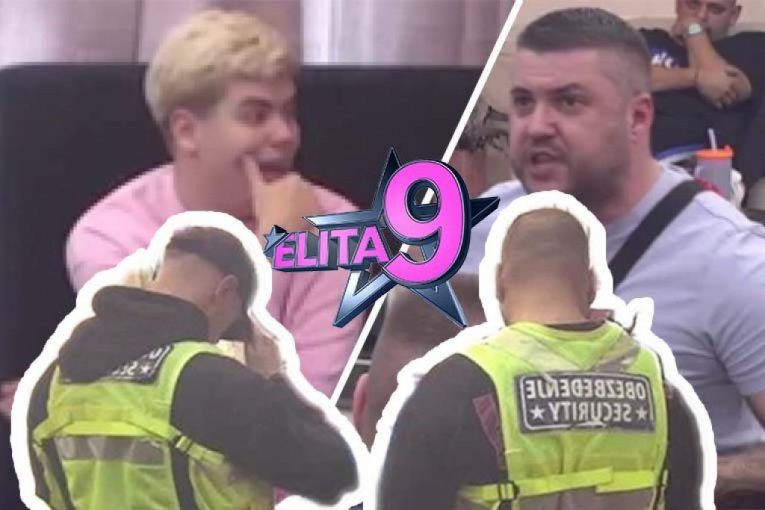
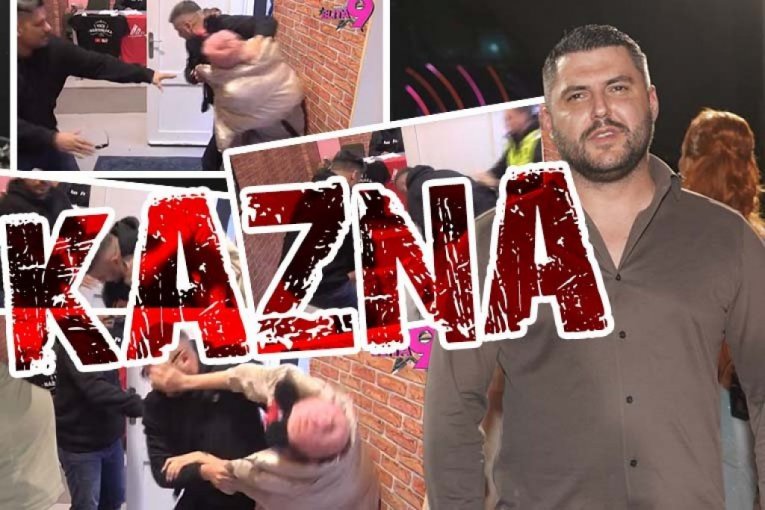
During the reality show "Elita 9," an on-air segment of "Radio-amnezija" featuring contestants Asmin Durdžić and Uroš Stanić escalated from a verbal clash into a physical altercation inside the show's compound. Both opposition and pro-government outlets agree that the incident was serious enough to cause an interruption of the broadcast, that security intervened repeatedly to separate the two, and that the production later announced sanctions in line with pre-established rules for violent behavior on the show.
Across the spectrum, coverage notes that the immediate trigger for the outburst was Stanić’s reference to Durdžić’s private life, specifically mentioning his child, Nora, which visibly enraged Durdžić and preceded the physical attack. Sources also concur that "Elita 9" operates under a strict rulebook prohibiting physical violence and that these rules are communicated to contestants in advance through official briefings and posted notices on the property, framing the altercation as a clear violation of institutionalized standards for on‑air conduct in the reality format.
Points of Contention
Framing of the violence. Opposition-aligned sources tend to describe the fight as the predictable outcome of an exploitative reality format that systematically provokes contestants to the breaking point, emphasizing a broader climate of aggression and humiliation. Pro-government outlets instead focus on the shock and singularity of the incident, presenting it as an unprecedented breach of clearly defined rules. While the former frame it as part of a pattern for which producers share responsibility, the latter highlight it as an individual failure by specific contestants.
Responsibility and accountability. Opposition coverage typically places shared blame on both participants and the production, arguing that editorial choices and provocative questions about family and children are deliberately used to inflame tempers. Pro-government coverage foregrounds Durdžić’s reaction to the mention of his daughter and portrays his conduct as a personal lapse for which immediate sanctions from "the Big Boss" are both necessary and sufficient. The opposition perspective calls for scrutiny of the entire reality-show model, whereas pro-government outlets largely defend the show’s framework and stress that internal disciplinary mechanisms worked as intended.
Role of the broadcaster and regulators. Opposition-aligned media often use the incident to question the public-interest role of the broadcaster and call for stronger intervention by media regulators, suggesting that such programming normalizes verbal and physical abuse. Pro-government outlets instead underline that the broadcaster promptly interrupted the program, deployed security, and initiated penalties, presenting these steps as evidence that existing oversight and self-regulation are adequate. Thus, one side portrays the fight as proof of systemic regulatory failure, while the other treats it as a stress test that the current system passed.
Political and social implications. Opposition coverage is more likely to link the altercation to a wider social coarsening and to a government-tolerated media ecosystem that prioritizes spectacle over responsibility, using the brawl as a metaphor for broader tensions in society. Pro-government media generally keep the story within the realm of entertainment news, avoiding overt political readings and framing it as an isolated reality-show scandal. Where opposition narratives see a symptom of deeper governance and cultural problems, pro-government narratives seek to contain the meaning of the event within the boundaries of a single, well-managed TV incident.
In summary, opposition coverage tends to treat the Asmin–Uroš fight as an emblematic failure of a sensationalist, poorly regulated media culture that implicates producers, broadcasters, and authorities, while pro-government coverage tends to emphasize individual misconduct, swift in‑show sanctions, and the adequacy of existing rules and institutional responses.