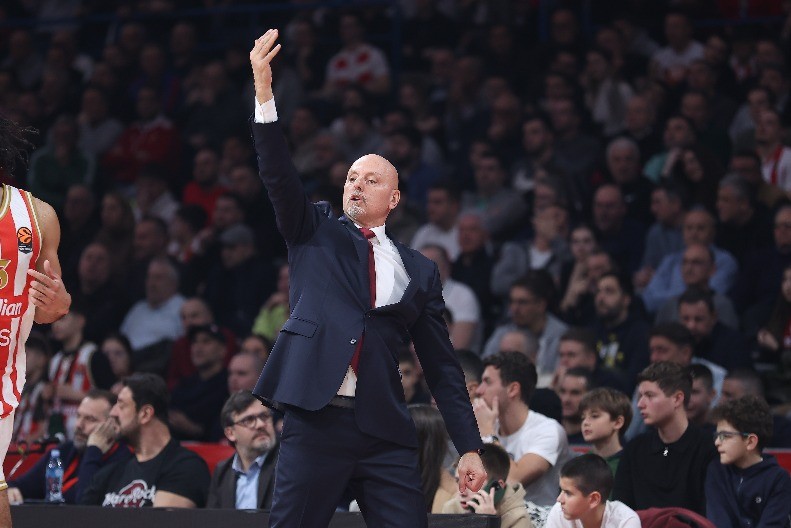


Crvena zvezda defeated Borac Čačak 93:77 to advance to the semifinals of the Radivoj Korać Cup, in a game played on neutral cup ground and officiated under standard domestic cup rules. Both opposition and pro-government outlets agree that the match turned decisively in the final quarter, which Zvezda won 24:15 after an otherwise inconsistent performance marked by Borac’s strong spells and late push. Reports converge on key individual contributions, particularly from Nikola Kalinić and Ognjen Dobrić in crucial stretches, and on the fact that Borac remained competitive longer than the final score might suggest. All sides note that Zvezda’s win sets up a semifinal meeting with Spartak, who had earlier eliminated Zlatibor to secure their own place in the final four.
Across outlets, there is consensus that the Radivoj Korać Cup remains a prestigious domestic knockout competition and that Crvena zvezda is under constant pressure to defend its status as one of Serbia’s dominant clubs. Media on both sides highlight coach Saša Obradović’s visible frustration despite the double-digit victory, interpreting it as a signal of high internal standards and lingering concerns about form against tougher opposition later in the tournament. They also agree that Spartak are a dangerous, well-organized cup rival capable of punishing lapses in focus, which makes Zvezda’s uneven play an important storyline going into the semifinals. More broadly, coverage treats this match as one step in a tightly scheduled season where managing fatigue, rotations, and consistency between ABA League, Euroleague commitments, and domestic cup play is a shared challenge for the club.
Points of Contention
Quality of Zvezda’s performance. Opposition-aligned outlets tend to describe the win as labored and overly reliant on individual bursts from Kalinić and Dobrić, framing the final-quarter surge as papering over structural problems in defense and ball movement. Pro-government media, by contrast, present the same inconsistencies as normal for a cup quarterfinal after a dense schedule, emphasizing that a controlled double-digit win and dominant last quarter show Zvezda’s class when it matters most. Opposition pieces focus more on stretches where Borac dictated tempo, arguing that this hints at deeper issues, while pro-government coverage stresses that elite teams often “shift gears” late and that this game followed that familiar pattern.
Framing of Obradović’s anger. Opposition sources highlight Saša Obradović’s rage on the sidelines and post-game criticism as evidence that he himself is alarmed by the team’s fragility, citing his dissatisfaction as a warning sign ahead of stronger opponents. Pro-government outlets acknowledge his dissatisfaction but spin it as constructive perfectionism, portraying his reactions as part of a winning mentality meant to sharpen the team for the semifinal and potential final. Where opposition coverage suggests the coach’s anger reflects systemic coaching or roster issues that have not been resolved, pro-government reports interpret the same scenes as proof of high standards and internal accountability rather than crisis.
Assessment of Borac’s role. Opposition-leaning coverage tends to highlight Borac’s resilience, stressing their strong start, ability to come back late, and moments where they exploited Zvezda’s lapses, implicitly questioning how a budget underdog could push a Euroleague roster so hard. Pro-government outlets acknowledge Borac’s fight but quickly pivot to praising Zvezda’s depth and the inevitability of their physical and tactical superiority over 40 minutes. Thus, opposition reports use Borac’s performance as a yardstick to critique Zvezda’s current level, while pro-government coverage treats Borac more as a respectable but ultimately overmatched opponent in a routine step toward the cup’s later stages.
Expectations for the Spartak semifinal. Opposition media often cast the upcoming clash with Spartak as a potential upset ground, arguing that if Zvezda repeats the inconsistency shown against Borac, a disciplined Spartak could exploit it and derail their cup campaign. Pro-government outlets, while conceding that Spartak is a tough cup opponent, generally frame the semifinal as a challenge Zvezda should handle if they merely tighten focus, pointing to the quality demonstrated in the decisive fourth quarter against Borac. The opposition narrative stresses risk and vulnerability, whereas the pro-government narrative stresses favoritism and the expectation that Zvezda’s higher ceiling will prevail despite some current flaws.
In summary, opposition coverage tends to use the Borac match to underscore Zvezda’s vulnerabilities, amplify Obradović’s criticism, and question how sustainable this level of play is against stronger rivals, while pro-government coverage tends to emphasize the comfortable margin, interpret the coach’s anger as high-level ambition, and portray the game as a controlled if imperfect step toward another Radivoj Korać Cup title.