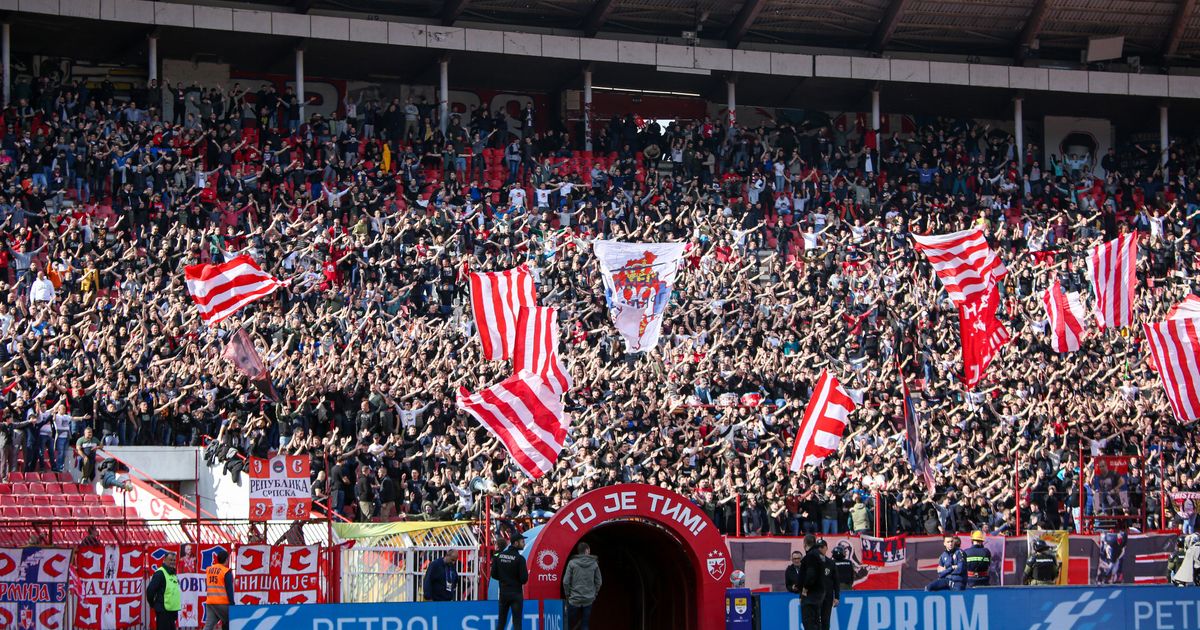

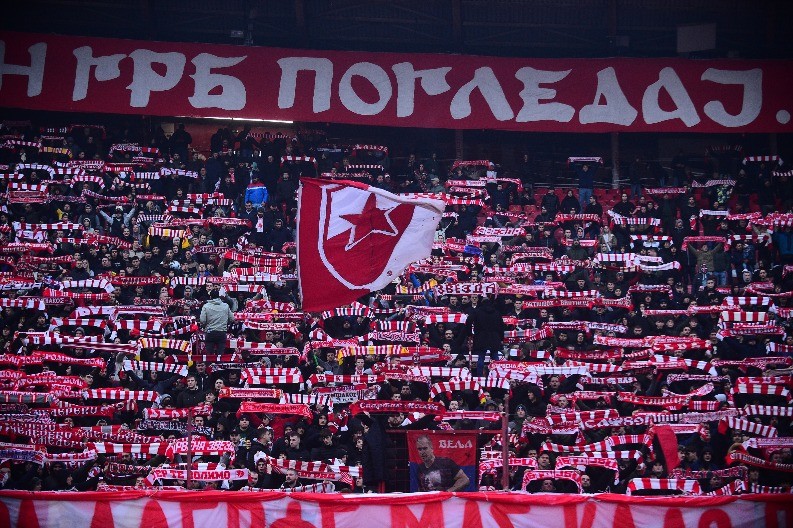
Crvena zvezda’s organized supporters group Delije has announced an official gathering point in Lille ahead of the club’s Europa League Round of 32 first-leg match against Lille, scheduled for Thursday at 9 PM. Both sides of the media agree that fans traveling from Serbia, as well as those living in France and neighboring European countries, are expected to assemble at Lille’s central Grand-Place at 5 PM on match day, from where they will proceed together toward the stadium, largely by metro, to support the team. Reports also converge on the fact that Delije began arriving in large numbers at least a day in advance, marching through the streets and singing, creating a visible presence in the city and forming a cortege the night before the game.
Shared context coverage underscores that this match is the first leg of the Europa League Round of 32 and that, despite Red Star’s previous win over Lille in an earlier European campaign, the French side is widely considered the favorite in the current tie. Media on both sides note the importance of the encounter for Crvena zvezda’s European ambitions and acknowledge key absences for the Serbian club, including Timi Maks Elšnik and Mirko Ivanić, which may influence the competitive balance. There is common recognition that Delije’s mobilization is meant to offset the sporting disadvantage by providing strong away support and maintaining Red Star’s tradition of high-intensity fan backing in European fixtures.
Points of Contention
Framing of the gathering. Opposition-aligned sources tend to depict the Lille gathering as a test of public-order management and the broader culture of Serbian football fandom, raising questions about whether authorities have learned from past incidents at international matches. Pro-government outlets, by contrast, frame the same gathering primarily as a patriotic and festive show of support, focusing on choreography, songs, and unity rather than potential risks. Where opposition media would highlight the logistical strain and possible flashpoints, pro-government reports emphasize enthusiasm and numbers, portraying Delije as disciplined ambassadors of the club and country.
Role of state and institutions. Opposition coverage is likely to stress the blurred line between ultras groups and state structures, suggesting that organized travel and visible coordination in Lille reflect long-standing patronage networks and selective tolerance by Serbian authorities. Pro-government outlets largely omit or downplay any institutional angle, presenting the trip as a purely fan-driven initiative without political or security entanglements. While critical media might question who facilitates tickets, transport, and policing arrangements, loyalist press focuses on UEFA regulations and formal match organization, avoiding scrutiny of domestic security services or political links.
Security and past incidents. Opposition media are inclined to link the Lille gathering to a history of fan violence and politicized hooliganism, warning that any disturbance abroad could damage Serbia’s image and trigger tighter international scrutiny. Pro-government coverage, however, tends to avoid references to previous scandals and instead showcases images of orderly marches and singing as proof that Delije can travel in large numbers without major incidents. In narratives critical of the government, even the absence of trouble is framed as contingent on serious foreign policing, whereas supportive media interpret calm behavior as evidence that Serbian fans are unfairly stereotyped.
Political symbolism and messaging. Opposition-aligned outlets are prone to read political symbolism into Delije’s mobilization, suggesting that chants, banners, or group discipline mirror nationalist narratives encouraged by the ruling elite. Pro-government sources present the same symbols as apolitical expressions of club pride, tradition, and cultural identity, insisting that the focus is on football rather than ideology. Where opposition media argue that such mass gatherings help sustain a loyal social base around the government, pro-government reporting treats them as organic fan culture, disconnected from domestic power structures.
In summary, opposition coverage tends to frame the Delije gathering in Lille as a politically inflected, potentially risky demonstration of state-tolerated ultras power that raises questions about security and institutional complicity, while pro-government coverage tends to present it as a vibrant, orderly, and purely sporting show of support that highlights national pride and the passionate culture surrounding Crvena zvezda.