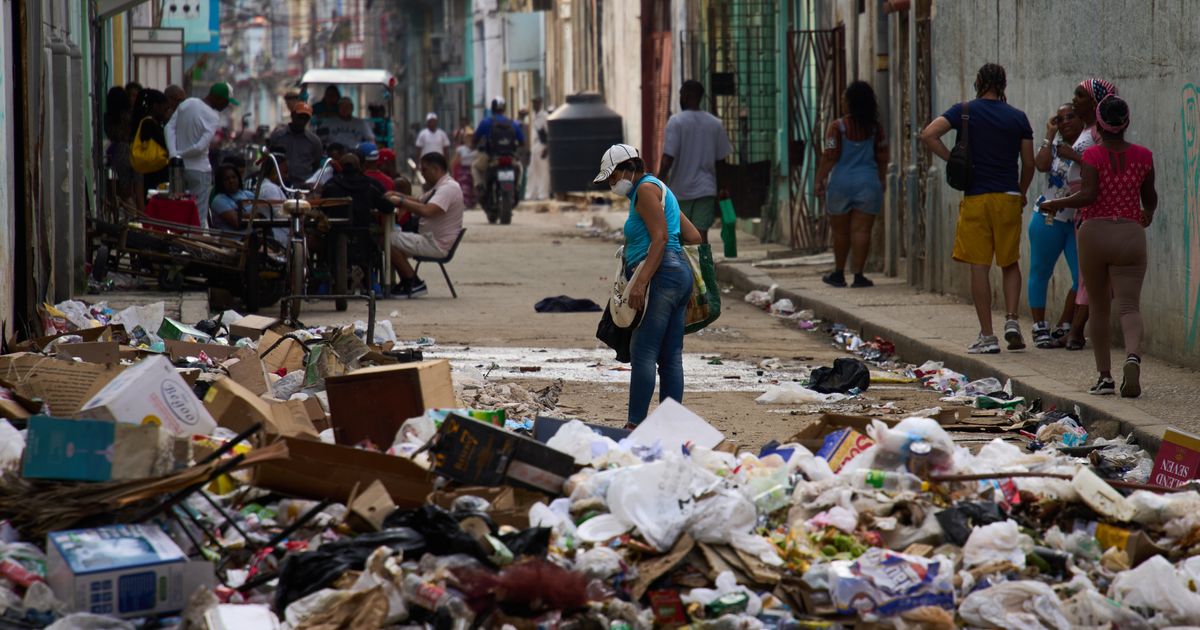

Russia’s pledge of support to Cuba is being reported as a coordinated political and economic response to intensified United States sanctions and the long‑standing blockade, centered on new restrictions that have sharply reduced Venezuelan oil shipments to the island. Across coverage, outlets agree that Russian officials, including Foreign Minister Sergey Lavrov and President Vladimir Putin, held meetings in Moscow with Cuban Foreign Minister Bruno Rodríguez Parrilla, publicly condemned recent US measures as illegitimate and unacceptable, and signaled readiness to supply oil and deepen strategic partnership with Havana. Reports concur that Cuba is facing acute shortages of fuel, electricity, food, and basic services, with cascading effects on transport, tourism, hospital operations, and industrial output, and that both Russian and Cuban authorities are framing these moves as part of a broader strategic alignment between the two countries.
Common background elements highlight the decades‑long US embargo on Cuba, the role of US secondary sanctions in constraining third‑country energy supplies, and the historic political ties between Moscow and Havana dating back to the Cold War. Both sides acknowledge that the latest measures targeting oil flows, including those associated with Venezuela and with Russian involvement, have intensified an already fragile economic situation on the island and heightened geopolitical tensions in the Caribbean. Coverage consistently notes that Cuban authorities are urging citizens to brace for austerity and a “wartime” style resilience, while Russia portrays its assistance as both humanitarian and strategic, fitting into a wider contest with Washington over the legitimacy of unilateral sanctions and the right of states to choose their partners.
Points of Contention
Responsibility and blame. Opposition‑aligned sources typically distribute responsibility for Cuba’s crisis between US sanctions, the long‑running inefficiencies of the Cuban economic model, and the political choices of both Havana and Moscow, often questioning whether Russian aid primarily serves Kremlin geopolitical aims. Pro‑government outlets emphasize US culpability almost exclusively, depicting the blockade and new sanctions as the dominant cause of shortages and downplaying or omitting internal policy failures in Cuba. While opposition coverage tends to frame Russia’s role as opportunistic and partly self‑interested, pro‑government narratives present Moscow as a principled partner standing against illegitimate US pressure.
Characterization of Russian support. Opposition media often describe Russian pledges of oil and strategic backing as limited, symbolic, or constrained by Russia’s own economic and logistical challenges, raising doubts about the durability and scale of the promised relief. Pro‑government coverage, by contrast, highlights Russia’s offers as concrete, timely, and strategically significant, suggesting they can meaningfully offset lost Venezuelan supplies and stabilize key sectors in Cuba. For opposition sources, the partnership can deepen Cuba’s dependency on another external patron, whereas pro‑government outlets cast it as diversification and sovereign cooperation.
Portrayal of Cuba’s internal situation. Opposition outlets generally present a more granular and critical picture of life on the island, stressing mismanagement, lack of structural reform, and restrictions on private enterprise alongside sanctions as drivers of systemic breakdown. Pro‑government sources focus on hardship mainly as evidence of the cruelty and effectiveness of US pressure, framing Cuban leaders’ calls for a “wartime” mentality as stoic resistance rather than a symptom of policy failure. Where opposition reporting may highlight public dissatisfaction, calls for reform, or emigration pressures, pro‑government narratives accentuate Cuban resilience, solidarity, and gratitude toward Russia.
Geopolitical framing. Opposition coverage tends to treat the Russia–Cuba dynamic as another front in a broader confrontation between Moscow and Washington, warning that deepening ties might heighten regional tensions or risk militarization reminiscent of Cold War crises. Pro‑government outlets instead describe the same moves as a legitimate assertion of multipolarity and a corrective to US dominance in the Western Hemisphere, stressing international law and sovereign equality. Opposition narratives are more likely to question whether Cuba is being drawn into Russia’s confrontation with NATO and the US, while pro‑government narratives portray Russia’s involvement as stabilizing and protective of Cuba’s rights.
In summary, opposition coverage tends to frame Russia’s pledge as a politically motivated and potentially limited lifeline that cannot substitute for internal reforms and risks entangling Cuba further in great‑power rivalry, while pro-government coverage tends to depict Russian support as principled, substantial, and central to mitigating an unjust US blockade and sustaining Cuba’s sovereignty.