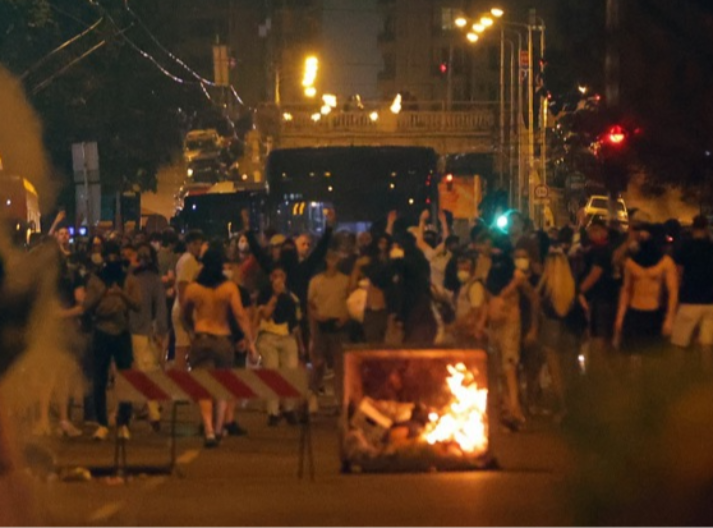

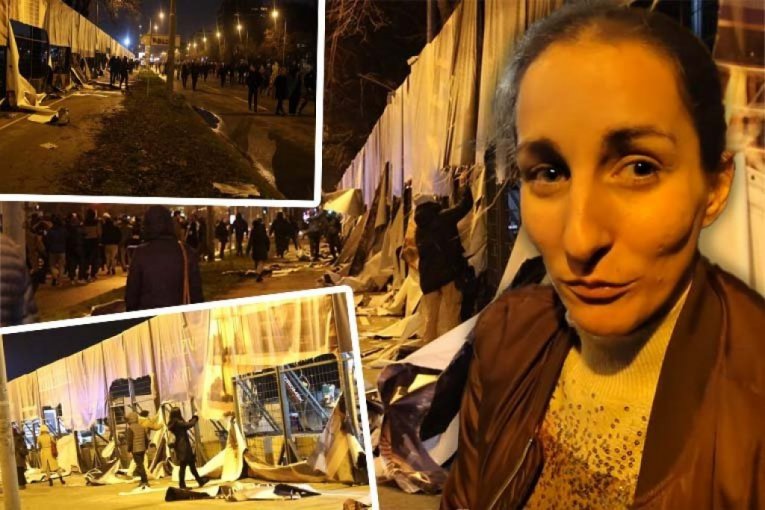
Media on both sides report that SNS activist Neda Perić was involved in a physical incident in Novi Sad during ongoing political tensions and street actions, after which she was transported to KBC Zemun for medical examination or treatment. It is commonly noted that she publicized her account on social networks, including TikTok, describing blows to the head and injuries to her arms, and that the event occurred against a backdrop of protests and so‑called blockades involving the removal of posters and confrontations in Belgrade and Novi Sad.
Across the spectrum, outlets frame the incident within Serbia’s highly polarized struggle between the ruling SNS and opposition-aligned protest groups, often referred to generically as blockaders. Both sides acknowledge the involvement of state institutions such as the police and healthcare services, citing police interventions, arrests, fines, and hospital admission as formal responses to related clashes and property damage. Coverage also situates the event within a longer-running cycle of demonstrations, counter-rallies, and disputes over political propaganda materials, reflecting a shared understanding that street-level confrontations have become a recurring feature of Serbia’s political landscape.
Points of Contention
Nature of the incident. Pro-government outlets describe the event as a brutal, one-sided physical assault on Neda Perić by organized blockaders who cornered her, kicked her while she was on the ground, and robbed her of her phone. Opposition-aligned sources, where they cover it at all, more often question whether this was a targeted political attack or a scuffle arising from mutual provocation around posters and blockades, sometimes downplaying the severity implied by words like horrific and brutal. While government-friendly media emphasize graphic details and victimization, opposition narratives tend to treat the episode as one of many chaotic protest-side encounters rather than a singular act of political violence.
Culpability and political framing. Pro-government coverage clearly assigns blame to opposition-linked blockaders, portraying them as violent extremists attacking a young SNS activist for her political affiliation and thereby endangering public order. Opposition media, in contrast, frequently imply that the ruling party bears indirect responsibility by staging provocations, sending activists into tense protest areas, or instrumentalizing individual clashes to discredit largely peaceful demonstrations. As a result, loyalist outlets see the attack as proof of opposition radicalization, whereas critical outlets see the narrative of an attack as part of an SNS propaganda effort to delegitimize dissent.
Evidence, verification, and tone. Pro-government sources highlight Perić’s own testimony, photos, and short video clips as sufficient proof, often repeating her quotes and medical transport details without substantial independent verification or questioning of her account. Opposition-aligned outlets, when they comment, demand more corroboration such as full video sequences, police reports, or neutral eyewitnesses, and may hint that selective footage or emotive language is being used to construct a political spectacle. Consequently, government-friendly media use urgent, sensational headlines and strong adjectives, while opposition outlets adopt a more skeptical or minimalistic tone, sometimes relegating the story to a secondary mention within broader protest coverage.
Role of institutions and security narrative. Pro-government reporting stresses swift institutional reaction, underscoring that the police intervened, arrests were made for related property damage, and Perić was quickly transported to hospital, depicting the state as a protector against opposition violence. Opposition coverage more often highlights perceived asymmetry, arguing that police and courts act harshly against protesters removing posters or blocking roads, but are slower or less transparent when SNS activists are involved in confrontations. This leads pro-government media to argue that stronger measures are needed against disruptive blockaders, while opposition media suggest that the state apparatus is being selectively mobilized to shield ruling-party interests.
In summary, opposition coverage tends to question the official narrative, contextualizing the incident as part of wider protest dynamics and potential SNS spin, while pro-government coverage tends to present Neda Perić as the clear victim of opposition-linked violence and use the case to portray blockaders and the broader opposition as a serious threat to public order.