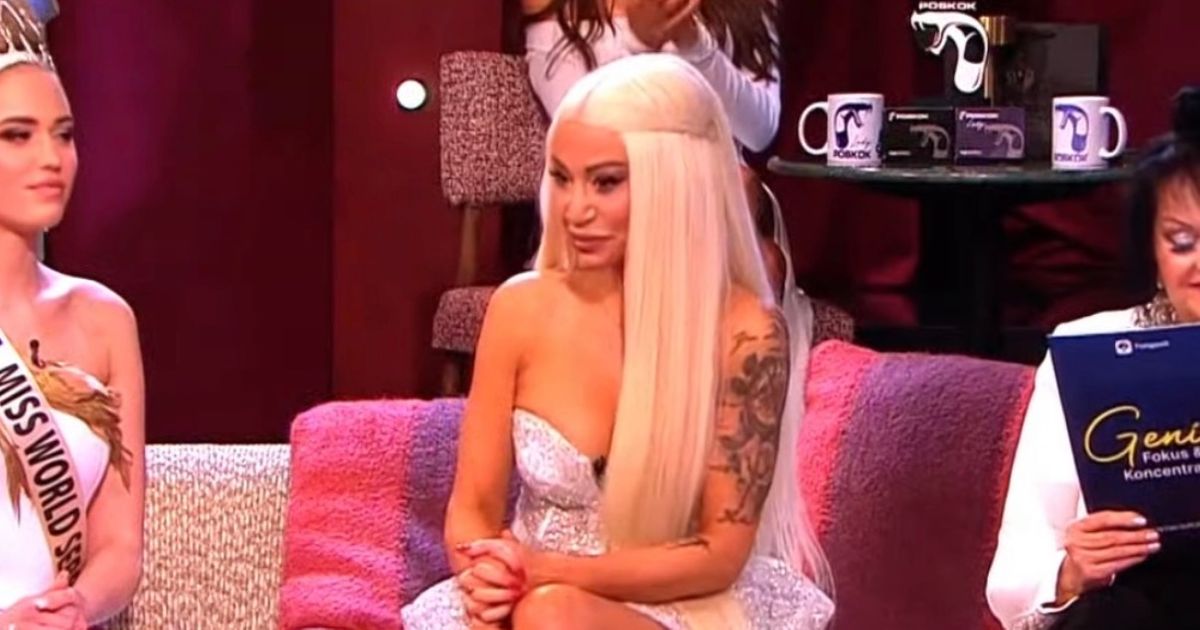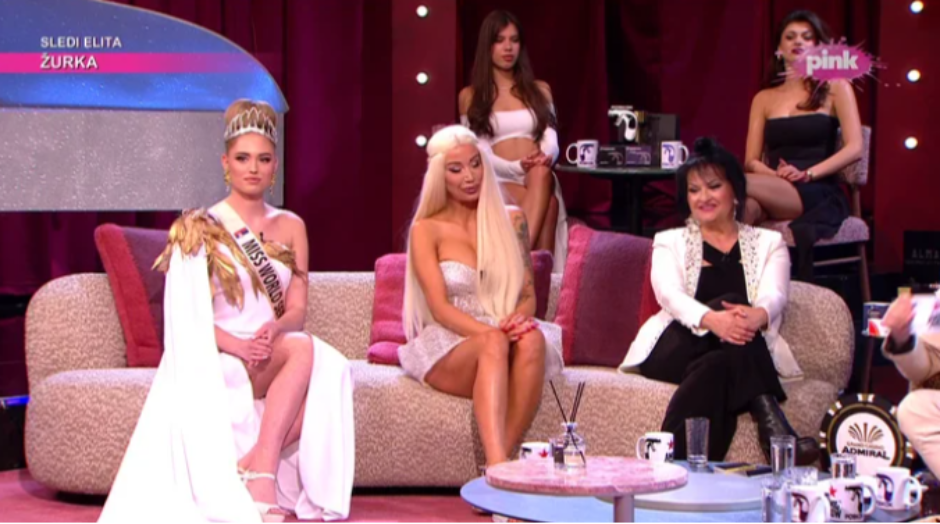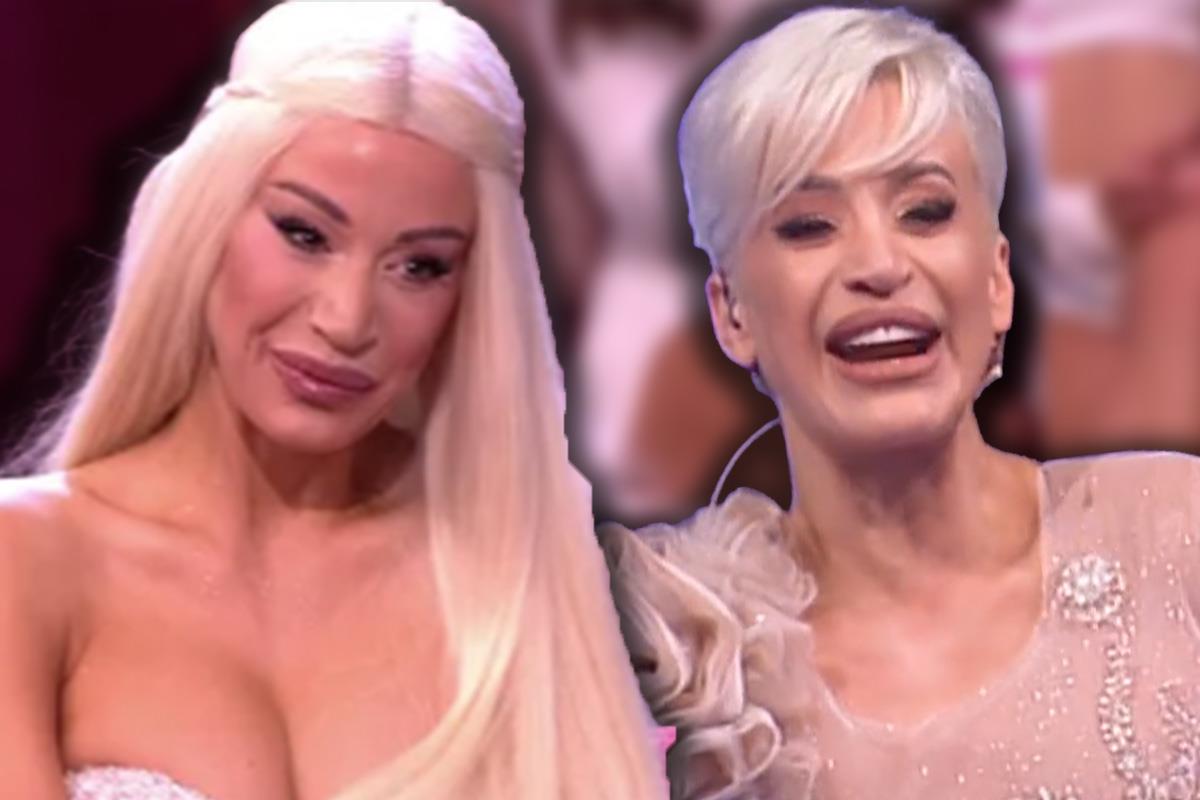



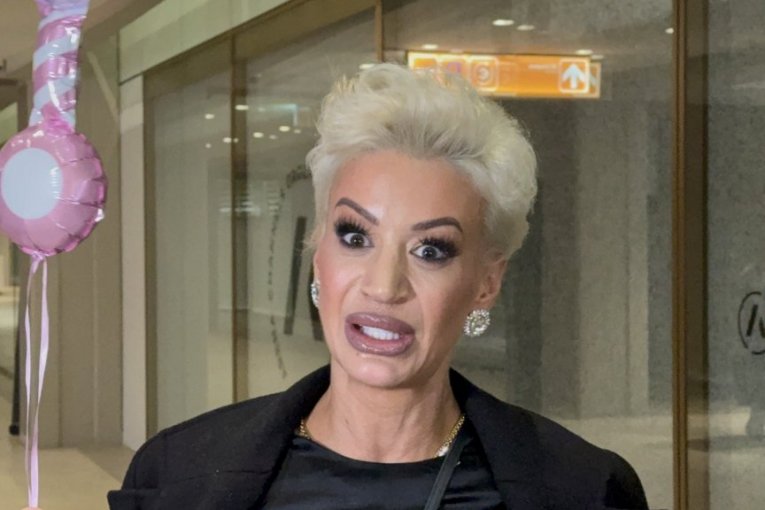
TV host Dušica Jakovljević appeared on the entertainment program "Amidži šou" on February 17 with a visibly different image, most notably debuting very long, blonde hair instead of her long-standing short hairstyle. Coverage agrees that the transformation was achieved with a wig that extended to her waist or lower back, combined with a short, low-cut dress and high heels, making her almost unrecognizable compared with her previous on-screen look.
Reports also concur that the appearance was framed as a deliberate image makeover tied to her broader media persona as a host on shows like "Elita" and Pink TV formats. Shared context highlights her age (mid-forties), her visibly slender, toned figure, and previously less-revealed tattoos on her stomach—including two crown motifs and a central diamond—along with on-air conversations about her private life, boundaries with the public, and her single status.
Points of Contention
Significance of the makeover. Opposition-aligned sources tend to portray the hairstyle change as a trivial or purely cosmetic incident, if they cover it at all, using it more as an example of the entertainment system’s obsession with image. Pro-government outlets, by contrast, frame the transformation as a major television moment, emphasizing shock, surprise, and audience fascination, with headlines that dramatize her being “unrecognizable” and having removed her “trademark” look.
Framing of personal narrative. Opposition coverage is likely to downplay or omit her reflections on boundaries, politeness, and the greater exposure of private life, treating them as standard celebrity chatter that does not merit political or social weight. Pro-government media highlight these comments as intimate confessions, presenting her self-critique about not setting limits and her remarks on modern media exposure as relatable life wisdom that deepens emotional engagement with viewers.
Body image and lifestyle emphasis. Opposition-oriented outlets, where they mention the story, are more inclined to see the focus on her slim figure, flat stomach, and age-defying appearance as part of a broader, superficial celebrity cult that distracts from substantive issues. Pro-government coverage enthusiastically celebrates her physique and “healthy lifestyle,” using detailed descriptions of her figure, tattoos, and styling to build aspirational glamour around a prominent Pink TV personality.
Role in the media ecosystem. Opposition media, when referencing her and similar hosts, often situate them within a system of regime-friendly entertainment that normalizes government-aligned channels and narratives, so a hairstyle change is read as branding within that ecosystem rather than a standalone cultural event. Pro-government outlets instead detach the makeover from any political context, treating it as a fun, visually driven TV highlight that showcases Pink TV’s star power, production value, and capacity to generate buzz.
In summary, opposition coverage tends to treat Dušica Jakovljević’s new long hairstyle as a marginal or symptomatic example of image-driven, regime-aligned entertainment that is not genuinely newsworthy, while pro-government coverage tends to amplify it as a sensational and glamorous television event, using her transformation and personal disclosures to promote Pink TV stars and emotionally engage audiences.
Story coverage