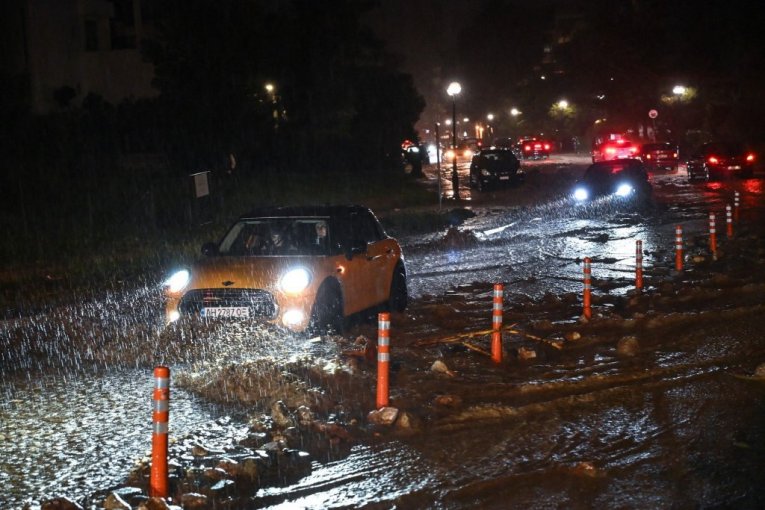
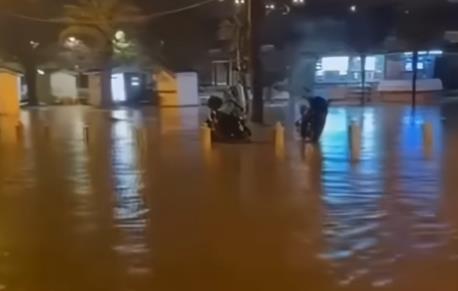
Heavy rainfall from a strong Adriatic cyclone has caused severe flooding across parts of the eastern Adriatic coast, with Kotor in Montenegro highlighted as one of the hardest‑hit cities and its old town reported as being under water up to waist height. Both types of outlets report torrents of rain measured in excess of 200 liters per square meter on sections of the Montenegrin coast, overflowing streams, flooded streets where cars and pedestrians appear to be “swimming,” and serious disruptions to local traffic and daily life. Coverage agrees that the cyclone formed over the Adriatic, has affected coastal Montenegro, southern Dalmatia, and parts of Herzegovina, and that images and videos circulating online show submerged squares, impassable city gates in Kotor, and urban infrastructure struggling to cope with the volume of water. Meteorologists cited in both camps broadly concur that the system is moving slowly, with risks of further precipitation and localized flooding persisting even as some short‑term stabilization is forecast.
Across the spectrum, media situate the event within the wider regional context of increasingly volatile Mediterranean weather systems affecting multiple countries simultaneously, stressing that Montenegro’s coastal infrastructure is facing the same storm complex impacting neighboring Croatia and Bosnia and Herzegovina. Both sides describe the cyclone as part of a pattern of stronger Adriatic and Mediterranean storms in recent years, referencing meteorological services that warn of continuing instability across Europe, with contrasts between storm‑battered southern areas and colder, calmer conditions further north. Outlets commonly invoke local hydrometeorological institutes and civil protection services as the key institutions monitoring river levels, issuing warnings, and coordinating traffic and safety measures, while acknowledging that urban planning along the coast — especially in historic centers like Kotor — leaves low‑lying areas particularly exposed to sudden deluges. There is shared recognition that emergency responders, municipal services, and local residents are engaged in pumping out water, clearing debris, and monitoring landslide risks, and that upcoming days will be critical for assessing structural damage and the need for any remedial works or longer‑term adaptation measures.
Points of Contention
Responsibility and preparedness. Opposition‑aligned outlets typically frame the flooding in Kotor as evidence of chronic underinvestment in drainage, protective infrastructure, and disaster preparedness, linking the inundation of the old town to years of neglect, overconstruction, and permissive zoning by the current authorities. Pro‑government outlets, by contrast, emphasize the extraordinary intensity of the cyclone and present it as an unavoidable natural disaster that would have overwhelmed any system, highlighting the efforts of municipal and state services rather than their alleged failures. While opposition media foreground testimonies of residents complaining about clogged drains and ignored expert warnings, pro‑government coverage tends to sideline structural criticism and instead stresses that institutions reacted promptly once the cyclone hit.
Political accountability and governance. Opposition sources cast the event as a test of the ruling coalition’s competence, arguing that the images of a “city underwater” symbolize broader mismanagement and lack of strategic planning for climate‑related risks. Pro‑government media largely depoliticize the disaster, treating it as a regional weather story and framing references to Kotor within a narrative of shared regional hardship rather than as a uniquely Montenegrin governance failure. When politics appears, opposition coverage often connects flood damage to previous government decisions on coastal development and tourism‑driven construction, whereas pro‑government coverage, when mentioning authorities at all, focuses on officials visiting affected areas and issuing reassurances without probing policy responsibility.
Scale, tone, and risk framing. Opposition‑leaning reporting tends to mix vivid imagery with a critical, sometimes alarmed tone that stresses systemic vulnerability, long‑term risks to heritage sites like Kotor’s old town, and the prospect of repeated disasters if policy does not change. Pro‑government outlets also use dramatic language and visuals but primarily to underline the raw power of nature, quickly pivoting to messages about forecast stabilization, the professionalism of emergency services, and the idea that the situation is under control. Where opposition media are more likely to question whether official forecasts and warnings were timely or adequate, pro‑government coverage foregrounds meteorological explanations, regional comparisons, and the technical details of rainfall amounts to underscore that the primary driver is an exceptional cyclone, not human error.
Future reforms and lessons. Opposition narratives frequently argue that the floods show the need for anti‑corruption measures in construction permitting, stricter coastal planning, and independent oversight of infrastructure projects, suggesting that without governance reforms, Kotor and similar towns will remain at high risk. Pro‑government narratives, when they discuss the future at all, tend to speak in general terms about improving resilience and supporting affected communities, avoiding explicit critiques of past decisions or concrete commitments that would imply systemic shortcomings. Opposition commentators commonly call for inquiries into how funds for flood protection have been spent and whether recommendations from experts were followed, whereas pro‑government voices focus more on immediate recovery, insurance, and the expectation that state institutions will “draw lessons” without assigning blame.
In summary, opposition coverage tends to portray the Kotor flooding as a stark indictment of governance, planning, and accountability around coastal development and disaster preparedness, while pro-government coverage tends to frame it primarily as an exceptionally strong natural event testing but ultimately validating the response of state and municipal institutions.