

pro-government
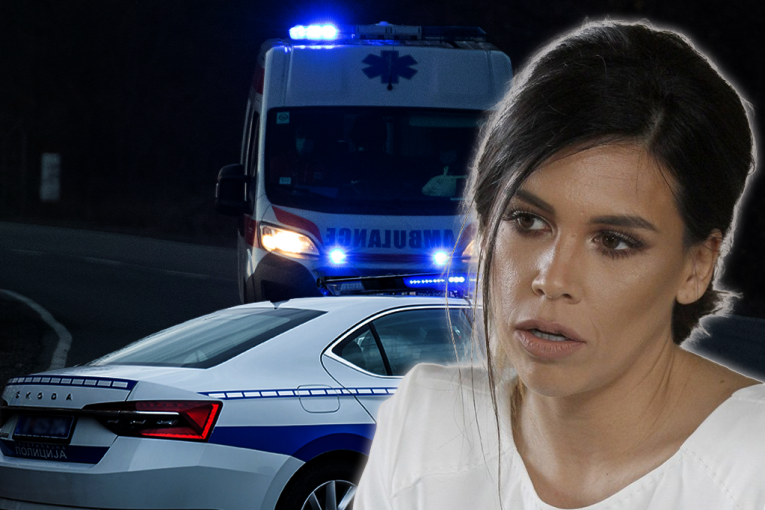
KAJA OSTOJIC'S HUSBAND WAS IN A TRAFFIC ACCIDENT! Miloš WAS HIT BY A TRUCK
Photo: Shutterstock/DusaNN, Petar Divac, Vladimir Lukić
a month ago
Singer Kaja Ostojić’s husband, Montenegrin businessman Miloš Čujović, was involved in a traffic accident on Zlatibor near a tunnel while he was on his way to pick her up from a performance. All aligned reports agree that the incident happened in the evening or night hours, that police were present on the scene and that traffic was briefly slowed while the circumstances were documented. It is consistently reported that Čujović was in the car with a driver, that the crash involved either a truck or another passenger vehicle that struck the guardrail and ended up in the opposite lane, and that, despite dramatic descriptions of the impact, there were no physical injuries to Čujović, his driver, or occupants of the other vehicle.
Coverage from both sides emphasizes that Ostojić quickly addressed the public to confirm that everyone involved was safe and that the main consequence was psychological stress rather than bodily harm. Shared context includes the fact that the couple married in 2024, that Čujović is frequently in the media spotlight due to his relationship with the singer, and that their movements around Zlatibor were tied to her professional engagements and performances. Both opposition and pro-government outlets, where they mention background at all, frame the event as a high-profile but ultimately non-fatal road incident of the kind that periodically occurs on busy mountain routes, rather than as a systemic transport disaster or a trigger for policy debate.
Causation and fault. Opposition-aligned sources, where they cover the story, tend to stress ambiguities about how the accident happened, highlighting conflicting early claims about a truck, another passenger car, and tunnel conditions, and leaving open who precisely was at fault. Pro-government outlets more firmly echo Ostojić’s statement that the other vehicle lost control, hit the guardrail, and was thrown into Čujović’s lane, effectively absolving him and his driver of responsibility. While opposition narratives may underline the chaotic nature of the collision sequence, pro-government coverage simplifies the chain of events into a clear, external cause that portrays Čujović as a victim of circumstances.
Narrative framing and emphasis. Opposition media are more inclined to treat the accident as a routine traffic incident that gained attention mainly because of celebrity status, occasionally noting the media spectacle around it. Pro-government outlets frame the story more melodramatically, with headlines foregrounding the danger, the reference to a truck, and the emotional tension before swiftly resolving it with reassurances that everyone is fine. As a result, opposition sources subtly question the newsworthiness and sensational tone, whereas pro-government coverage leans into the drama to attract clicks while rapidly shifting to a comforting narrative.
Use of Kaja Ostojić’s statements. Opposition-aligned coverage, when it quotes Ostojić, often does so briefly and in a more neutral register, citing her confirmation that there were no injuries and that stress was the primary consequence. Pro-government outlets, by contrast, repeatedly center her voice, giving extended attention to her relief, emotional reaction, and detailed retelling of how the other vehicle allegedly lost control, thus personalizing the story. Opposition reporting tends to treat her comments as factual clarification, while pro-government media use them to dramatize the ordeal and reinforce the idea that the couple were blameless victims.
Broader context and implications. Opposition sources, to the extent they contextualize the incident, link it mainly to general traffic-safety concerns and the way celebrity accidents dominate the news cycle, without tying it to any particular institutional performance. Pro-government outlets keep the focus narrowly on the couple’s private ordeal, avoiding discussion of infrastructure, tunnel safety, or enforcement issues, and instead framing the event as an isolated misfortune with a happy outcome. Thus, opposition-leaning reporting hints at structural questions about road safety and media priorities, while pro-government coverage treats the crash as a closed personal story with no policy or governance ramifications.
In summary, opposition coverage tends to underplay the drama, stress uncertainties around the exact sequence of events, and gesture toward broader questions about traffic safety and media sensationalism, while pro-government coverage tends to dramatize the accident, firmly adopt Ostojić’s account that another driver was at fault, and frame the incident as a personal ordeal that ended well and requires no wider institutional scrutiny.