


pro-government
CANADA (18) KILLER "BORN MALE" "Brown-haired woman in a dress"
The attacker is an 18-year-old man who identified as a trans person.
2 months ago
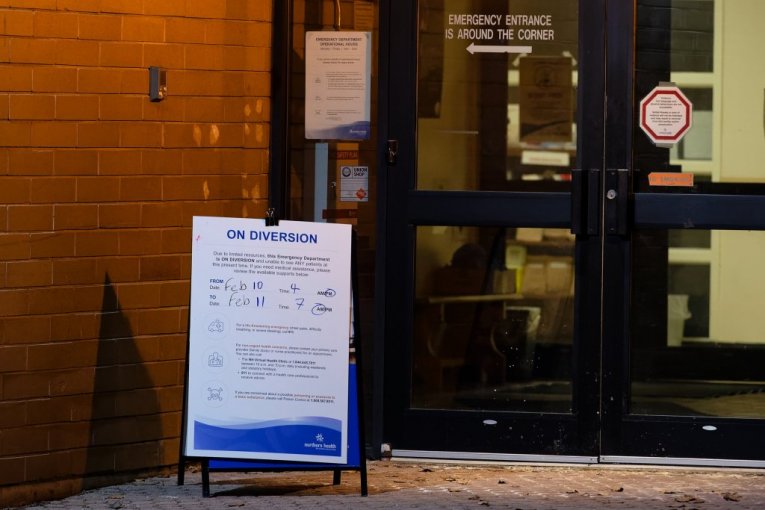
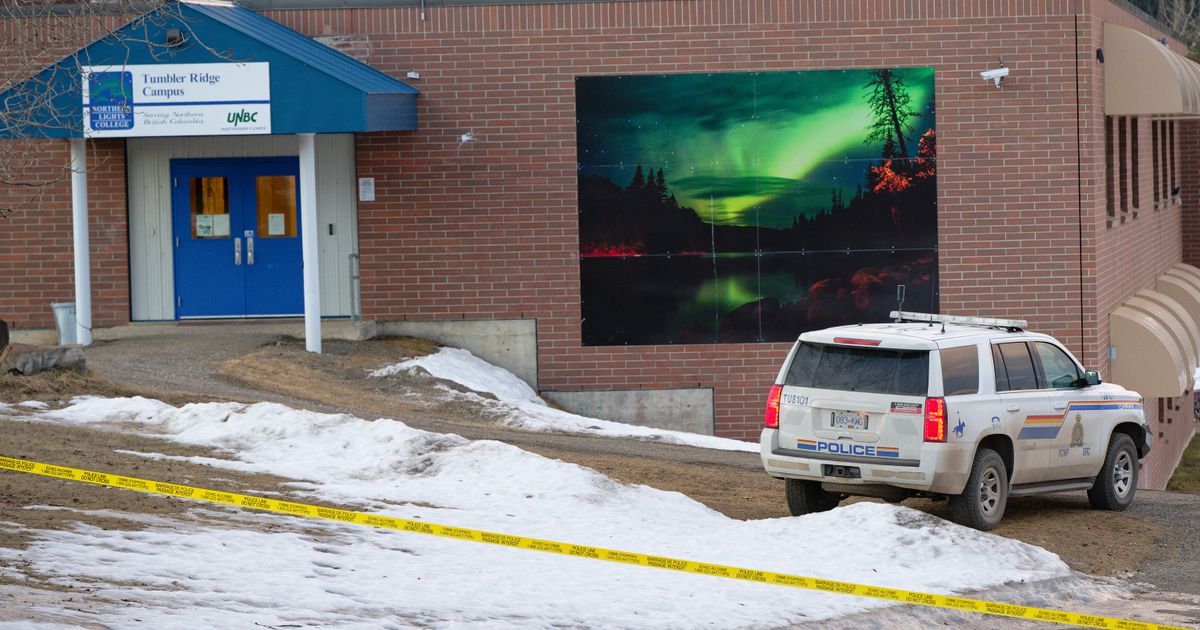
A mass shooting at Tumbler Ridge Secondary School in the small community of Tumbler Ridge, British Columbia, left multiple people dead and at least around two dozen injured, with reports converging on roughly 25 wounded and several in critical condition. Both opposition and pro-government sources agree the attacker was an 18-year-old named Jesse (variously rendered as Van Rutselar, Strang, or Streng), who died by suicide at or near the scene, and that the victims include a 39-year-old teacher and several 12- and 13-year-old students. Coverage on both sides also acknowledges additional bodies discovered at a nearby family residence tied to the shooter, indicating that close relatives were killed before or during the school attack, and that the incident ranks among the most serious school shootings in Canada in recent years. Despite discrepancies in precise fatality counts across outlets—ranging from eight to ten dead—there is broad agreement that this was a large-scale mass killing with children among the primary victims.
Across both opposition and pro-government reporting, there is shared emphasis on the shooter's prior mental health problems and earlier contact with authorities, including past interventions at the family home. Both sides note that firearms and licensing are under scrutiny, with references to an expired or unregistered firearms license and earlier police seizures of the attacker’s weapons. Media on both sides situate the event within wider debates about school security, mental health support for youth, and the capacity of Canadian institutions—police, social services, and schools—to detect and prevent escalating risk. There is also common acknowledgment that the motive remains officially undetermined, that investigations are ongoing into the attacker’s online activity and ideological exposure, and that the community is mobilizing support—from hospital care to fundraising campaigns—for the survivors and bereaved families.
Victim and casualty numbers. Opposition-aligned outlets generally report eight deaths, including the attacker, and emphasize “dozens” of injuries, often specifying more than 25 wounded, while pro-government outlets frequently cite nine or ten fatalities, in some cases adding more family members to the total. Opposition coverage tends to stress that two of the injured are in critical condition but avoids revising the death toll upward without official confirmation. Pro-government reports are quicker to frame the incident as an even larger catastrophe numerically, highlighting the higher counts as evidence of an exceptionally grave national tragedy.
Shooter identity and gender. Opposition sources identify the perpetrator primarily by name and age, occasionally with inconsistent surnames, but generally avoid foregrounding gender identity as a defining characteristic of the story. Pro-government outlets, by contrast, repeatedly stress that the attacker was “born male” and transgender, quoting police descriptions of a “brown-haired woman in a dress” and building headlines around this aspect. While opposition reports treat gender identity as incidental or omit it entirely, pro-government coverage links it directly to the narrative of the crime and to broader cultural and political debates.
Causes, motive, and ideology. Opposition coverage focuses on unknown motive, generalized mental health issues in the family, and systemic failures in support and oversight, with relatively cautious mention of possible online influences. Pro-government outlets more aggressively explore ideological and behavioral angles, highlighting alleged online radicalization, interest in white supremacist content, and long-standing psychological problems alongside the attacker’s transgender identity. Both refer to mental health, but opposition framing leans toward institutional neglect and policy shortcomings, while pro-government framing leans toward a mix of individual pathology, ideological extremism, and cultural factors.
Responsibility of authorities and policy implications. Opposition-aligned media underscore prior police interactions, expired firearms licensing, and earlier mental health complaints to argue that Canadian authorities and regulatory systems failed to act decisively, hinting at government accountability. Pro-government outlets acknowledge earlier police interventions and confiscated weapons but portray these as evidence that institutions tried to respond, emphasizing the limits of what authorities can do without clear legal grounds. Whereas opposition reporting tends to use the tragedy to question the adequacy of current gun control, mental health, and school safety policies, pro-government reporting more often frames it as an exceptional case that should not be used to broadly indict government policy, instead focusing on community grief and individual responsibility.
In summary, opposition coverage tends to frame the Tumbler Ridge shooting as a systemic failure of state institutions, downplaying the attacker’s gender identity and stressing mental health, gun regulation, and government accountability, while pro-government coverage tends to dramatize the event with higher casualty counts, emphasize the perpetrator’s transgender status and alleged radicalization, and present authorities as having acted within their limits amid an extreme and exceptional tragedy.