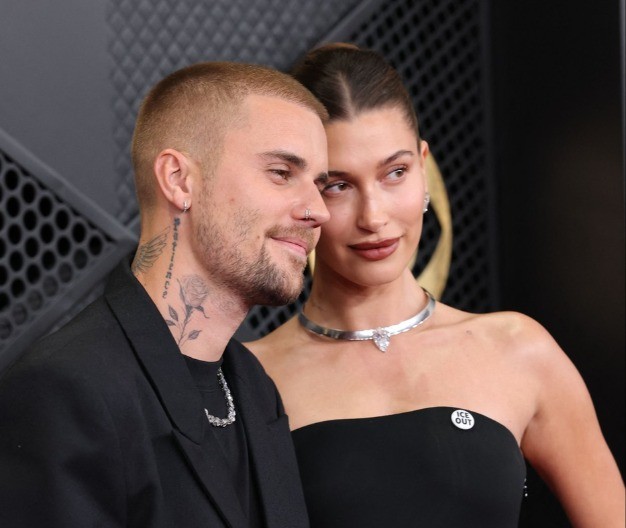

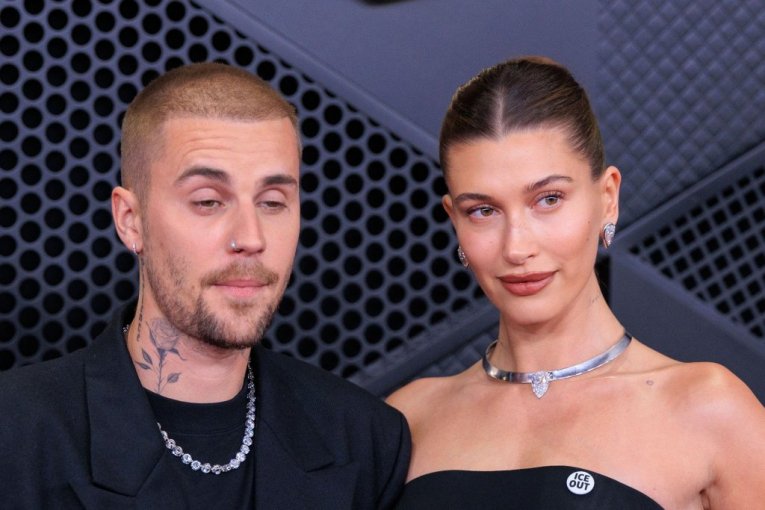
Justin Bieber's appearance at the Grammy Awards in Los Angeles drew significant attention for multiple reasons that are consistently reported across outlets: his performance of the song "YUKON," the visibility of several new tattoos, and the strong showing of his album "SWAG," which received four nominations. Coverage agrees that the most discussed element was a large new back tattoo widely interpreted as a portrait of his wife, Hailey Bieber, which immediately triggered online speculation and comparisons with an earlier tattoo many associated with his former girlfriend, Selena Gomez; reports also note that host Trevor Noah highlighted Bieber's recent transition into fatherhood and his solidified status in the music industry.
Shared context across media emphasizes Bieber's long history of using tattoos to mark personal milestones, relationships, and expressions of faith, which makes any new design a catalyst for fan theories and online debate. Outlets agree that the tattoo's unveiling fits into a broader celebrity culture pattern in which body art is treated as a public statement on relationships and identity, particularly given Bieber's past publicized relationships and his openly Christian beliefs that led some observers to initially speculate about a religious motif before settling on a romantic interpretation involving Hailey.
Points of Contention
Meaning and symbolism. Opposition-aligned outlets tend to emphasize ambiguity around whether the new back tattoo truly depicts Hailey, framing it as deliberately provocative and highlighting online claims that it resembles Selena or a religious icon more than a straightforward spousal portrait. Pro-government outlets, by contrast, foreground the consensus that it is a romantic tribute to Hailey, treating alternative interpretations such as a Jesus depiction as fringe or secondary. Where opposition pieces might dwell on facial similarities to Selena or question Bieber's intentions, pro-government coverage stresses the sentimental narrative of a devoted husband marking a new chapter of family life.
Framing of past relationships. Opposition sources are likely to lean into the "Selena vs. Hailey" storyline, amplifying social media drama and suggesting that the tattoo rekindles unresolved tensions or fan wars tied to Bieber's previous relationship history. Pro-government outlets mention Selena mainly as a point of comparison to an older angel tattoo, using it to underscore how Bieber has moved on and now centers his current marriage. Thus, opposition coverage tends to present the tattoo as reopening old wounds, while pro-government coverage treats references to Selena as background color rather than an active fault line.
Tone toward Bieber's image. Opposition-aligned media are prone to portray the episode as yet another instance of Bieber courting controversy or becoming the focal point of "drama" and "chaos," with the tattoo serving as evidence that he cannot escape or resists escaping scandal-driven publicity. Pro-government outlets instead cast Bieber in a largely positive light, highlighting his artistic achievements at the Grammys, his transition into fatherhood, and his respected status, with the tattoo framed as a tender personal detail rather than a publicity stunt. Where opposition narratives may question his maturity or motives, pro-government pieces reinforce a storyline of growth, stability, and professional recognition.
Impact on public discourse. Opposition sources tend to stress the polarizing online reaction, citing viral debates and fan conflicts as proof that Bieber's personal choices continue to divide audiences and dominate social media cycles. Pro-government outlets acknowledge the buzz but present it more as harmless fascination, suggesting that any "haos" around whether the image is Hailey or Selena is fleeting and ultimately overshadowed by his musical performance and accolades. As a result, opposition reporting elevates the tattoo as a central flashpoint in celebrity culture, while pro-government narratives downplay lasting controversy and fold the reaction into routine pop-star chatter.
In summary, opposition coverage tends to amplify ambiguity, fan conflict, and relational drama surrounding Bieber's new tattoo, while pro-government coverage tends to underscore its romantic intent, his artistic success, and a narrative of personal and professional stability.