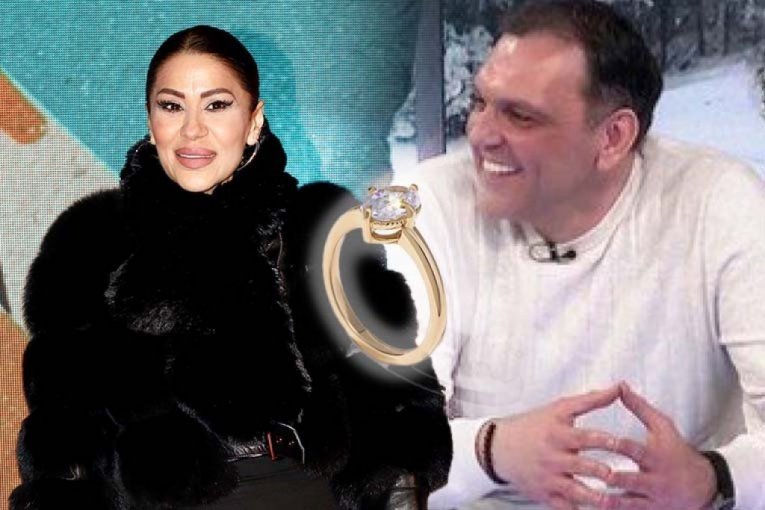

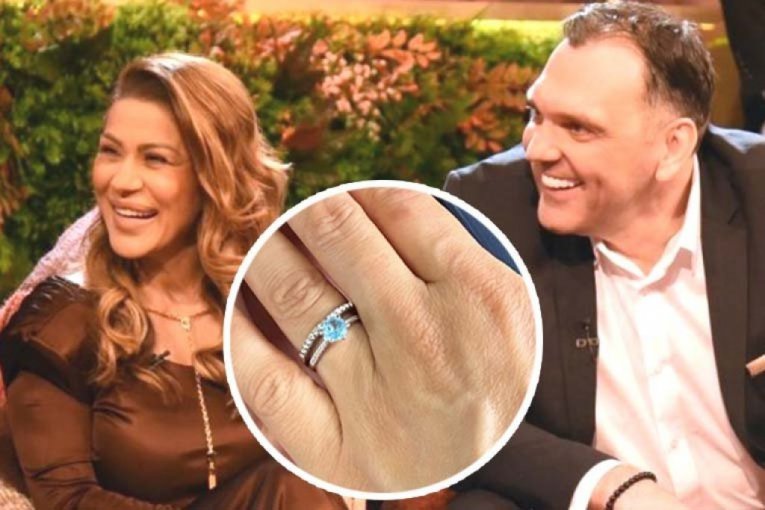
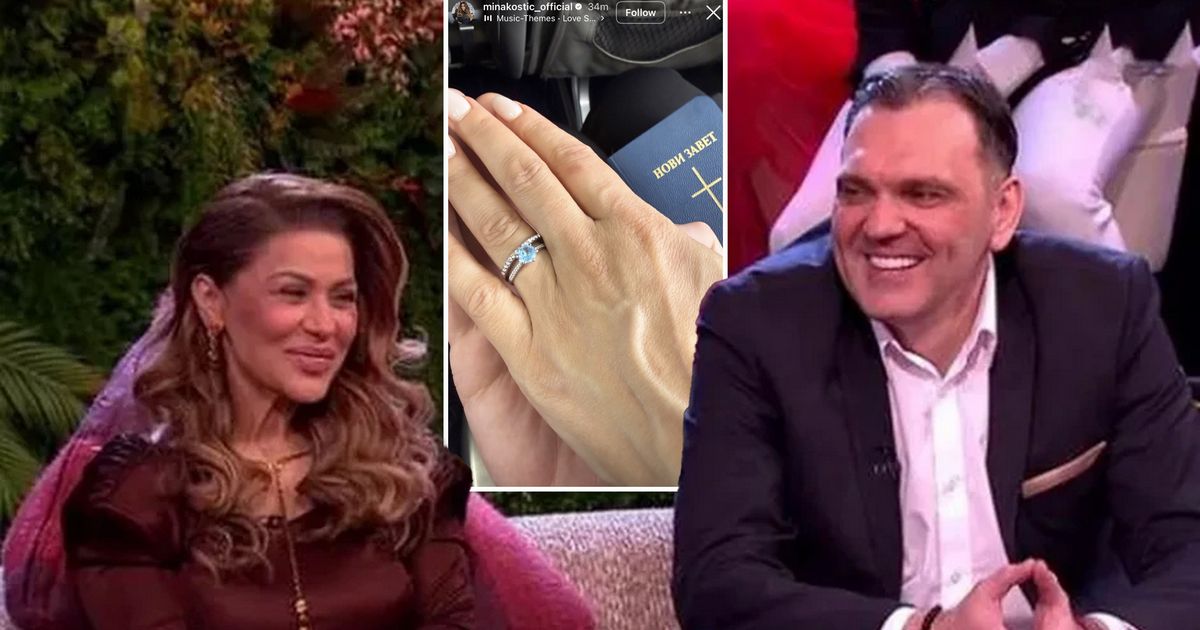
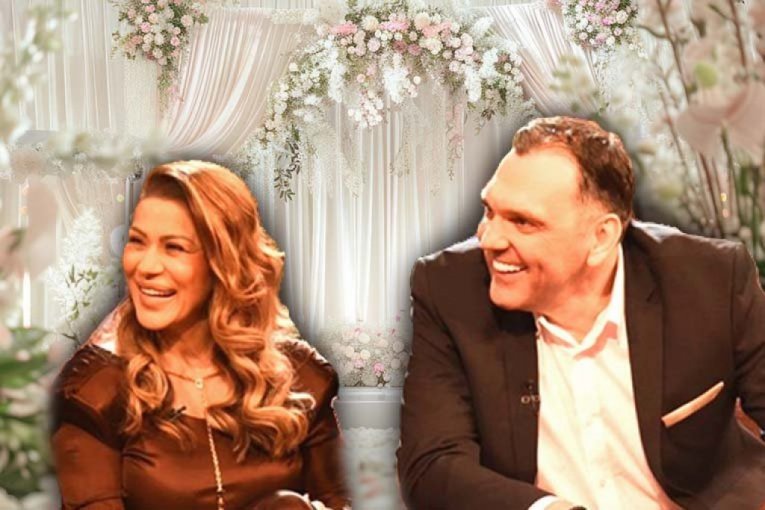
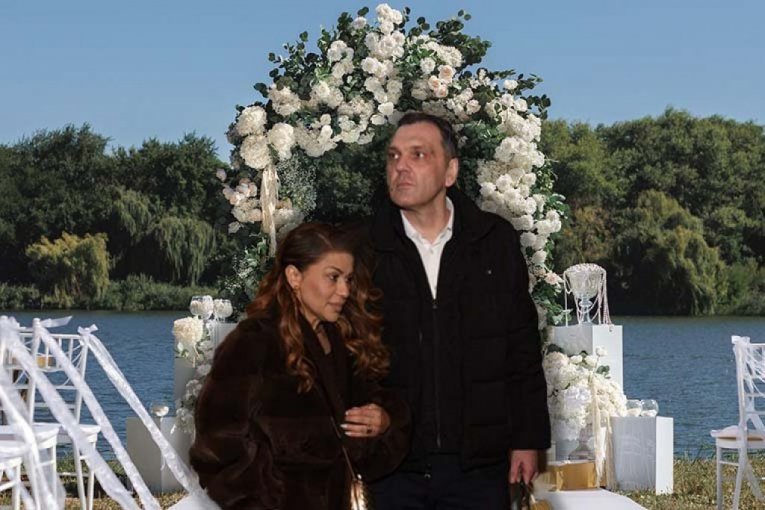
Singer Mina Kostić and her fiancé Mane Ćuruvija, known as Kasper, traveled to Skopje, North Macedonia, to appear on Bojan Jovanovski’s (Boki 13) television show, where they were married live on air. Coverage from both opposition-leaning and pro-government outlets agrees that this was a made-for-TV event featuring a surprise-style ceremony during the program, with manager Ritko Memedov acting as best man and officiant who formally declared them husband and wife. Reports consistently mention Mina publicly sharing photos from the trip, including shots from the airport, from Skopje, and of her engagement ring, and highlight that she is several years older than Kasper, with their relationship becoming intense and highly public since late December. Earlier stories across the spectrum referenced the modest initial engagement ring, subsequent high-value jewelry purchases, and Mina’s prior denials of secret marriage rumors before the live broadcast finally confirmed their union.
Across both opposition and pro-government outlets, the wedding is framed within a celebrity-entertainment context rather than as a political issue, with shared emphasis on the spectacle of a live TV ceremony, the involvement of Boki 13 as host, and the couple’s deliberately public handling of their romance on social media. Common background details include Mina’s status as a well-known folk/pop singer in Serbia, Kasper’s previous public responses to speculation about his identity and family, and the role of Balkan tabloid culture in amplifying every step of their relationship. Both sides underscore the cross-border media dimension, noting that the event took place on a Macedonian show yet is heavily consumed by Serbian audiences, and they treat jewelry prices, family reactions, and intimate disclosures as standard celebrity-gossip elements rather than points of factual dispute.
Points of Contention
Framing of the event. Opposition coverage tends to frame the live TV wedding as an example of sensationalist, lowbrow programming that reflects a broader degradation of public media space, implicitly criticizing the culture that elevates such stunts. Pro-government outlets, by contrast, mostly present the wedding as light entertainment and human-interest content, focusing on romance and glamour rather than on any perceived cultural decline. While opposition sources may hint that this kind of spectacle crowds out more serious issues, pro-government coverage treats it as harmless escapism that attracts viewers and boosts regional celebrity ties.
Role of media and state influence. Opposition-aligned media are more likely to suggest that the prominence of this story is a symptom of a media environment shaped by political influence and commercial pressures, where trivial celebrity events receive disproportionate attention. Pro-government outlets largely avoid linking the coverage volume to political control, portraying the story as organically popular due to Mina’s fan base and the novelty of a live televised wedding. Where opposition reporting may allude to blurred lines between entertainment, politics, and oligarch-linked broadcasters, pro-government pieces keep the focus narrowly on the show, the host, and the couple’s personal choices.
Moral and social tone. Opposition coverage is more prone to adopt a subtly critical or ironic tone about the overt intimacy, age-gap discussion, and the monetization of private life, framing it as a symptom of broader moral and social kitsch. Pro-government outlets usually adopt a celebratory or neutral tone, highlighting Mina’s happiness, Kasper’s generosity with expensive rings, and the brother’s reaction as family drama rather than moral controversy. Where opposition sources may question whether this sets dubious examples in public discourse, pro-government media emphasize individual freedom and the entertainment value for audiences.
Economic symbolism and lifestyle. Opposition-aligned outlets, when discussing ring prices and lavish elements, are more inclined to juxtapose such spending and ostentatious display with everyday economic hardship, hinting at an escapist bubble around celebrity culture. Pro-government coverage, however, treats the same details as aspirational lifestyle markers and standard tabloid fare, stressing Kasper’s willingness to “open his wallet” and framing the expensive jewelry as proof of devotion rather than a social provocation. Thus, the same financial details become either a critique of inequality and bad taste or a harmless part of showbiz storytelling, depending on the outlet.
In summary, opposition coverage tends to treat Mina Kostić’s live-on-air wedding as a symbol of media trivialization, moral kitsch, and distorted priorities in a politically influenced media system, while pro-government coverage tends to present it as a cheerful celebrity spectacle, focusing on romance, lifestyle, and cross-border entertainment without drawing wider systemic critiques.
Story coverage

pro-government
MINA KOSTIĆ SE UDALA U PROGRAMU UŽIVO!
Foto: e STOCK/Rajko Ristić,Studio Peace/Shutterstock
2 months ago