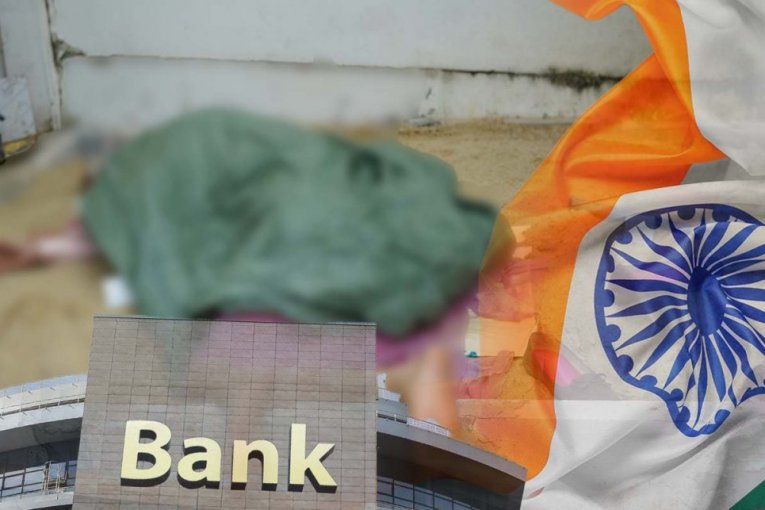
A widely reported incident in the eastern Indian state of Odisha describes an illiterate tribal man who exhumed his deceased sister’s skeleton, carried it in a sack, and brought it to a rural bank branch so he could access money she had deposited. Both opposition and pro-government outlets agree that bank staff had repeatedly insisted that the account holder must be physically present or that proper documentation was required, which the man, unable to navigate bureaucratic procedures, interpreted as needing to present his sister herself, leading to the macabre scene that prompted staff to call the police. They converge on the key facts that the sister had died months earlier, the man is considered the sole lawful heir to the funds, and that the shocking event was captured on video and circulated widely, drawing strong reactions from the public and authorities.
Across the spectrum, coverage notes that the case involves rural banking procedures, identity verification rules, and the requirement for a death certificate in order to release deposits from a deceased person’s account. Both sides emphasize the man’s illiteracy and tribal background as crucial context for his misunderstanding of the rules, and they mention that local police and district authorities intervened once the incident came to light. There is agreement that officials ultimately moved to help the man complete the necessary formalities so he could access the funds, and that the episode has triggered broader discussion about how banking regulations, documentation requirements, and limited financial literacy intersect in remote and marginalized communities.
Areas of disagreement
Framing of the incident. Opposition-leaning coverage tends to cast the episode as a disturbing symbol of systemic neglect, arguing that only a deeply alienating and insensitive state-banking apparatus could produce such a desperate act. Pro-government outlets instead frame it primarily as a bizarre and terrifying human-interest story, stressing the shock value of a man bringing a skeleton into a bank. While the opposition emphasizes the story’s structural causes and presents it as an indictment of governance, pro-government sources focus on the singular extremity of the event and the man’s personal misunderstanding.
Allocation of blame. Opposition sources typically portray the bank and, by extension, state institutions as culpable, highlighting rigid insistence on procedures and the failure to proactively guide an illiterate claimant through the process. They suggest that repeated demands for the sister’s presence or formal documents without effective support reflect bureaucratic cruelty. Pro-government coverage, by contrast, downplays institutional fault, depicting staff as merely following rules and shocked by an unforeseeable reaction, and framing the man’s act as an unfortunate consequence of his own misinterpretation of necessary safeguards.
Portrayal of the state’s response. In opposition narratives, official intervention after the incident is often described as reactive damage control prompted by viral outrage, with hints that authorities only moved to help once the spectacle became public. They question why no one within the system assisted earlier and suggest that the case exemplifies a pattern of indifference toward marginalized citizens. Pro-government reporting emphasizes that police and administrators quickly stepped in, presented this as proof of a responsive state, and highlighted ongoing efforts to facilitate the withdrawal and protect the man’s rights.
Systemic implications. Opposition-friendly outlets are inclined to link the incident to broader critiques of financial inclusion, arguing that government claims about accessible banking are undermined if beneficiaries cannot practically navigate procedures. They cite the man’s tribal status and illiteracy as evidence that reforms have not adequately addressed last-mile implementation or human-centered support. Pro-government sources, meanwhile, tend to isolate the case as an extreme anomaly, using it to affirm the importance of documentation rules rather than to question them, and implying that better individual awareness and local-level communication, rather than systemic overhaul, are the main lessons.
In summary, opposition coverage tends to treat the man’s desperate act as a systemic failure of governance and financial inclusion, while pro-government coverage tends to present it as a shocking but isolated misunderstanding that ultimately showcases the state’s willingness to step in and help.