
pro-government
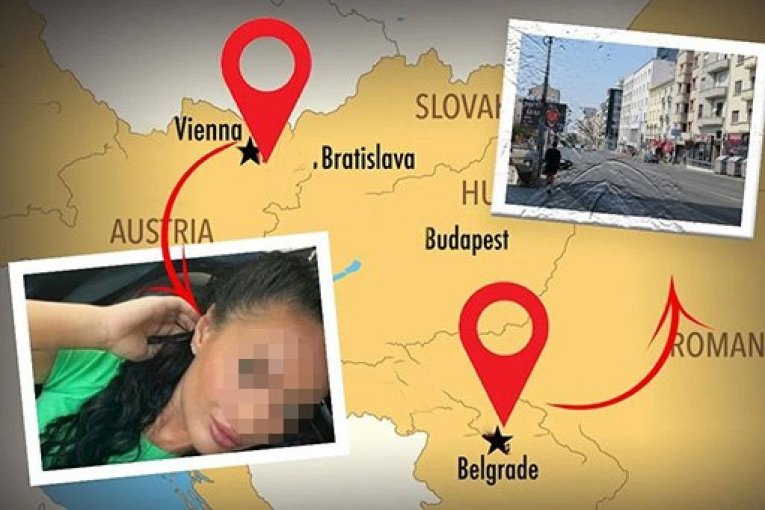
ANĐELA MIHAJLOVIĆ (23) MISSING IN BELGRADE "She tried to contact us from a bus driver's Instagram, she lives in Vienna"
Anđela Mihajlović (37) from Belgrade disappeared today around 8:25 AM at the Zeleni venac bus stop.
4 days ago
The case of missing woman Anđela Mihajlović centers on a 37‑year‑old Belgrade native who had arrived from Vienna and disappeared in Belgrade after being last seen around 8:25 a.m. near the Zeleni venac bus stop, reportedly without her phone, wallet, or other personal belongings after leaving a hotel. Across outlets, it is agreed that her car was later found in a public parking lot with a note on the dashboard reading that her passport was with an individual identified only as “M.,” and that several days after her disappearance she was located in Belgrade by two young women who recognized her walking barefoot on the street, after which her family picked her up and took her to the police.
Opposition and pro-government reports converge in describing the institutional setting: the police opened a missing person investigation, the public prosecutor was informed, and family members cooperated closely with authorities throughout the search. Both sides acknowledge that Anđela resides in Vienna but maintains ties to Belgrade, that her apparent disorientation and lack of documents complicated the search, and that her eventual discovery owed both to media-public alerts and formal investigative measures, highlighting a mix of institutional response and citizen vigilance rather than a clearly resolved underlying cause.
Framing of the incident. Opposition outlets tend to frame the disappearance as symptomatic of deeper problems in public safety and institutional reliability, suggesting that a woman can vanish in central Belgrade and remain missing for days despite surveillance and policing. Pro-government media instead present the case more as an unfortunate but individualized mystery, focusing on her personal circumstances, disorientation, and cross-border travel from Vienna while downplaying broader systemic implications. Where opposition sources might stress that such cases reflect a pattern of insecurity, pro-government reports highlight the eventual positive outcome and the fact that she was found alive and physically unharmed.
Portrayal of institutions. In opposition coverage, the police and other state bodies are often depicted as reactive, slow, or overly secretive, with questions raised about why it took days to locate someone wandering barefoot in urban areas and how information was communicated to the public. Pro-government outlets emphasize that police followed procedure, coordinated with the family, and treated the dashboard note as a significant lead, portraying the institutions as diligent and ultimately successful. Opposition narratives are more likely to cast the resolution as driven by ordinary citizens and social networks, while pro-government outlets highlight institutional competence aided by public cooperation.
Use of mystery and speculation. Opposition media, where they diverge, are more inclined to question the circumstances around the hotel departure, loss of belongings, and the cryptic note, situating them in a context of insufficient transparency from authorities and the possibility of foul play or coercion. Pro-government reports tend to dramatize the mystery in human-interest terms—drawing attention to the note, the barefoot sighting, and her behavior—without pressing hard on official explanations or suggesting institutional wrongdoing. Opposition sources more frequently invoke the unresolved aspects of who “M.” is and why her documents were withheld, while pro-government outlets largely treat these as elements of an ongoing investigation rather than grounds for public criticism.
Narrative of outcome. Opposition coverage, while acknowledging relief that she was found alive, often frames the resolution as partial, stressing unanswered questions, possible trauma, and the need for systemic reforms to prevent similar disappearances. Pro-government coverage underscores the fact that the search ended successfully, credits both citizens and police, and uses the outcome to reassure readers that institutions ultimately functioned as intended. Where opposition outlets emphasize lingering concerns and demand more detailed official communication, pro-government sources focus on closure, gratitude to those involved, and the message that the system works when citizens and authorities cooperate.
In summary, opposition coverage tends to use Anđela Mihajlović’s disappearance to question public safety and institutional performance, keeping attention on unresolved details and systemic issues, while pro-government coverage tends to present the case as an isolated, human-interest incident that ultimately confirms the effectiveness of police work and citizen vigilance.