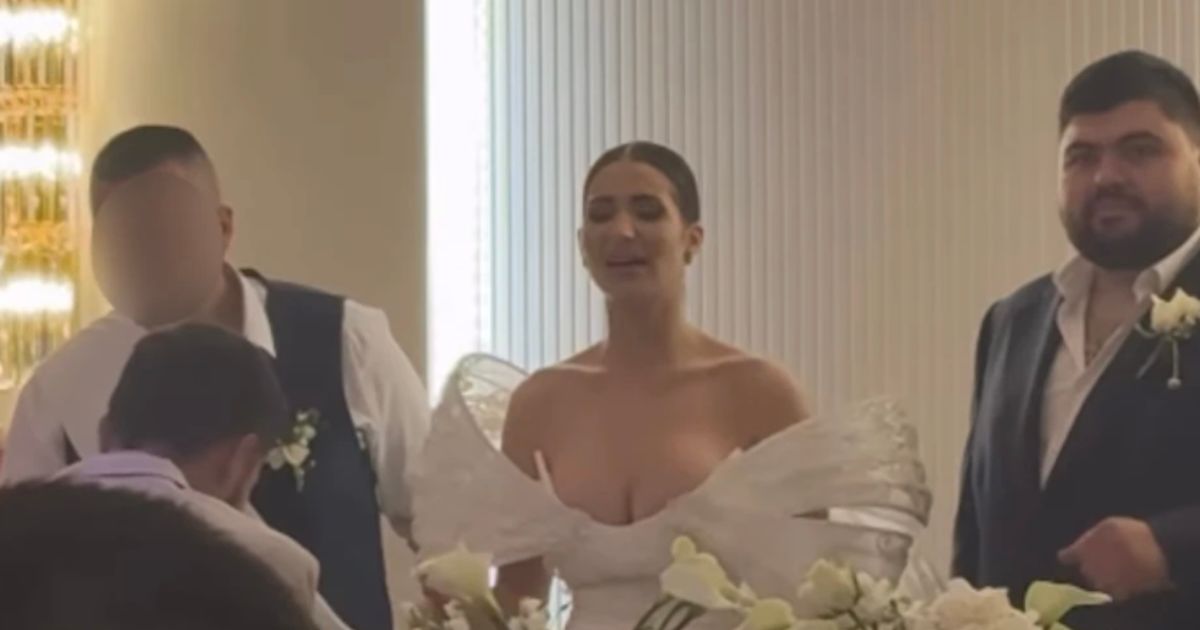
Singer Jelena Savić married her long-time partner in Belgrade at a lavish, gala-style celebration attended by numerous celebrities from the Serbian entertainment scene. Coverage notes that the event took place in a glamorously decorated venue, with Savić wearing a distinctive, luxurious wedding dress with a deep neckline that drew attention from guests and media alike, and with actress Dragana Mićalović among the most visible attendees.
Reports consistently emphasize the strong turnout of well-known figures from music, television, and film, framing the wedding as a high-society entertainment event rather than a private family ceremony. They highlight that the celebration was meticulously organized, with carefully designed decorations, a festive atmosphere, and moments from the wedding quickly shared and amplified on social networks, underscoring its cultural relevance within the local celebrity ecosystem.
Areas of disagreement
Tone and framing. Opposition-aligned outlets tend to describe the wedding, when they cover it at all, in a more restrained, factual tone, sometimes implying that such celebrity stories serve as distraction from political and economic problems. Pro-government outlets frame the event in overtly celebratory language, emphasizing glamour, happiness, and star power as a welcome escape from everyday concerns. While both sides accept the same basic facts of the ceremony, opposition sources are more likely to situate it within a saturated tabloid environment, whereas pro-government sources present it as a feel-good cultural highlight.
Political subtext and symbolism. Opposition media, in broader commentary on similar events, often suggest that high-profile weddings involving entertainment elites can signal the coziness between celebrity circles and power structures, even when no politician is present, and they may allude to this dynamic in passing. Pro-government outlets largely strip away any political or structural subtext, treating Jelena Savić’s wedding purely as lifestyle and entertainment news. Thus, opposition narratives tend to hint that such coverage normalizes a status quo elite culture, while pro-government narratives insist it is simply about celebrating love and success.
Emphasis on social media and spectacle. Opposition-leaning coverage is more likely to contextualize the heavy use of social media and viral wedding clips as part of a broader spectacle-driven media environment they often criticize. Pro-government outlets focus on the same viral images and videos as proof of the event’s popularity and the public’s appetite for positive stories, highlighting Dragana Mićalović’s emotional posts as a key draw. The former may stress overexposure and saturation, while the latter stresses reach and engagement.
Relevance to the public. Opposition sources, where they touch on such celebrity weddings, frequently question their newsworthiness compared with governance or economic issues, subtly suggesting that editorial priorities are skewed. Pro-government outlets justify the prominence given to Jelena Savić’s wedding by presenting it as aspirational, culturally significant, and reflective of a thriving entertainment sector. In this way, opposition narratives tend to downplay its public importance, while pro-government narratives position it as a natural and popular centerpiece of the news cycle.
In summary, opposition coverage tends to acknowledge the wedding as a notable showbiz event while questioning its broader significance and hinting at a culture of spectacle, while pro-government coverage tends to embrace the glamour, emotional imagery, and social media buzz as a welcome, apolitical celebration of celebrity life.