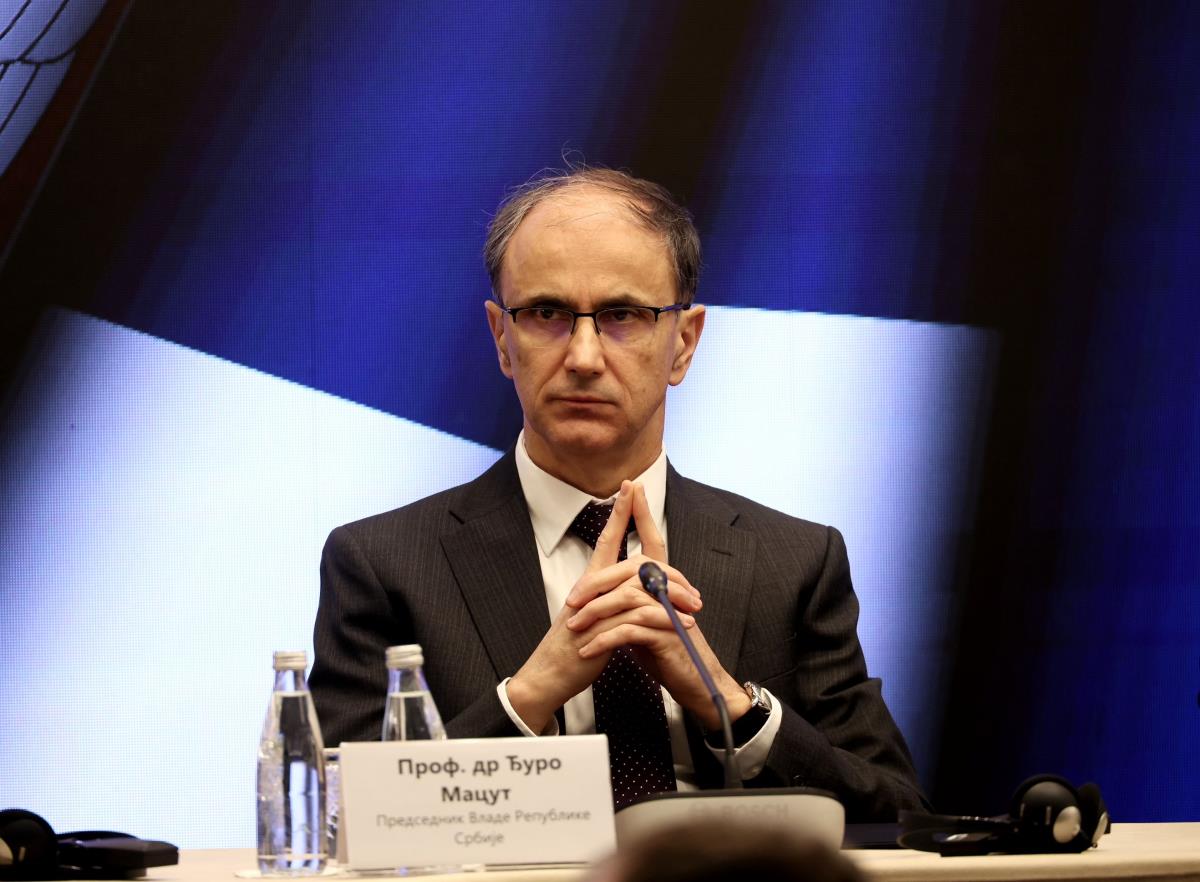
Prime Minister Prof. Djuro Macut of Serbia is scheduled to travel to the Republic of Turkey to lead the Serbian delegation at the fifth Antalya Diplomacy Forum, taking place in Antalya from April 17 to 19. The event is held under the patronage of Turkish President Recep Tayyip Erdoğan and will gather government officials, diplomats, and experts from various countries to discuss global challenges under the overarching theme "Mapping Tomorrow, Navigating Uncertainties" (or variants such as "Mapping the Future, Navigating Uncertainties").
Across outlets, the Antalya Diplomacy Forum is described as a recurring international platform for high-level dialogue on foreign policy, security, and economic cooperation, emphasizing structured panels and bilateral meetings among participating states. There is broad agreement that Serbia’s participation is part of its ongoing diplomatic engagement with Turkey and other regional and global actors, situated within a wider framework of multilateral diplomacy and forums that aim to address instability, shifting geopolitical alignments, and long-term strategic planning.
Areas of disagreement
Framing of Macut’s role. Opposition-aligned sources tend to depict Macut’s attendance as routine diplomatic choreography or as an attempt to bolster his personal and party image, sometimes questioning whether the trip advances concrete national interests. Pro-government outlets instead stress his leadership role, highlighting that he is heading the national delegation and portraying him as an active shaper of regional dialogue. While opposition media may minimize his visibility in the program or panel lineups, pro-government coverage amplifies his presence, projecting him as a sought-after interlocutor in Antalya.
Significance of the forum. Opposition outlets are more likely to portray the Antalya Diplomacy Forum as one of many conferences with limited tangible outcomes for Serbia, occasionally hinting that such gatherings serve more as public relations than policy-making venues. Pro-government media frame the forum as a major diplomatic event and an important opportunity for Serbia to influence debates on security, economics, and regional stability. They emphasize high-level hosting by the Turkish president and the global scope of participants, whereas opposition narratives may question whether this prestige translates into measurable benefits for Serbian citizens.
Foreign policy orientation. Opposition coverage often uses Macut’s appearance in Antalya to reopen debates about Serbia’s broader foreign policy balance between the European Union, Russia, and Turkey, sometimes warning that highly publicized ties with Ankara could be instrumentalized for domestic politics rather than anchored in a clear strategic doctrine. Pro-government sources present the visit as evidence of a multi-vector foreign policy that keeps Serbia open to all major partners, insisting that engagement with Turkey complements, rather than contradicts, other alliances and aspirations. Where opposition voices may scrutinize any signaling toward non-EU partners, pro-government reports frame such diversification as pragmatic and sovereignty-affirming.
Domestic political implications. Opposition outlets are prone to connect Macut’s participation to internal political controversies, suggesting that the government uses international stages to distract from domestic economic or governance issues and to secure external validation. Pro-government coverage, by contrast, either downplays domestic disputes or casts them as secondary to Serbia’s growing diplomatic stature, arguing that appearances at forums like Antalya reinforce stability and investor confidence. Thus, while one side sees the trip through the lens of internal accountability and political optics, the other presents it as a neutral or positive function of statecraft above everyday partisan conflict.
In summary, opposition coverage tends to downplay the uniqueness and domestic payoff of Macut’s appearance at the Antalya Diplomacy Forum and tie it to broader critiques of government priorities, while pro-government coverage tends to elevate the event’s prestige, spotlight Macut’s leadership role, and fold the visit into a narrative of successful, multi-directional Serbian diplomacy.