pro-government
Famous Actor from 'Walter Defends Sarajevo' Dies
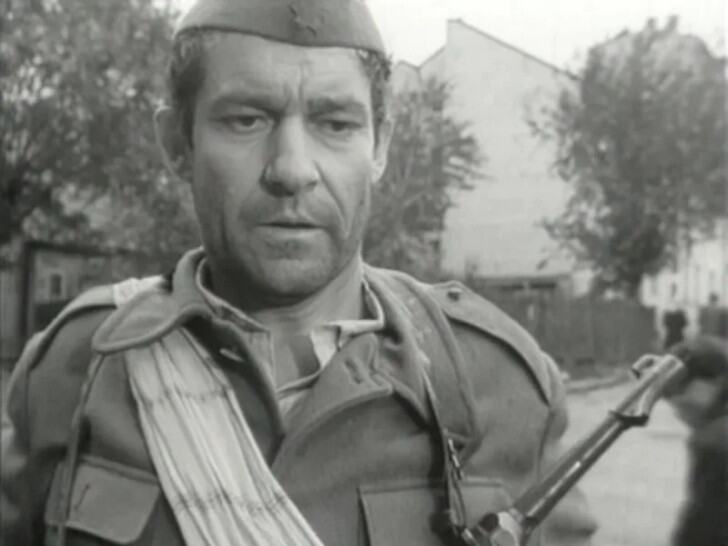
Husein Čokić, the oldest Bosnian-Herzegovinian actor, passed away yesterday, April 14, at the age of 96 in Pula, leaving behind a rich and significant artistic career.
23 days ago
Husein Čokić, a Yugoslav and Bosnian-Herzegovinian actor best known for his role in the film “Walter Defends Sarajevo,” has died in Pula at an advanced age, with pro-government outlets variously citing 95 and 96. Both sides, where they cover the story, agree he was regarded as the oldest Bosnian or Bosnian-Herzegovinian actor and that his professional career began in 1953, spanning theatre, film, and television across the former Yugoslavia. They concur that he appeared in 28 feature films, took part in numerous television projects, and became widely recognized for his contribution to Yugoslav cinema and culture. Coverage also aligns in describing his death as a moment of mourning for audiences across the former Yugoslav space, emphasizing that he remained active and respected well into his later years.
Shared context in both opposition and pro-government narratives highlights Čokić as a bridge figure within the cultural life of socialist and post-socialist Yugoslav successor states, frequently tied to landmark works like “Walter Defends Sarajevo.” Outlets agree that he was instrumental, alongside contemporaries such as Bekim Fehmiu, in opening paths for Yugoslav actors into international productions, underlining his status not just as a domestic star but as a regional pioneer. They also cite his monodrama “The Defense and Death of Socrates” as a key artistic achievement that showcased his range beyond screen roles. Across the spectrum, his career is framed within the broader institutional history of Yugoslav film and theatre, presenting him as a product and emblem of that era’s cultural infrastructure.
Framing of his legacy. Opposition-aligned sources, where they cover the story, tend to emphasize Čokić as an artist whose work outlived the political regimes under which he performed, underscoring his personal artistry over state-linked cultural narratives. Pro-government outlets, by contrast, more explicitly link his legacy to the cultural canon of Yugoslavia and today’s state-supported remembrance, presenting him as a national and regional symbol whose fame reflects positively on current cultural institutions.
National and regional identity. Opposition outlets are more likely to stress his Bosnian-Herzegovinian identity and the plural, multiethnic Yugoslav context of his career, framing him as belonging to a shared regional heritage rather than to any single contemporary nation-state. Pro-government media tend to center their own national audience and often present him as part of a broader patriotic cultural tradition, using phrases like “the entire former Yugoslavia in mourning” in a way that still orients the narrative toward their domestic national community.
Tone and emotional register. Opposition coverage generally adopts a more restrained, obituary-style tone, focusing on factual biography and artistic milestones with limited sensational language. Pro-government outlets employ highly emotive headlines and language, stressing collective grief and the iconic status of his “cult films,” thereby transforming the death notice into a larger emotional and patriotic event.
Use of political and historical subtext. Opposition sources, when they mention the socialist Yugoslav era, often do so neutrally or as a backdrop to highlight artistic freedom and cross-border collaboration, without attributing particular credit to present-day governments. Pro-government coverage more readily folds references to Yugoslav film history into a narrative of continuity with current cultural policy, subtly suggesting that honoring figures like Čokić reflects the state’s ongoing guardianship of national heritage.
In summary, opposition coverage tends to treat Čokić primarily as an artist rooted in a shared Yugoslav and Bosnian-Herzegovinian cultural space with relatively muted political framing, while pro-government coverage tends to cast him as a national icon whose passing validates and reinforces state-centered narratives of heritage, unity, and collective mourning.