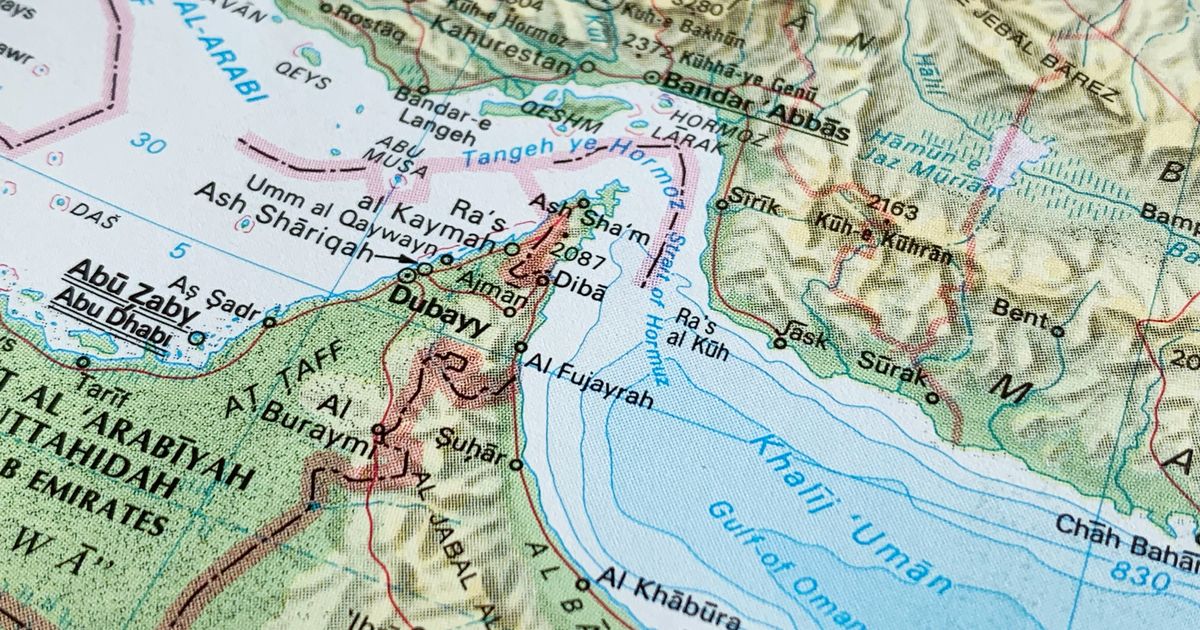
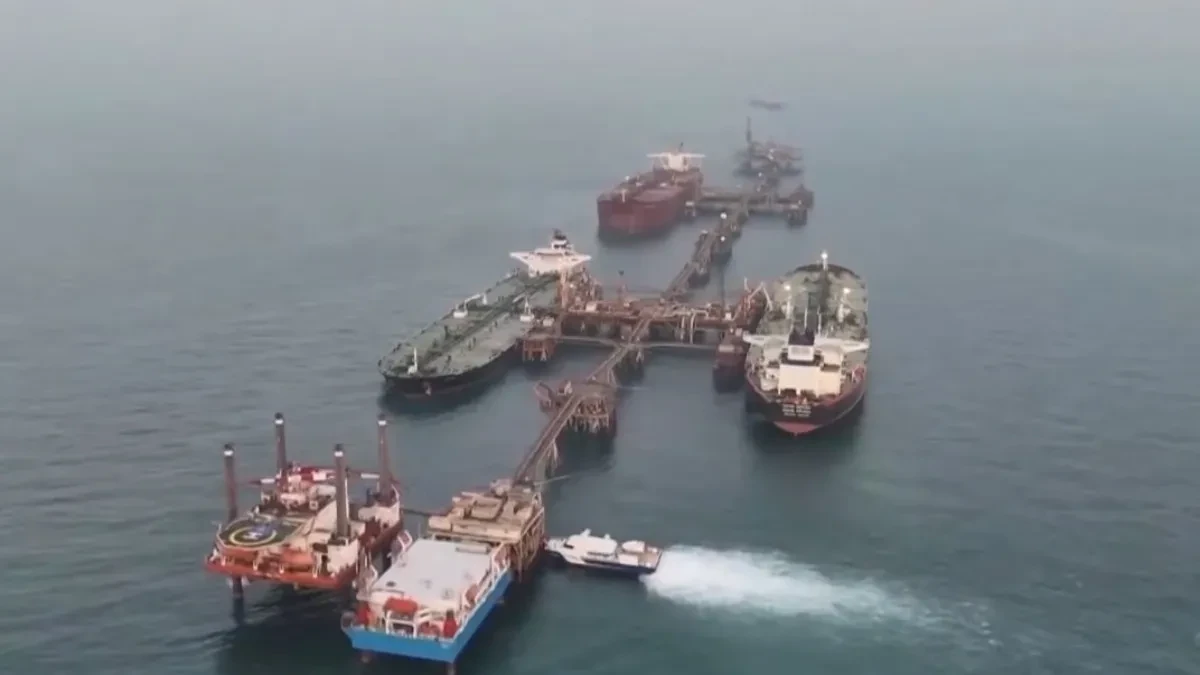
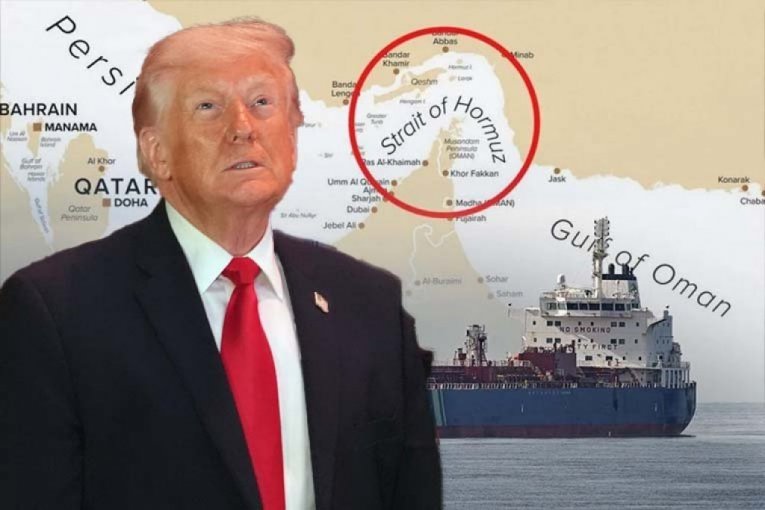
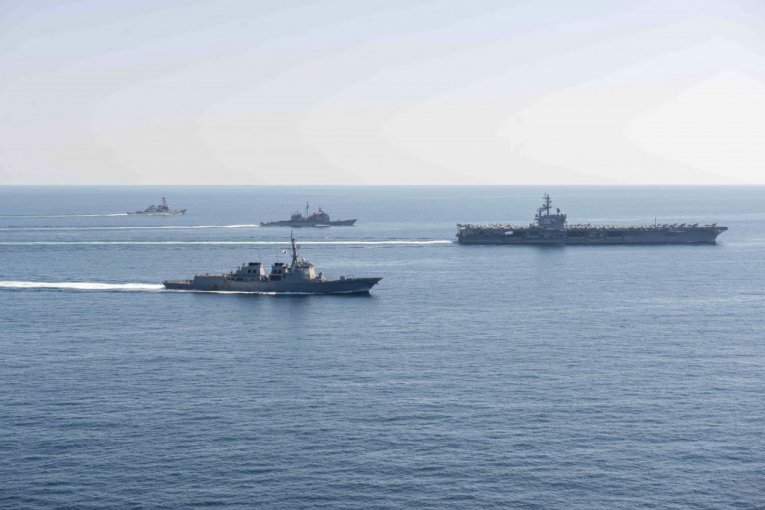
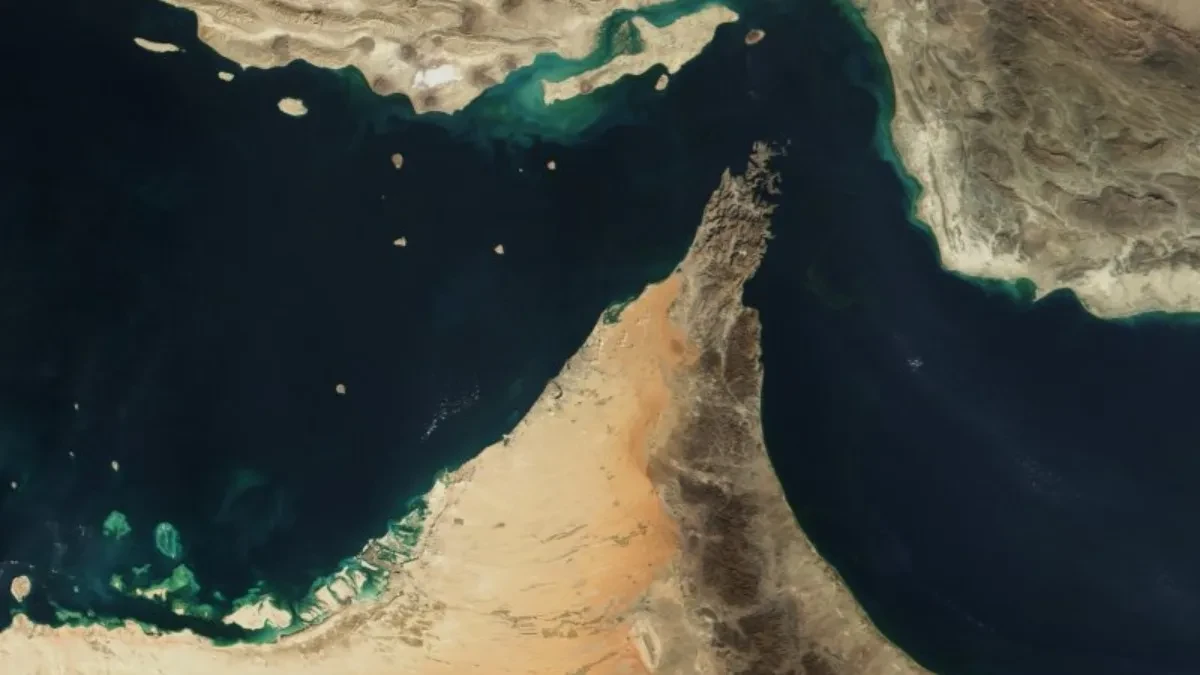
US and regional outlets across the spectrum agree that Washington has announced and begun enforcing a naval blockade focused on Iranian ports and traffic around the Strait of Hormuz, with US Central Command and senior naval officers providing the main official statements. Reported facts common to both narratives include multiple interceptions or turn-backs of Iran-linked or Iran-bound commercial vessels, including a specific Iranian-flagged cargo ship intercepted after leaving Bandar Abbas and redirected by the destroyer USS Spruance, and the claim that in the first 48 hours, roughly nine to ten ships were turned back toward Iran under a threat of force that includes air support from the carrier Abraham Lincoln. Both sides also acknowledge that US leaders, including President Trump, have issued explicit threats against ships approaching the blockade, that Iranian commanders have vowed retaliatory measures in the Persian Gulf, Gulf of Oman, and Red Sea if the blockade persists, and that vessel-tracking firms and maritime monitoring sites are being cited to assess whether ships are actually transiting the Strait of Hormuz despite US statements.
Across coverage, there is shared context that the blockade comes against a backdrop of heightened confrontation between the US and Iran, including recent clashes linked to the Israel–Iran conflict and longstanding tensions over sanctions, nuclear programs, and freedom of navigation in the Gulf. Both opposition and pro-government sources frame the Strait of Hormuz as a critical chokepoint for global energy supplies and acknowledge that any sustained disruption there could have far-reaching economic and security consequences, drawing on prior crises in the waterway as a reference point. They also agree that US Central Command is the primary institutional actor implementing the operation and issuing official data on ship movements, while Iranian military and political figures respond with counterthreats. Finally, both sides note the role of commercial shipping companies, third-country flags, and global tracking technologies in complicating the clean enforcement of any blockade, highlighting the mix of direct naval power and informational battles over whose account of traffic flows is accurate.
Areas of disagreement
Effectiveness of the blockade. Opposition-aligned coverage emphasizes reports from maritime tracking firms and independent monitoring websites suggesting that more than 20 commercial ships have sailed through the Strait of Hormuz within a 24-hour window, arguing this shows the US blockade is porous or failing. Pro-government outlets, by contrast, foreground Pentagon and Centcom claims that nine to thirteen ships have been successfully intercepted or turned back, insisting that no vessel has definitively broken the declared cordon around Iranian ports. Where opposition sources underscore each reported transit as evidence of US overstatement, pro-government narratives highlight each interdiction as proof the operation is fully implemented and commercially decisive.
Credibility of official claims and data. Opposition reporting tends to cast US military communiqués as selectively framed or misleading, contrasting initial statements that no ship had crossed the blockade with later evidence of Iranian and Iran-linked vessels exiting the region. Pro-government outlets largely treat Centcom briefings and named US commanders as authoritative, presenting ship counts, timelines, and descriptions of “successful diversion” as reliable metrics of progress. While opposition voices elevate third-party shipping data and anonymous maritime experts to challenge official tallies, pro-government sources either downplay these alternative datasets or question their completeness relative to classified US surveillance.
Strategic framing and responsibility. Opposition media often depict the blockade as an escalatory and potentially illegal use of force by Washington, stressing that Trump’s threats to destroy Iranian ships risk provoking a wider regional conflict and inviting Iranian retaliation across multiple waterways. Pro-government coverage instead frames the operation as a necessary show of strength and deterrence against Iranian behavior, portraying US naval actions as defensive, measured, and backed by demonstrations of overwhelming power from destroyers and carrier-based aircraft. In this telling, opposition concerns about escalation are reframed as undermining US resolve, while responsibility for any broader crisis is placed squarely on Iranian commanders who vow to close key maritime corridors.
Impact on regional commerce and global markets. Opposition outlets highlight the continued movement of some Iran-related shipping as evidence that global trade actors are unwilling or unable to fully comply with US pressure, warning that partial enforcement combined with uncertainty is already roiling energy markets and insurance costs. Pro-government coverage, on the other hand, stresses claims that commercial traffic has been “completely halted” in and out of Iranian ports, suggesting that decisive enforcement will quickly coerce compliance and stabilize expectations in favor of US strategic goals. Where opposition commentary warns of long-term damage to global supply chains and the risk of tit-for-tat disruptions by Iran in the Gulf of Oman and Red Sea, pro-government narratives suggest that short-term disruption is a necessary price for reasserting freedom of navigation under US terms.
In summary, opposition coverage tends to question US claims of total control, stress evidence of ships still transiting Hormuz, and warn that the blockade is escalatory and economically risky, while pro-government coverage tends to treat Centcom data as authoritative, portray the blockade as effective and strategically necessary, and frame disruptions as a justified tool to pressure Iran.