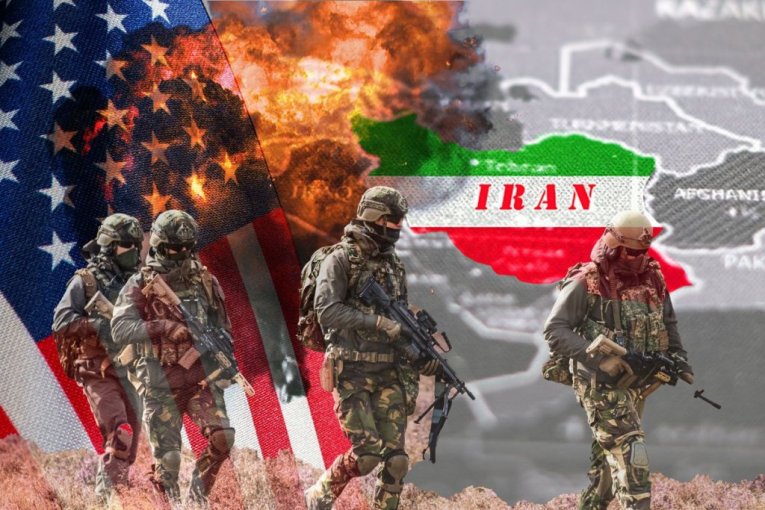
Iran’s Revolutionary Guard Corps has publicly claimed responsibility for a new series of large-scale missile and drone strikes, described in various reports as phases or waves of the “True Promise” or “Rightful Promise” operation, targeting United States and Israeli military-linked sites. Across both pro-government and opposition-aligned descriptions, there is agreement that the attacks involved coordinated salvos of ballistic and cruise missiles as well as explosive drones fired from Iran toward multiple locations in the region, including Israel and US-linked facilities in Gulf states such as the UAE, Bahrain, Kuwait, and Saudi Arabia, with Iran framing the action as a significant escalation. All sides concur that these operations are being announced by the Revolutionary Guard as direct strikes on US and Israeli bases, that they are claimed to have hit military infrastructure and industrial or weapons-related sites, and that Iran has officially tied them to the broader confrontation with Washington and Tel Aviv.
Shared context across both camps highlights the central role of the Revolutionary Guard as a key military and political institution in Iran and as the main executor of Iran’s regional deterrence strategy against the United States and Israel. Coverage broadly agrees that Tehran presents the operation as retaliation for earlier attacks or pressure on Iranian assets and allies, in line with a long-running cycle of tit-for-tat actions in the Middle East. Both perspectives situate the strikes within Iran’s stated doctrine of forward defense, its growing missile and drone capabilities, and the wider geopolitical struggle over influence in the Persian Gulf and the Levant, noting that these operations are meant both to signal military strength and to shape future bargaining and deterrence dynamics with Washington and its regional partners.
Areas of disagreement
Scale and effectiveness of the strikes. Pro-government outlets portray the operation as a sweeping and highly successful campaign, emphasizing claims of destroyed bases, hit weapon factories, and heavy casualties, including specific figures such as dozens of American officers allegedly killed and even serious damage to a major US aircraft carrier. Opposition sources, by contrast, tend to question these battlefield achievements, describing Iranian claims as exaggerated or unverifiable and highlighting the lack of independent confirmation of large-scale destruction. They more often stress that US and Israeli officials report limited damage and successful interception of many projectiles, casting doubt on the transformative military impact.
Casualties and damage reporting. Pro-government media repeat detailed casualty and damage numbers provided by the Revolutionary Guard, treating them as evidence of Iranian precision and deterrent power against US and Israeli forces and bases in the Gulf. Opposition coverage is much more skeptical of these figures, frequently noting that international and Western sources do not corroborate the claimed death tolls or the reported destruction of secret centers and major facilities. In some opposition narratives, the emphasis is on the opacity of casualty data and the use of inflated numbers for domestic propaganda rather than reliable situational reporting.
Strategic framing and justification. Pro-government narratives frame the attacks as a legitimate and necessary response to prior aggression by the US and Israel, casting Iran as acting defensively to uphold sovereignty, protect regional allies, and restore deterrence through calibrated retaliation. Opposition-aligned outlets are more likely to question the wisdom and legality of the escalation, arguing that such operations risk dragging Iran into a broader, potentially uncontrollable conflict and serve leadership interests more than public welfare. They tend to highlight potential international backlash and sanctions, whereas pro-government coverage stresses deterrence success and national pride.
Domestic political implications. Pro-government media present the operation as a unifying national achievement, reinforcing the Revolutionary Guard’s image as protector of the nation and showcasing technological and operational prowess to bolster regime legitimacy. Opposition sources, in contrast, highlight domestic costs and vulnerabilities, arguing that high-profile external attacks may invite retaliatory strikes on Iranian territory and deepen economic and diplomatic isolation at a time of public discontent. They often depict the Guards’ actions as driven by internal power consolidation and ideological agendas, rather than by the broader interests of Iranian society.
In summary, opposition coverage tends to cast doubt on the scale, success, and strategic wisdom of the Revolutionary Guard’s claimed attacks and stresses the risks and domestic costs of escalation, while pro-government coverage tends to present the operations as highly effective, justified acts of deterrence that showcase Iranian strength, inflict major damage on US and Israeli assets, and reinforce the regime’s legitimacy.