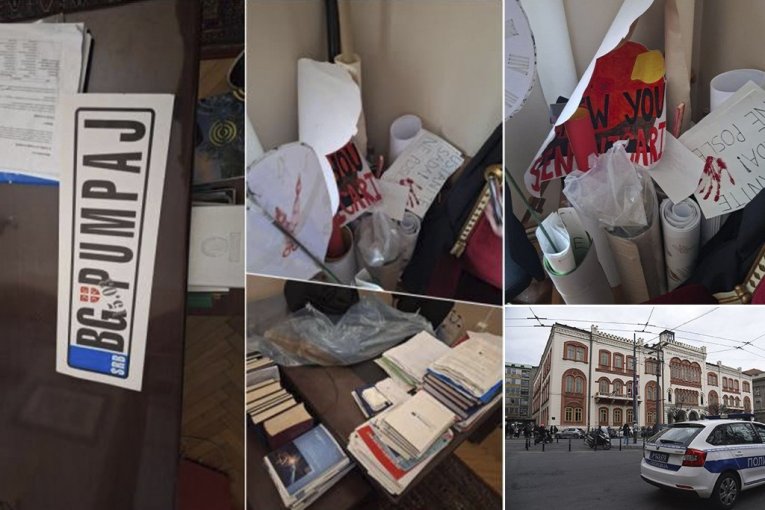
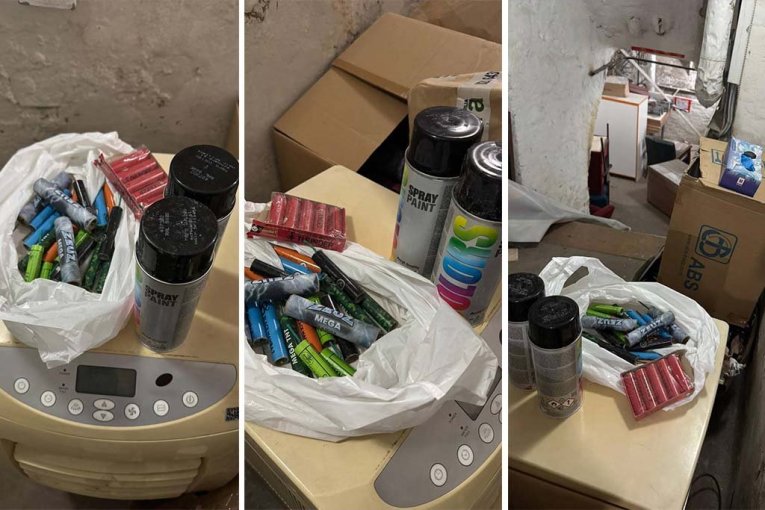
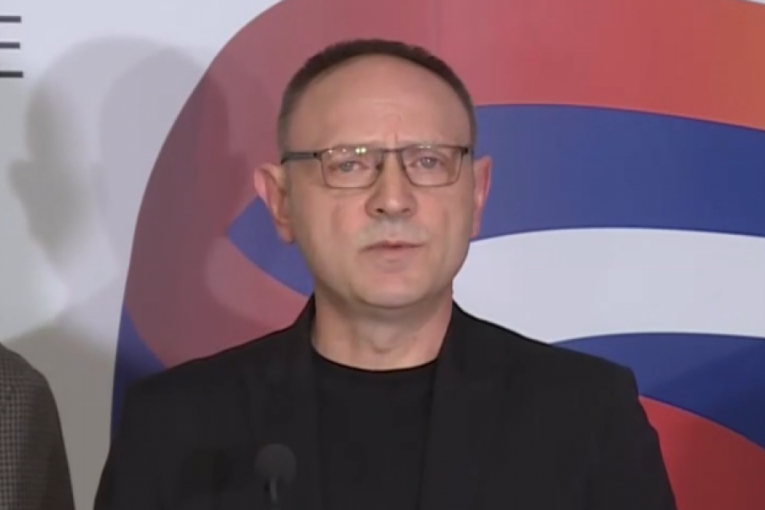
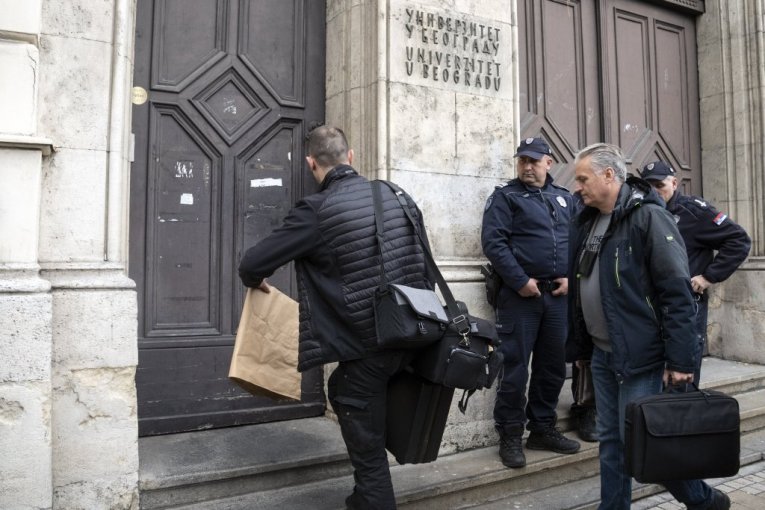
Police and criminal investigators, acting on orders from the Higher Public Prosecutor’s Office and a court warrant, conducted a hours-long search of the University of Belgrade Rectorate as part of an investigation linked to the recent death of a student from the Faculty of Philosophy and related protest events near the building. Both opposition and pro-government outlets agree that more than 30 officers participated, that prosecutors were present, and that a large quantity of items was seized, including pyrotechnics such as firecrackers or cannon firecrackers, sprays, gas masks or military-style protective masks, walkie-talkies or surveillance-related equipment, various banners, flyers, and other materials associated with student or protest activities. Both sides report that the Rector, Vladan Đokić, was on the scene, that at least one search report was presented to him, that he did not sign one of the records, and that servers and documentation related to student and university activities were confiscated for forensic analysis. They also converge on the fact that, during or around the search, there were tense confrontations and physical scuffles between police and demonstrators or blockaders outside the Rectorate, after which senior police officials publicly stated that the police used minimal force and warned that any attack on officers would be prosecuted.
Opposition and pro-government sources both situate the search within a broader institutional and political context involving the University of Belgrade, the Higher Public Prosecutor’s Office, the criminal police (especially the Anti-Corruption or Criminal Police Directorate), and the judiciary, especially the investigating judge who signed multiple warrants. They agree that the starting point is the fatal incident involving a Philosophy Faculty student, which raised questions about campus security and the conduct of both university leadership and state bodies. Both sides describe the Rectorate as a focal point of recent student-led blockades and protests, tying the seized materials to that protest wave, and they acknowledge that the investigation now spans both the circumstances of the student’s death and possible irregularities or abuses connected to protest organization and university governance. There is shared recognition that the affair has escalated tensions between state authorities and university leadership, has drawn in foreign diplomatic actors through the Rector’s contacts, and has become intertwined with the political climate surrounding recent or upcoming elections.
Areas of disagreement
Nature and meaning of the seized items. Opposition-aligned outlets portray the pyrotechnics, banners, medical supplies, and related protest paraphernalia as largely benign materials typical of mass demonstrations and student activism, stressing that nothing clearly criminal was found and that the haul does not justify the scale of the raid. They emphasize statements from the Rector’s lawyer that there is no basis for criminal charges and that the operation was “overdimensioned.” Pro-government media, by contrast, frame the same items as “illegal” and ominous, describing cannon firecrackers, gas masks, walkie-talkies, and “guerrilla equipment” as tools for orchestrated street unrest rather than legitimate protest. They often link the materials to radical movements and suggest the Rectorate functioned as a logistical base for potentially violent actions.
Legitimacy and purpose of the investigation. Opposition coverage casts the search as a politically motivated expansion of the investigation, claiming that prosecutors and specialized police units are exploiting the student’s death to attack the University of Belgrade and pressure its leadership. These outlets highlight alleged procedural irregularities, such as how key items were “discovered,” and point to personal ties between prosecutors, the chief prosecutor, and the investigating judge as evidence of a coordinated campaign. Pro-government outlets insist the search is a lawful, necessary response to a tragic incident and a broader threat to public order, repeatedly stressing that it is conducted under judicial orders and prosecutorial supervision. They present the police as simply “doing their job” in clarifying the death and preventing further violence, and depict criticism of the investigation as propaganda aimed at delegitimizing state institutions.
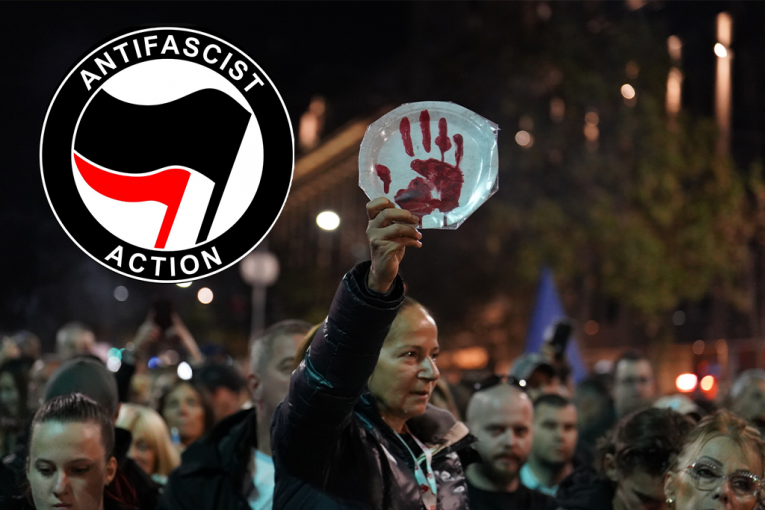
Portrayal of actors: university, protesters, and security forces. Opposition media describe the Rector and university leadership as targets of pressure and intimidation, and portray students and blockaders primarily as civic actors protesting government abuses, with medical equipment and banners underscoring peaceful intent. In this narrative, police and certain prosecutors are “contractors of dirty work” for the ruling party, and the university space is being criminalized to stifle dissent. Pro-government coverage reverses this framing, presenting parts of the protest movement and groups around the Rectorate as radicalized, sometimes linking them to “Antifa” or anti-Serbian projects allegedly backed from abroad, and questioning whether there are genuine students among the organizers. In their accounts, police are professional and restrained, using minimal force in the face of attacks, while the Rector and his allies are accused of abusing academic functions for pre-election political campaigns.
Political timing and broader agenda. Opposition outlets argue that the synchronized corruption angle, the seizure of servers and documentation, and the involvement of particular prosecutors indicate an attempt to manufacture scandals around the university at a politically sensitive moment, especially in the wake of local elections. They suggest that authorities seek to punish the university for its autonomy and for tolerating or supporting political criticism, turning a campus tragedy into a pretext for wider repression. Pro-government media, however, maintain that the timing reflects investigative needs and the urgency of preventing further incidents, with officials like the education minister framing the discovery of riot-related equipment as evidence of plans to incite panic and challenge election outcomes through street pressure. They depict the Rector’s foreign contacts and diplomatic meetings as suspicious political maneuvering, not as ordinary academic or institutional outreach.
In summary, opposition coverage tends to depict the Rectorate search as an overblown, politically driven operation that weaponizes a student’s death to intimidate the university and criminalize protest, while pro-government coverage tends to present it as a justified, legally grounded response that exposed dangerous radical networks misusing academic space to foment unrest and attack the police.