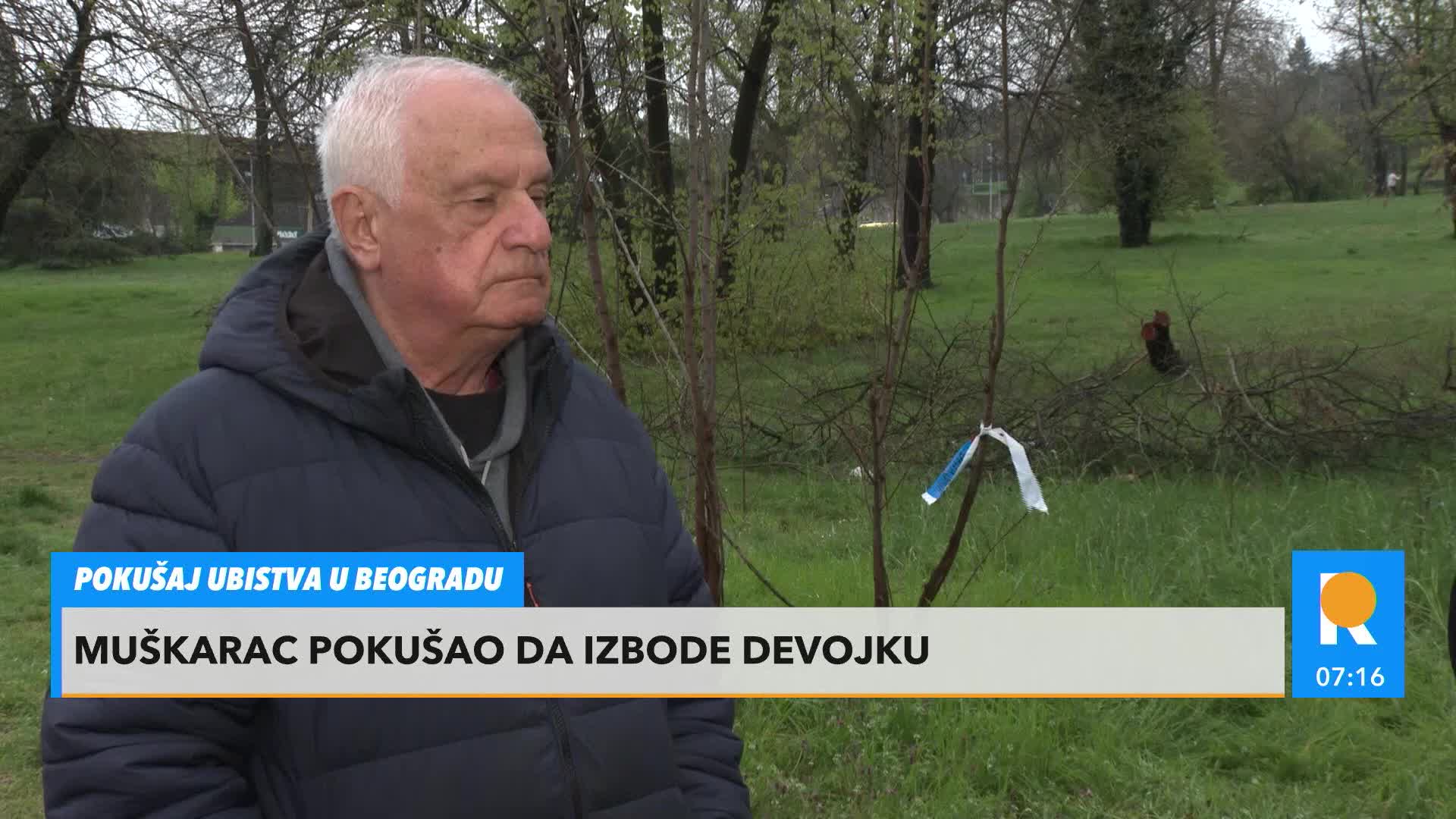
Police and both opposition and pro-government outlets agree that a man was arrested in Belgrade on suspicion of stabbing a 47-year-old woman with a sharp object in Humska Street, in the Savski venac area. The incident occurred at night, the victim suffered severe and potentially life‑threatening injuries, and the suspect was quickly located and detained by the police. Both sides report that he has been placed in custody for up to 48 hours pending further investigative procedures and a decision by the prosecution on formal charges, typically framed as attempted murder.
Coverage also converges on basic institutional context: the Ministry of Internal Affairs and Belgrade police are identified as leading the operation, the case falls under standard criminal procedure for violent offenses, and prosecutors will determine further steps after the initial detention period. Outlets on both sides present the event as part of broader urban security concerns in Belgrade, implicitly linking it to debates on public safety, policing, and the functioning of the justice system, but without disputing the basic sequence of events or the fact that the victim’s condition underscores the gravity of the crime.
Areas of disagreement
Framing of the police operation. Opposition-aligned outlets treat the arrest in a restrained, procedural tone, stressing the formal charge of attempted murder, the suspect’s initials and year of birth, and the standard 48-hour detention as a routine application of the law. Pro-government outlets, by contrast, emphasize that the police reaction was rapid and “efficient,” highlighting operational success and presenting the arrest as evidence of effective law enforcement under current authorities. While the opposition largely avoids evaluative language about performance, pro-government sources use the incident to showcase the responsiveness and competence of state institutions.
Portrayal of the suspect and victim. Opposition coverage keeps both suspect and victim largely anonymous beyond initials, age and the bare allegation, avoiding emotive descriptions. Pro-government reports give more personalizing detail, including that the man is 44 and originally from Kosovo and Metohija, while foregrounding the victim’s own quoted words and describing the attacker as a “monster,” thereby creating a more sensational, moralizing narrative. This contrast turns the same event into either a neutral criminal case in opposition reporting or a dramatic story with clear villains and victims in pro-government media.
Security context and urban danger. Opposition outlets frame the incident as a single serious crime within the regular work of the police, without extrapolating to sweeping claims about the neighborhood or city. Pro-government outlets instead stress that this part of town is particularly dangerous, using the stabbing to illustrate broader concerns about local safety and devoting space to explaining why the area is seen as risky. In doing so, they tie the incident to a wider narrative about urban threats that can implicitly justify a strong security presence and the need for firm policing.
Political and institutional subtext. Opposition-aligned reporting tends to strip away political overtones, avoiding praise of the government or explicit criticism, but implicitly presents institutions as merely fulfilling legal obligations without fanfare. Pro-government outlets, however, embed the case within a narrative of state strength, where the ministry and police are foregrounded as protectors who swiftly neutralize danger, aligning institutional performance with the legitimacy of the ruling authorities. This results in a subtle divergence: what is a routine criminal-justice story for the opposition press becomes a validation of current governance and security policy in pro-government media.
In summary, opposition coverage tends to present the stabbing as a stark but procedurally handled criminal case reported in restrained, depoliticized terms, while pro-government coverage tends to dramatize the event, highlight police efficiency, stress neighborhood danger, and use emotive and identity cues that reinforce a narrative of strong, protective state institutions.