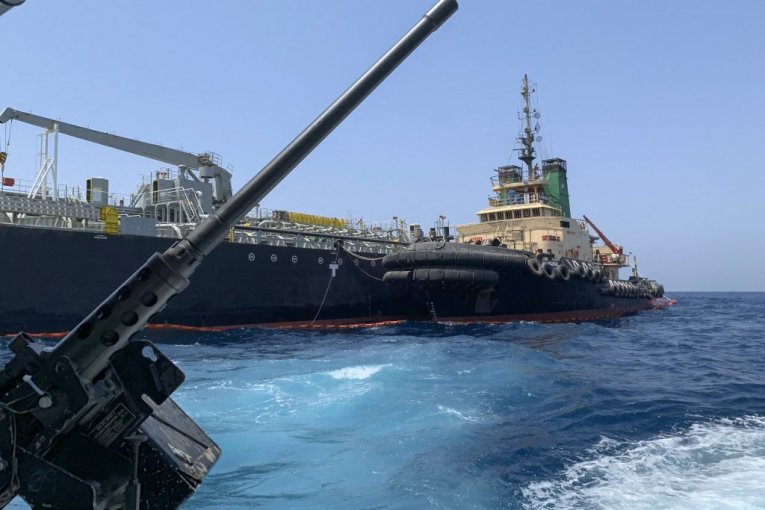
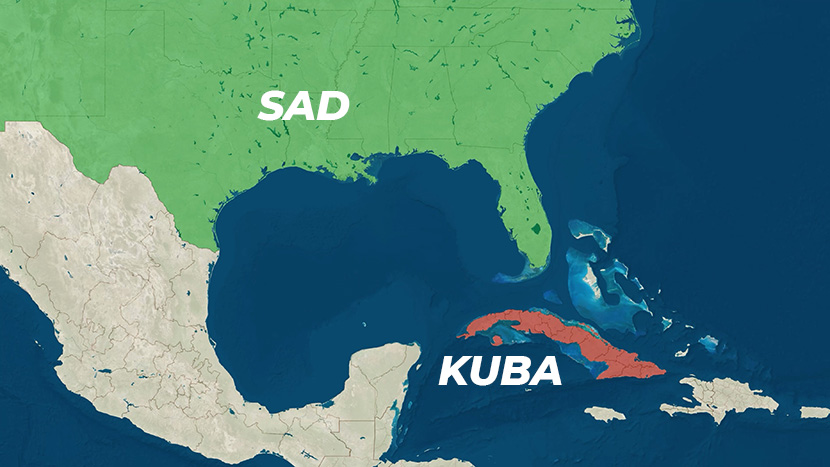
US and foreign media broadly agree that a Russian oil tanker carrying a large shipment of crude has reached or approached Cuban waters without being intercepted by US forces. Reports most commonly cite a cargo of roughly 700,000–730,000 barrels (around 100,000 tons) of oil, describing it as the first major delivery to Cuba after a period in which Washington had effectively blocked or discouraged such shipments beginning in January. The vessel is described as Russian-flagged and state-linked, and coverage also notes that, around the same time, the US lifted sanctions on three Russian-flagged ships that had been previously blacklisted over connections to Russian leasing entities.
Across outlets there is broad agreement that this delivery is significant for Cuba’s strained energy system and comes amid a wider regional debate over fuel supplies to the island. Media on both sides reference the broader framework of US sanctions on Cuba and Russia, the informal nature of the earlier “blockade” on Cuban-bound oil shipments, and the legal and diplomatic sensitivities around ordering the US Coast Guard to stop a Russian vessel in international or near-Cuban waters. Coverage also converges on the idea that other countries, notably Mexico, are asserting a right to supply fuel to Cuba on humanitarian and commercial grounds, and that Washington’s stance on enforcement appears to be shifting or softening at the margins rather than being formally overhauled.
Areas of disagreement
Nature of the US decision. Opposition-aligned sources typically frame the episode as a tactical de-escalation or a pragmatic carve-out within a still-hostile sanctions architecture, stressing that Washington has not formally renounced pressure on either Cuba or Russia. Pro-government outlets instead present it as a clear and deliberate easing of US pressure, highlighting the lifting of sanctions on specific Russian ships and the non-interception of the tanker as evidence of a broader policy shift. While opposition narratives emphasize provisional, reversible steps motivated by risk avoidance, pro-government coverage tends to suggest a more durable recalibration of US policy toward Cuba’s energy lifeline.
Motives and strategic signaling. Opposition coverage usually interprets the US choice not to stop the tanker as driven by fear of direct confrontation with Russia and concern over legal overreach in international waters, casting it as reluctant accommodation rather than goodwill. Pro-government outlets, by contrast, highlight humanitarian considerations for Cuba’s population and diplomatic outreach to regional partners, portraying Washington as responding to pressure from Latin American governments such as Mexico. In this telling, opposition media underline deterrence and crisis-management logic, whereas pro-government media accentuate moral and political arguments about respecting Cuba’s sovereignty and alleviating shortages.
Implications for sanctions regimes. Opposition-aligned sources often argue that letting the tanker through does not fundamentally weaken the sanctions system, describing it as a limited exception within a still-robust framework against Russian and Cuban entities. Pro-government coverage tends to depict the move as exposing the fragility or inconsistency of US sanctions, suggesting that Washington is being forced by practical realities and international criticism to back away from its toughest measures. Where opposition outlets stress continuity and legal nuance, pro-government outlets stress erosion, backtracking, and the possibility that more exemptions or slack enforcement will follow.
Regional political framing. Opposition narratives commonly place the event within a story of US domestic and geopolitical balancing, suggesting Washington is juggling pressure on Russia, migration and stability in the Caribbean, and relations with allies without fundamentally changing course. Pro-government narratives foreground Latin American agency, amplifying statements from leaders like Mexico’s president asserting a right to supply Cuba and implying that US policy is bending under regional resistance. Thus, opposition coverage centers on Washington’s internal calculus, while pro-government coverage centers on a supposed shift in the regional power dynamic at the United States’ expense.
In summary, opposition coverage tends to portray the US decision as a cautious, reversible adjustment within an unchanged sanctions posture, while pro-government coverage tends to frame it as a meaningful retreat that validates Cuba’s and its partners’ pushback against US pressure.