
opposition
This is how Trump speaks: 'Fire, fire, fire. Fire, boom, fire boom' (VIDEO)
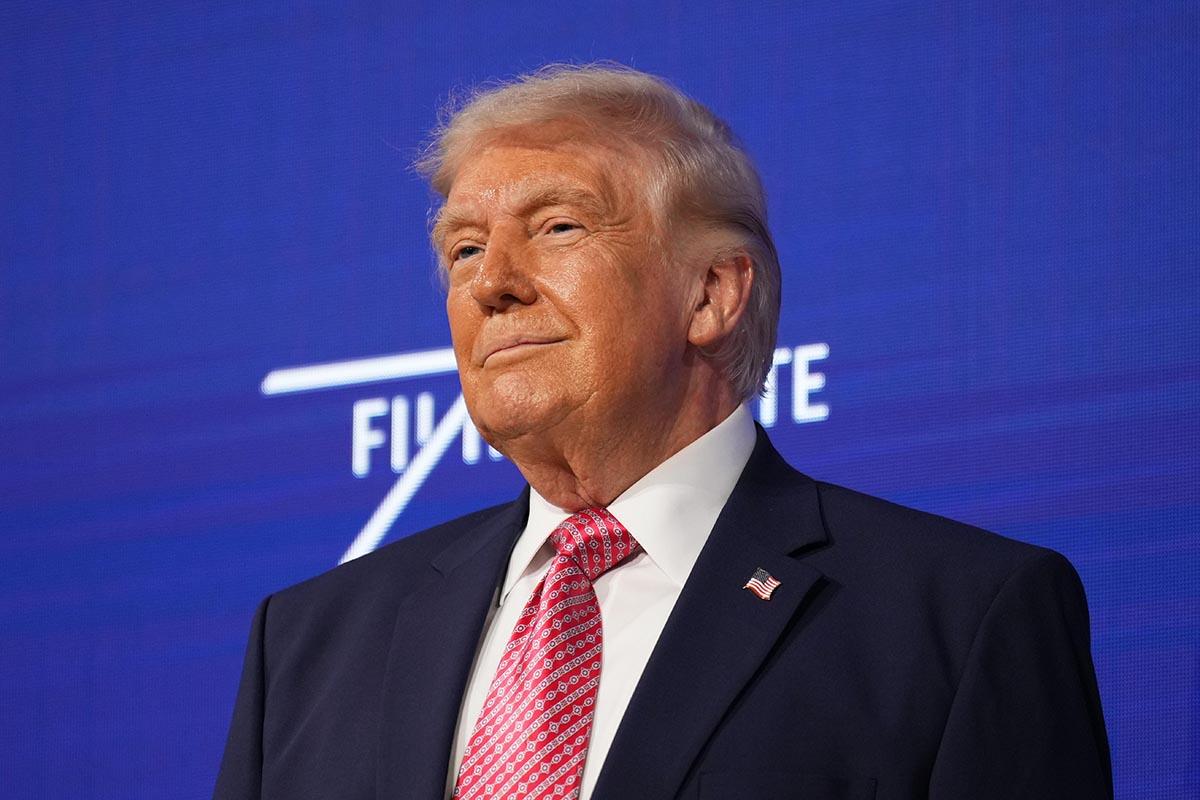
A snippet of a speech by U.S. President Donald Trump from the Future Investment Initiative summit in Miami is being widely shared on social media.
9 days ago
A short video clip from Donald Trump’s recent speech at the Future Investment Initiative investment summit in Miami has gone viral, showing him describing US missile defense operations with repetitive, onomatopoeic phrases such as “fire, fire, fire. Fire, boom, fire boom” and “shoot, shoot, shoot.” Both opposition and pro-government outlets agree that the clip has been widely shared and heavily commented on across social media, that the remarks were part of a broader discussion of US air and missile defense, and that Trump also used the occasion to praise Saudi Crown Prince Mohammed bin Salman. They concur that the speech referenced the ongoing war in Iran, connected it to oil prices and wider economic implications, and suggested that active negotiations are taking place in parallel with military operations.
Coverage from both camps also situates the viral moment within Trump’s broader communication style, noting his preference for simplified, vivid, and repetitive language when describing complex security systems. Both sides place the remarks in the context of US strategic ties with Saudi Arabia and the role of investment summits like the Future Investment Initiative in signaling economic confidence despite regional conflict. There is shared emphasis that Trump framed the war in Iran as being in its later stages, mentioned its effect on global and US economic conditions, and projected post-conflict economic growth, tying defense, diplomacy, and markets together in a single narrative.
Tone and significance of the clip. Opposition outlets portray the “fire, boom” segment as emblematic of Trump’s perceived lack of sophistication, highlighting mockery online and presenting the clip as a self-contained joke at his expense. Pro-government outlets, by contrast, frame the same clip as light-hearted and deliberately simple, emphasizing its entertainment value and the idea that it makes technical defense concepts accessible to a broader audience. While opposition coverage stresses ridicule and questions of competence, pro-government coverage stresses relatability and virality as a sign of Trump’s continued media dominance.
Portrayal of Trump’s leadership and competence. Opposition reporting tends to treat the simplified missile-defense description as evidence of Trump’s shallow grasp of complex military issues and as a worrying trait in a commander-in-chief discussing war. Pro-government outlets instead present Trump as a confident leader who can cut through jargon to describe how US defenses work in clear, direct terms. Where opposition sources imply that the language trivializes serious matters of life and death, pro-government sources argue that it reflects decisiveness and an instinctive understanding of force and deterrence.
Framing of the war in Iran and its economic impact. Opposition-leaning coverage references Trump’s comments on the war and oil prices but often does so briefly, focusing more on the viral rhetoric than on his strategic claims, and may imply skepticism about optimistic projections. Pro-government outlets foreground his assertion that the war is nearing its end, that negotiations are active, and that the US is positioned for economic growth afterward, presenting this as proof of effective crisis management. Thus, opposition sources tend to foreground spectacle over substance in the war discussion, while pro-government sources elevate his remarks as a credible roadmap for stabilizing the region and the economy.
Relations with Saudi Arabia and Mohammed bin Salman. Opposition outlets mention Trump’s praise of Mohammed bin Salman in a neutral or subtly critical way, hinting at concerns about over-closeness to an authoritarian partner and the ethical implications of such flattery. Pro-government outlets, conversely, treat this praise as a positive affirmation of a key strategic and investment ally, underlining mutual benefits and shared interests. Where opposition coverage suggests discomfort with the warmth of the relationship, pro-government coverage casts it as a pragmatic and lucrative pillar of US foreign and economic policy.
In summary, opposition coverage tends to treat the viral “fire, boom” clip as a mocking symbol of Trump’s perceived unseriousness and to downplay his strategic and economic claims, while pro-government coverage tends to present the same moment as engaging, effective communication from a strong leader and to highlight his optimistic narrative about the war, the economy, and US alliances.