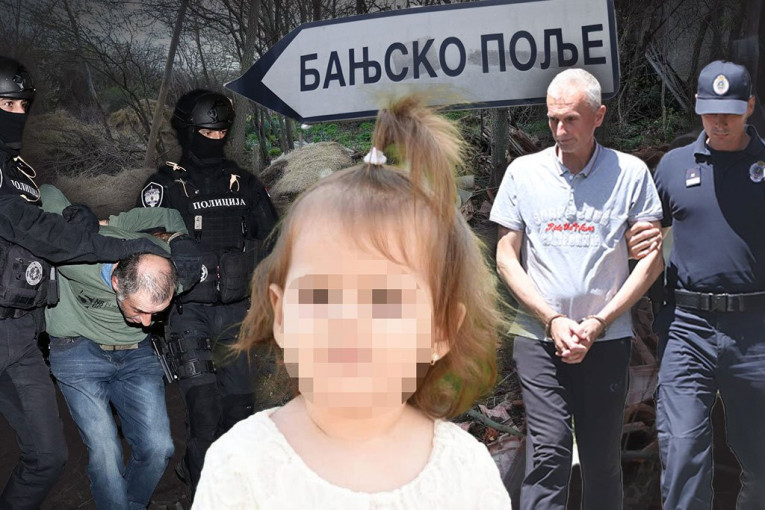
The Higher Court in Negotin has confirmed the indictment against Dejan Dragijević and Srđan Janković for the alleged murder of two-year-old Danka Ilić, who disappeared on March 26, 2024 near Bor. Both opposition and pro-government outlets agree that the indictment will be delivered to the accused and their defense, who have a short legal window of several days to appeal, and that the child’s body has still not been found despite extensive searches.
Coverage from both sides describes the institutional path of the case in similar terms: the prosecution has formally framed the act as a murder, tied to an incident in which the child was allegedly hit by a vehicle and her body subsequently concealed. They also agree that the case is proceeding within the regular criminal justice framework of the Serbian system, with the Higher Court in Negotin acting on a prosecution proposal, and that additional individuals are implicated in relation to the alleged concealment of the body and events following the crime.
Areas of disagreement
Framing of the indictment and legal process. Opposition outlets generally present the confirmation of the indictment in a more restrained, procedural tone, emphasizing that the indictment is suspected and subject to appeal, and underscoring that the body has not been found as a major unresolved element. Pro-government outlets, by contrast, highlight the indictment as a strong and decisive step, foregrounding prosecutorial claims about how the murder was committed and stressing that the prosecution is seeking life imprisonment, which they frame as an appropriately severe response.
Emphasis on investigative shortcomings versus state resolve. Opposition coverage tends to underline the gaps in the investigation, especially the failure to find the body, implicitly raising questions about the thoroughness and reliability of the case. Pro-government media emphasize that the authorities quickly identified suspects, secured an indictment, and are pursuing the harshest penalties, portraying the institutions as determined and efficient in delivering justice.
Role of other implicated individuals and institutional accountability. Opposition-aligned reports typically mention other implicated persons, such as relatives involved in concealing the body, in a factual way while leaving room to question how such a network operated without earlier detection by the authorities. Pro-government outlets more prominently note these auxiliary roles to illustrate that the investigation has unraveled the broader circle around the crime, but are less inclined to link these facts to any systemic police or prosecutorial failings.
Treatment of custodial death and potential abuses. Opposition sources, where they touch on it, hint that the death in custody of Dejan’s brother Dalibor raises troubling questions about police conduct and transparency, situating it in a broader pattern of concern over state power. Pro-government outlets mention the death in custody in a brief, matter-of-fact way, emphasizing that it does not alter the main case against the two primary defendants and avoiding speculation about misconduct, thus maintaining confidence in the integrity of the investigation.
In summary, opposition coverage tends to stress unresolved facts, investigative gaps, and potential institutional failings around the indictment in the Danka Ilić case, while pro-government coverage tends to highlight the swiftness and severity of the state’s response, underscoring prosecutorial narratives and the pursuit of life sentences as evidence of firm institutional action.