
pro-government
СТРЕЛЬБА В УЛЬЦИНЕ! Молодой человек за рулем "Ауди" открыл огонь!
Фото: Танюг/AP Photo/Дарко Войнович, Архив, Shutterstock/ShotPrime Studio
9 days ago
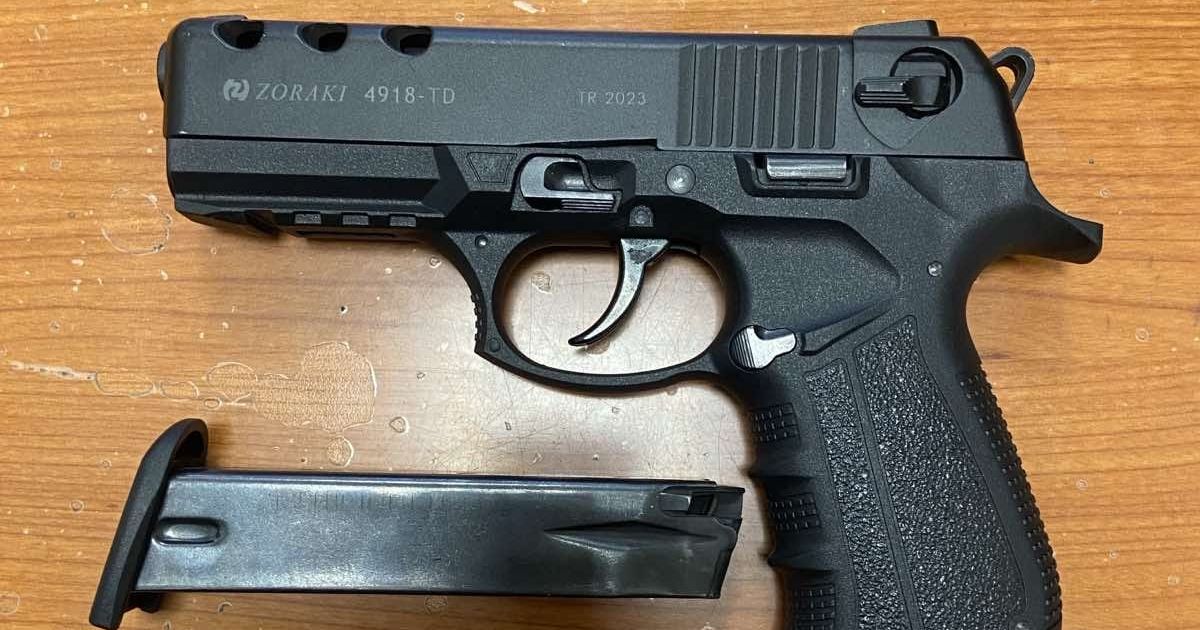
A man from Nikšić was arrested after firing a starter pistol into the air from a moving Audi in Ulcinj, with police later apprehending him in Bar; both opposition and pro-government outlets agree on these core facts. Coverage converges that the weapon was a starter pistol, shots were fired in the air rather than at people, no injuries were reported, the pistol was confiscated, and that the man faces only misdemeanor proceedings because police determined there was no basis for a criminal charge.
Across the spectrum, outlets emphasize that local police responded quickly after receiving reports of the incident, located the vehicle, and identified the suspect by initials and age, in line with standard practice. There is consensus that the case falls under public order and safety regulations rather than serious violent crime, and that it illustrates existing procedures for assessing weapon-related incidents, classifying the offense, and initiating administrative rather than criminal proceedings.
Seriousness of the incident. Opposition outlets tend to frame the incident as symptomatic of broader public-safety and policing problems, suggesting that firing even a starter pistol from a moving car shows a worrying normalization of disorder. Pro-government outlets, by contrast, stress that it was a starter pistol, that no one was harmed, and that law enforcement correctly treated it as a lower-level offense. Where opposition-leaning coverage hints that any such shooting in public spaces should be treated as potentially grave, pro-government reports lean on the technical distinction between starter and real firearms to downplay wider alarm.
Police performance and responsiveness. Opposition-aligned media are likely to acknowledge the rapid response but may characterize it as an exception that proves a rule of inconsistent or politically selective policing, using the case to question overall police effectiveness. Pro-government outlets highlight the speed and efficiency of the intervention as proof that institutions function well and can swiftly neutralize risks. The difference is that opposition narratives place the episode in a pattern of systemic shortcomings, while pro-government narratives showcase it as an example of professional, routine police work.
Legal qualification and sanctions. Opposition coverage questions whether classifying the act only as a misdemeanor is too lenient, arguing that public gun-like fire from a vehicle should attract stronger criminal liability to deter similar behavior. Pro-government coverage defends the legal framing as correct, noting that the law distinguishes starter pistols from real firearms and that police explicitly found no elements of a criminal offense. Thus, while opposition voices invoke the spirit of the law and perceived threats, pro-government voices emphasize formal legal criteria and procedural correctness.
Broader political and social framing. Opposition outlets are inclined to embed the story in a narrative of social frustration, weakened deterrence, and a state that tolerates rowdy or dangerous behavior until it becomes politically sensitive. Pro-government outlets generally strip the incident of broader political meaning, presenting it as an isolated case of individual misbehavior promptly handled by the authorities. This leads opposition media to use the event as a talking point about governance and rule of law, while pro-government media treat it as a minor public-order news item.
In summary, opposition coverage tends to amplify the event’s significance as evidence of deeper security and governance failings and to question the adequacy of the legal response, while pro-government coverage tends to minimize its gravity, focus on the technical legality and the fact that no one was hurt, and highlight the police reaction as proof that institutions are working as intended.