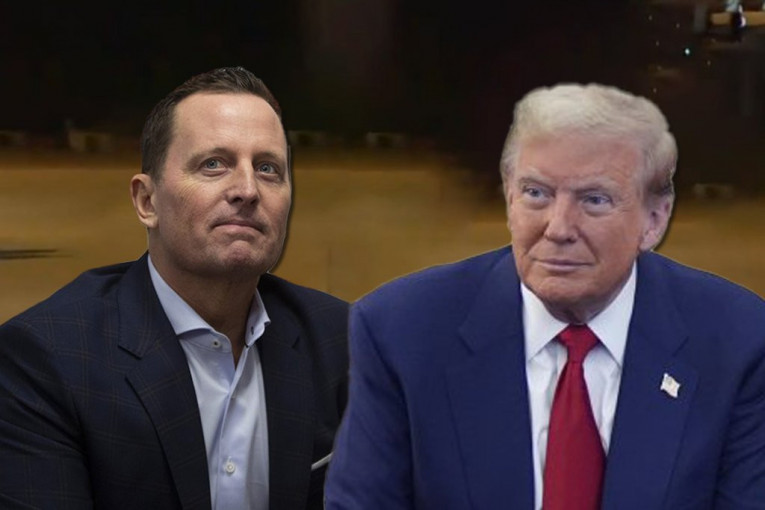

Richard Grenell has been replaced as director of the Kennedy Center after roughly a year in the post, with both opposition and pro-government outlets noting that he is leaving following a period of significant institutional change and controversy. They agree that many artists withdrew from participating in the center’s events during his tenure, that the venue is expected to close for renovation in the near term, and that Matt Floka (often rendered as Matt Floka/FloKa/Flocka in coverage) has been selected as his successor to manage the upcoming works.
Coverage also converges on the broader context that Grenell’s leadership coincided with an attempt to rebrand and reshape the Kennedy Center’s identity and programming. Both sides highlight that the center was renamed to include Donald J. Trump alongside John F. Kennedy, that this rebranding and programmatic shift triggered intense public and artistic pushback, and that the planned renovation is framed as part of a longer-term restructuring of the institution rather than a routine maintenance closure.
Areas of disagreement
Causes and responsibility. Opposition-aligned outlets emphasize that Grenell’s policy and stylistic choices directly provoked the artists’ boycott and ultimately made his position untenable, portraying his departure as a consequence of mismanagement and overreach. Pro-government sources, by contrast, frame his exit as a largely procedural or strategic change after a completed first phase of reforms, downplaying any causal link between his decisions and the exodus of artists.
Characterization of Grenell’s tenure. Opposition reporting tends to describe his year at the helm as turbulent and polarizing, stressing reputational damage to the Kennedy Center and the alienation of traditional cultural constituencies. Pro-government coverage highlights what it calls bold or necessary reforms, casting Grenell’s work as a tough but successful effort to modernize and reorient the institution despite predictable backlash from liberal or establishment arts communities.
Framing of the renaming and institutional identity. Opposition outlets present the renaming of the center to include Donald J. Trump as a politically motivated move that undermined the nonpartisan cultural legacy associated with John F. Kennedy and contributed to public criticism. Pro-government sources describe the new name as an overdue recognition of Trump’s role or as an expansion of the center’s commemorative mission, arguing that the controversy over the name was exaggerated by opponents rather than organically driven by the broader public.
Interpretation of the transition to Matt Floka. Opposition coverage portrays Floka’s appointment as an implicit acknowledgment that Grenell’s approach had failed and that a reset is required to restore artistic credibility and public trust, even if the overall Trump-era imprint on the institution remains. Pro-government narratives more often depict Floka as a continuity figure tasked with consolidating and implementing the structural and branding changes initiated under Grenell, suggesting the transition is about operational follow-through rather than course correction.
In summary, opposition coverage tends to portray Grenell’s removal as a corrective response to a politicized and damaging tenure that alienated artists and audiences, while pro-government coverage tends to frame his departure as a routine or strategic handover after a forceful but necessary reform drive whose core changes will be carried forward by his successor.