
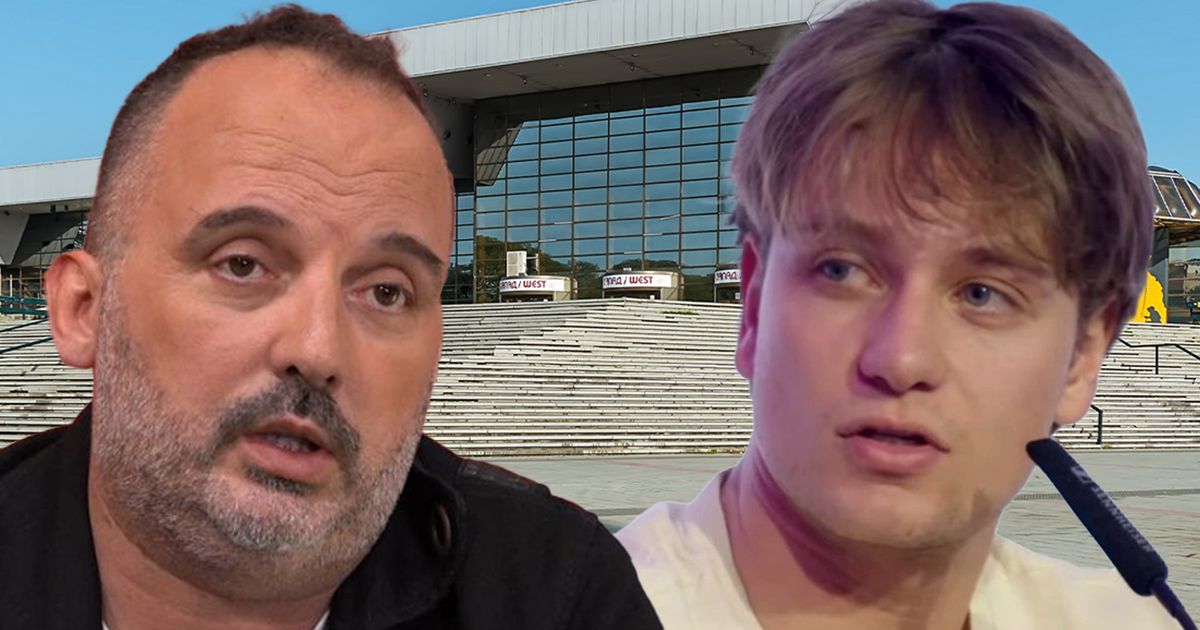
Croatian singer Toni Cetinski canceled his planned concert in Novi Sad at the Spens sports and business center on March 8, shortly before it was scheduled to begin, with both opposition and pro-government media agreeing on the timing and abruptness of the decision. All sides report that the cancellation was justified by Cetinski and his team with reference to “testimonies of victims” and claims that Spens allegedly served as a camp or site of detention for Croats during the conflicts of the 1990s, leading to a wave of public surprise and controversy in both Serbia and the region.
Across the spectrum, outlets describe Spens as a major Novi Sad venue from the Yugoslav era that has long been used for sports, concerts, and political events, and they note that tensions around its wartime role tap into unresolved issues from the 1990s conflicts. Reporting converges on the fact that the decision intersects with broader sensitivities in Serbian‑Croatian relations, ongoing debates over war memory and victimhood, and the way cultural events can become flashpoints for historical grievances, with both sides recognizing that the incident quickly escalated from an entertainment story into a politically charged regional issue.
Areas of disagreement
Motives and credibility. Opposition-aligned sources tend to present Cetinski’s reference to “testimonies of victims” as at least potentially credible, framing him as reacting to serious allegations about Spens and suggesting that wartime abuses in Serbian institutions have been systematically minimized. Pro-government outlets, by contrast, highlight the vagueness of those testimonies, stress the lack of concrete proof, and imply that Cetinski may have overreacted or succumbed to pressure from Croatian nationalist circles rather than relying on verified facts.
Framing of Spens and wartime history. Opposition media are more likely to treat the claim that Spens functioned as some form of camp or site of mistreatment as part of a broader pattern of unresolved accountability for 1990s crimes in Serbia, arguing that such spaces need fuller historical scrutiny. Pro-government coverage counters by emphasizing Spens’s role as a neutral civic and sporting hub, downplaying or outright rejecting the camp narrative as an insult to Novi Sad and Serbia and warning that such claims serve foreign or anti-Serbian agendas.
Political responsibility and narrative. Opposition outlets tend to link the episode to the current Serbian leadership, arguing that the government’s approach to the past—denial, relativization, and selective remembrance—creates the conditions in which artists cancel concerts over unaddressed victims’ stories. Pro-government media, meanwhile, frame the controversy as being instrumentalized by opposition figures and hostile media to attack Serbia’s image and the government, portraying the state as a victim of unfair historical accusations rather than as an actor with unresolved responsibilities.
Portrayal of Cetinski and public reaction. Opposition-leaning coverage is more inclined to portray Cetinski sympathetically, as an artist shaken by harrowing accounts and pressured by his conscience, while also noting that some fans were disappointed but understanding of his decision. Pro-government sources more often underline the anger and resentment among local audiences and officials, casting Cetinski as irresponsible or misinformed, and suggest that his move offended Serbian citizens who see the venue as a symbol of their city rather than a site of alleged crimes.
In summary, opposition coverage tends to treat the cancellation as a revealing symptom of unresolved wartime abuses and a culture of denial around Serbia’s recent history, while pro-government coverage tends to frame it as an unjustified slight against Serbia based on unproven claims, emphasizing reputational damage and alleged political exploitation of the incident.