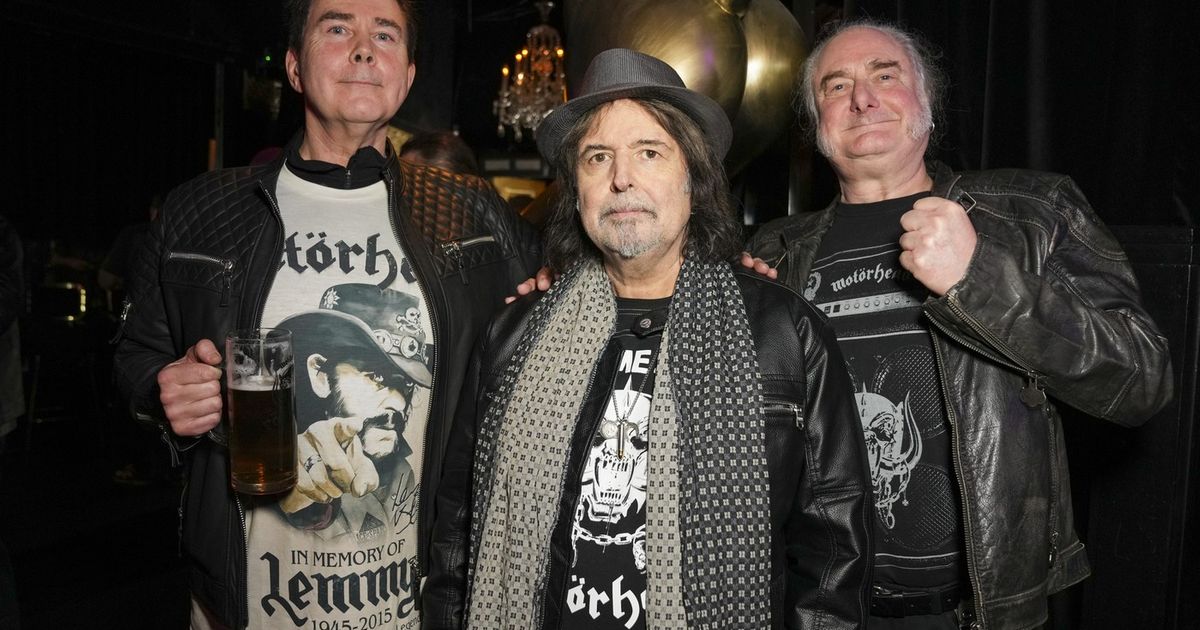


Phil Campbell, longtime guitarist for the heavy metal band Motörhead, has died at the age of 64, a fact consistently reported by both opposition and pro-government-leaning coverage. Both sides agree that his death followed a prolonged and difficult period in intensive care after complex surgery, and that the news was formally confirmed by his current band, Phil Campbell and the Bastard Sons. They also converge on the core timeline: Campbell joined Motörhead in 1984, played with the band until its dissolution in 2015 following the death of founder Lemmy Kilmister, and was widely regarded as an integral contributor over more than three decades. Shared reporting highlights his authorship and performance on 16 Motörhead studio albums and notes that his passing has prompted tributes from fans and fellow musicians across the rock and metal communities.
Coverage from both camps emphasizes Motörhead’s status as a seminal institution in heavy metal, treating Campbell as a central figure in sustaining the band’s sound and global influence during its later decades. There is agreement that, after Motörhead ended in 2015, Campbell maintained an active role in rock music by forming Phil Campbell and the Bastard Sons with his children, indicating a continuity of musical legacy across generations. Both perspectives situate his death in the broader narrative of Motörhead’s gradual closure as key members have passed away, underscoring the band’s lasting imprint on rock history rather than debating it. Across the spectrum, outlets frame his career within the established canon of British and European heavy music, focusing on artistic contributions and fan culture rather than institutional or political controversy.
Areas of disagreement
Tone and framing. Opposition-aligned outlets tend to frame Campbell’s death in a more understated and culturally focused manner, emphasizing his musicianship, discography, and the reactions of fans and fellow artists without sensational language. Pro-government outlets, by contrast, are more likely to use emotive headlines about “tragic news” and “rock and roll legend,” foregrounding the drama of his struggle in intensive care and the shock value of his passing. Both acknowledge his importance, but the opposition coverage leans toward sober commemoration, while pro-government pieces tilt toward pathos and mass audience appeal.
Biographical emphasis. Opposition outlets generally foreground Campbell’s artistic development and role within Motörhead’s evolving sound, highlighting touring history, studio work, and his technical style as a guitarist. Pro-government sources focus more on simple biographical milestones and easily communicable facts, such as the year he joined the band, the number of albums recorded, and his later work with Phil Campbell and the Bastard Sons. As a result, opposition coverage often reads as more detailed in musical terms, while pro-government coverage presents a concise, personality-driven life sketch.
Cultural and political subtext. Opposition-aligned media occasionally situate Campbell and Motörhead within a broader countercultural tradition, stressing the band’s roots in working-class British rock scenes and their influence on anti-establishment musical currents. Pro-government outlets largely strip out any political or subcultural framing, presenting Campbell instead as a broadly palatable national or international cultural figure whose achievements can be celebrated without ideological nuance. This leads opposition coverage to hint at the more rebellious edges of Motörhead’s legacy, while pro-government coverage emphasizes neutral heritage and entertainment value.
Discussion of legacy. Opposition outlets tend to frame Campbell’s legacy in terms of artistic influence and the way later generations of metal and rock bands drew from his riffs, tone, and stage presence. Pro-government coverage more often links his legacy to nostalgia and the endurance of Motörhead’s brand, highlighting how his work kept the band commercially and popularly relevant up to 2015 and then continued via his family band. Thus, opposition pieces focus on influence in the creative community, while pro-government ones stress continuity of name recognition and broad public affection.
In summary, opposition coverage tends to treat Phil Campbell’s death as an occasion for reflective, musically detailed and mildly countercultural commemoration, while pro-government coverage tends to emphasize emotive storytelling, accessible biographical highlights, and a politically neutral celebration of his status as a beloved rock figure.