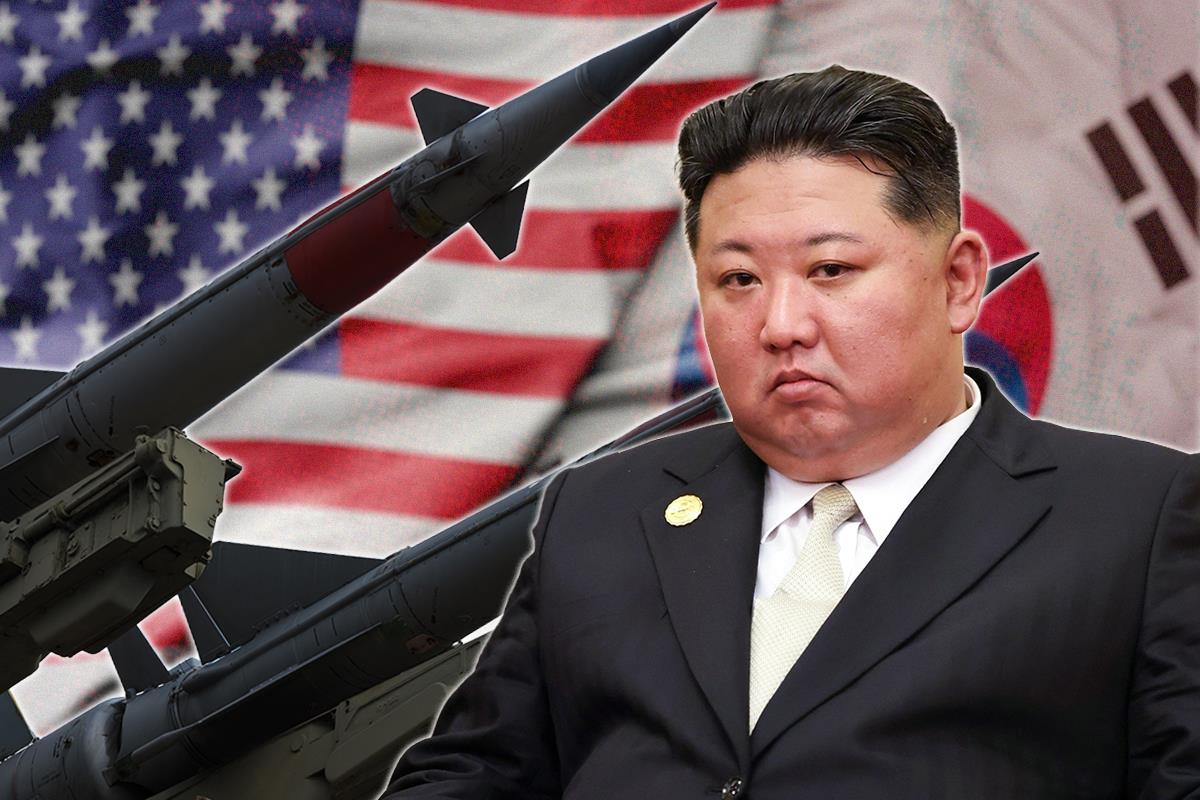

North Korea has fired multiple projectiles, described across outlets as a combination of ballistic missiles and large-caliber multiple rocket launchers, toward the Sea of Japan/East Sea during ongoing joint US–South Korean "Freedom Shield" military exercises. Shared reporting notes that South Korea’s military detected about ten missiles launched eastward from North Korean territory, with some coverage highlighting a concurrent test of 600mm rocket launchers observed by Kim Jong Un and his daughter, involving around 12 launchers and boasting a claimed range of roughly 420 kilometers. Both sides agree that the launches violate UN Security Council resolutions, that South Korean authorities publicly condemned the tests, and that the firings fit a broader pattern of North Korean weapons demonstrations in recent years.
Across both opposition and pro-government coverage, there is consensus that the joint US–South Korean drills are a central backdrop to the launches, with North Korea denouncing these exercises as a rehearsal for invasion and warning of unspecified "consequences". Outlets on both sides reference Kim Jong Un’s framing of the weapons system as capable of delivering tactical nuclear strikes against regional targets, situating the incident within North Korea’s long-standing strategy of using missile tests to signal resolve and deter perceived threats. The reports also converge on the idea that the tests underscore the continuing stalemate in diplomacy after earlier, inconclusive efforts to engage Pyongyang, and that the episode reinforces persistent regional security concerns on the Korean Peninsula and in the wider Indo-Pacific.
Areas of disagreement
Responsibility and blame. Opposition-aligned coverage places primary responsibility on Kim Jong Un and North Korea’s leadership, emphasizing deliberate escalation, violations of international norms, and the regime’s choice to threaten tactical nuclear use. Pro-government outlets more strongly foreground the joint US–South Korean drills as a provoking factor, suggesting that Washington and Seoul "pushed" Kim to the brink and that the launches are a predictable reaction to perceived encirclement. While both sides acknowledge North Korea’s agency, opposition reports frame Pyongyang as the clear aggressor, whereas pro-government reports spread blame by treating the drills as an underlying trigger.
Characterization of the threat. Opposition sources depict the tests as a serious and destabilizing development, underscoring the potential nuclear role of the 600mm launchers and highlighting South Korea’s condemnation under UN resolutions. Pro-government coverage, in contrast, sometimes normalizes the launches, with language suggesting that ten-missile salvos have become "completely normal" and no longer shocking, thus downplaying the immediacy of the risk. This creates a divide where opposition outlets stress urgency and heightened danger, while pro-government outlets portray the event as routine within an established pattern of brinkmanship.
Portrayal of Kim Jong Un and motives. Opposition reporting tends to present Kim as a leader intentionally showcasing advanced weaponry, including the presence of his daughter at the test, to project internal strength and external intimidation, with little justification beyond regime survival and coercive diplomacy. Pro-government outlets emphasize Kim’s anger and sense of being pressured by the United States and South Korea, portraying his "extreme action" as reactive rather than purely aggressive. Thus, opposition narratives highlight calculated belligerence, whereas pro-government narratives frame Kim as cornered and responding to external military pressure.
Assessment of regional dynamics. Opposition sources more often situate the episode within a rules-based international order, underscoring UN resolutions, alliance commitments, and the need for deterrence against North Korean violations. Pro-government outlets focus more on power politics, describing the drills as a show of force by the US–South Korea alliance and interpreting North Korea’s launches as a counter-show, suggesting that great-power rivalry is driving the cycle rather than solely Pyongyang’s choices. As a result, opposition coverage leans toward reinforcing existing sanctions and military readiness, while pro-government coverage foregrounds the escalatory nature of mutual shows of force and the failure of past diplomatic overtures.
In summary, opposition coverage tends to frame North Korea’s launches as a grave, unilateral escalation and a clear breach of international norms requiring strong deterrence, while pro-government coverage tends to cast them as an expected, if dangerous, response to US–South Korean drills and broader geopolitical pressure.
Story coverage