

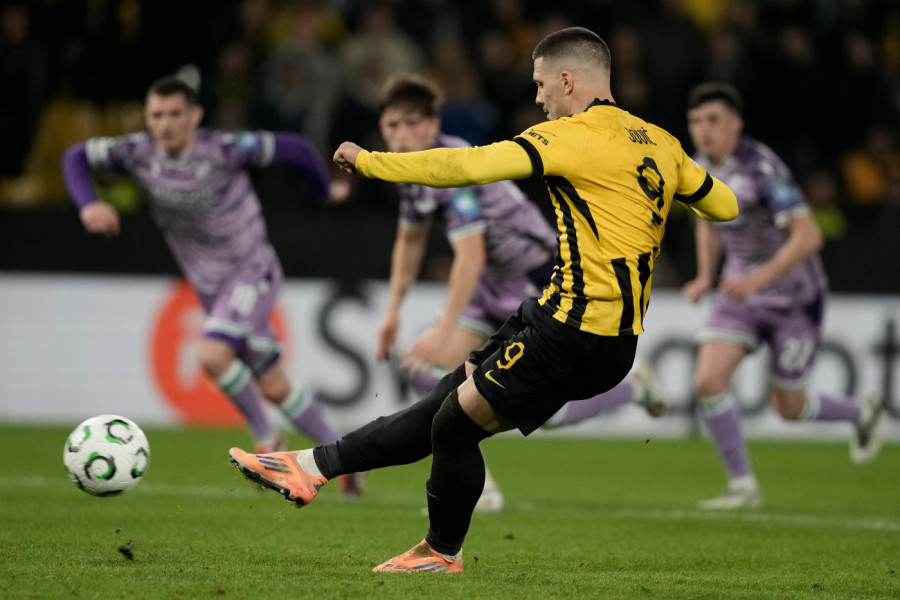
AEK Athens defeated Celje 4-0 away in Slovenia in the first leg of the UEFA Europa Conference League round of 16, with the match effectively decided by a combination of early control and clinical finishing. Across outlets there is agreement that the goals were scored by Barnabas Varga, Abubakari Koita, Mijat Gaćinović, and Harold Moukoudi, that Jović provided at least one assist, and that the result puts AEK in a very strong position ahead of the return leg next Thursday. Reports concur that this was a commanding performance rather than a narrow win, and that the aggregate scoreline gives AEK a clear advantage in the battle for a place in the quarterfinals.
Coverage also aligns on the broader European context: the match is part of the Conference League round of 16 schedule featuring several ties across the continent, with other reported results including Fiorentina’s 2-1 comeback win over Raków and AZ Alkmaar’s 2-1 victory over Sparta, as well as goalless draws in other fixtures. Both sides of the media spectrum frame AEK’s win as a significant moment in the club’s European campaign, noting that the performance strengthens the club’s continental ambitions and reflects the increasing competitiveness of clubs from smaller leagues in UEFA’s third-tier competition.
Areas of disagreement
Emphasis and framing. Opposition-aligned outlets are likely to frame the 4-0 result primarily as a footballing achievement by AEK as a club, stressing tactical superiority, coaching decisions, and the collective performance, while keeping political or national angles to a minimum. Pro-government outlets, by contrast, highlight the night as a great moment for Serbian football, foregrounding the roles of Gaćinović and Jović and using celebratory language that links the club’s success to national pride. This produces differing headlines and narrative leads even when the raw match facts are identical.
Hero selection and credit. Opposition coverage tends to distribute praise across AEK’s entire lineup and coaching staff, treating the Serbian players as important contributors among many and underscoring the balance of the squad and system. Pro-government outlets instead single out Gaćinović’s goal and Jović’s assist as the primary story, sometimes relegating the other scorers and the defensive display to secondary mentions. As a result, readers of opposition media encounter a more club-centric story, while pro-government audiences see a star-driven, nationality-focused narrative.
Competitive significance. Opposition sources are inclined to contextualize the 4-0 win cautiously, noting that although AEK has one foot in the quarterfinals, the tie is not mathematically over and future rounds will be more demanding. Pro-government outlets, on the other hand, often describe AEK as already being “one step into the quarterfinals,” framing the result as nearly decisive and using the scoreline to amplify a sense of triumph. This leads to more restrained expectations on the opposition side and more confident, almost celebratory forecasts on the pro-government side.
Broader European lens. Opposition-aligned media are more likely to situate the match within the overall Conference League landscape, comparing AEK’s performance to other clubs and discussing implications for Greek or regional football generally. Pro-government coverage includes other European scores but mainly as a backdrop, keeping the spotlight on Serbian players abroad rather than on the structural evolution of the competition or on AEK’s long-term project. Thus, opposition narratives lean toward analytical, competition-wide framing, whereas pro-government narratives privilege the diaspora success angle.
In summary, opposition coverage tends to present AEK’s 4-0 victory as a balanced, team-oriented European success framed within the wider logic of the Conference League, while pro-government coverage tends to spotlight Serbian players, amplify national pride, and treat the emphatic scoreline as near-clinching proof of progress to the quarterfinals.
