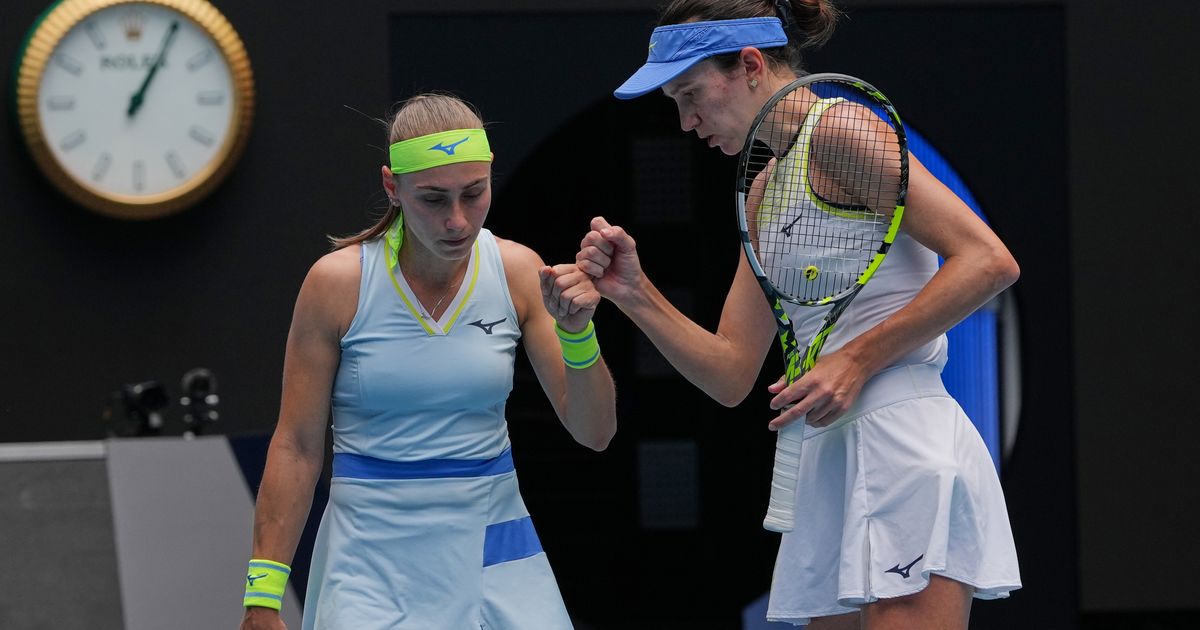


Aleksandra Krunić of Serbia and Ana Danilina of Kazakhstan have reached the women’s doubles final at the Indian Wells tournament in the United States, advancing after a straight-sets victory over Kristina Buksa and Nicole Melichar-Martinez by 6:3, 6:4. Both opposition and pro-government-leaning outlets agree on the core facts: Krunić and Danilina will play for the doubles title, their opponents will emerge from the Sara Errani/Jasmine Paolini vs. Katerina Siniakova/Taylor Townsend semifinal, and the match represents a major sporting achievement at one of the most prestigious events on the WTA calendar.
Coverage across the spectrum also converges on the broader context that Indian Wells is informally known as the “fifth Grand Slam” and that a title here would be the most significant of Krunić’s career to date, with important implications for her doubles ranking and visibility. Both sides frame Krunić as a key figure for Serbian tennis, noting that a victory could boost the sport’s profile in the country and add to Serbia’s modern tennis success story, while also acknowledging that Danilina is an established doubles specialist who has helped form a highly effective partnership at this event.
Areas of disagreement
Framing of achievement. Opposition-aligned outlets tend to frame the run to the final as primarily a personal and professional milestone for Krunić and Danilina, emphasizing the quality of their play and the strength of the Indian Wells field without attaching broader political symbolism. Pro-government outlets, by contrast, more often cast the result as a national triumph in the making, highlighting that Krunić could win “the biggest title of her career” for Serbia and treating the final as a matter of national prestige.
National narrative and credit. Opposition sources are more likely to describe Krunić’s success as the product of her individual perseverance, international training environment, and partnership dynamics, while keeping state institutions largely out of the story. Pro-government coverage tends to fold the success into a wider narrative of Serbian sporting excellence, implicitly crediting the country’s sports culture and sometimes hinting that such results reflect well on current national leadership and its support for athletes.
Impact on Serbian tennis. Opposition outlets usually speak cautiously about the broader impact, noting that while the final is an important boost, structural issues in Serbian tennis—such as funding, facilities, and pathways for young players—remain unresolved and are not transformed by a single result. Pro-government media, however, are more inclined to suggest that reaching the Indian Wells final confirms the healthy state of Serbian tennis and may herald a wave of renewed interest and development, presenting the achievement as evidence that existing policies and conditions are bearing fruit.
Tone about institutions and future prospects. Opposition coverage, where it appears, often separates Krunić’s success from domestic sports governance, sometimes implicitly contrasting her international success with what they portray as inconsistent or politicized support at home. Pro-government reporting is typically more upbeat and forward-looking, stressing how a potential title could inspire younger players and reinforcing the idea that Serbia’s institutional framework is capable of producing world-class tennis results.
In summary, opposition coverage tends to spotlight Krunić and Danilina’s individual sporting merits and downplay state or political ownership of the success, while pro-government coverage tends to fold the result into a broader national narrative that presents Serbian tennis and current conditions as validated by their run to the Indian Wells final.