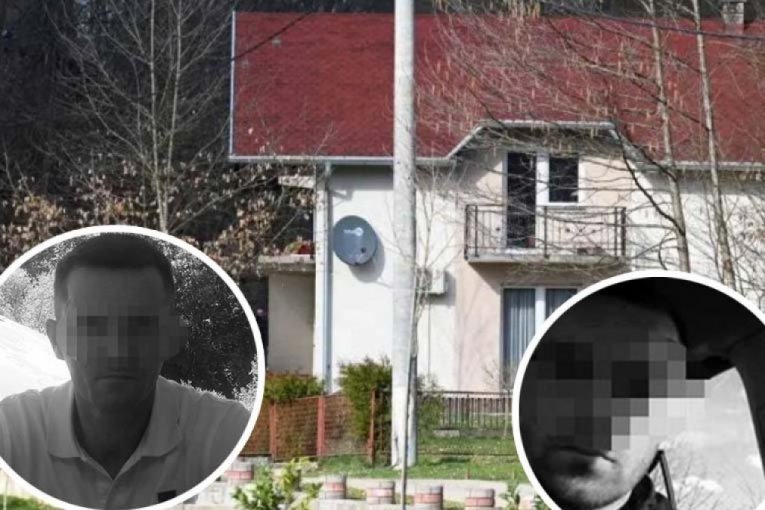

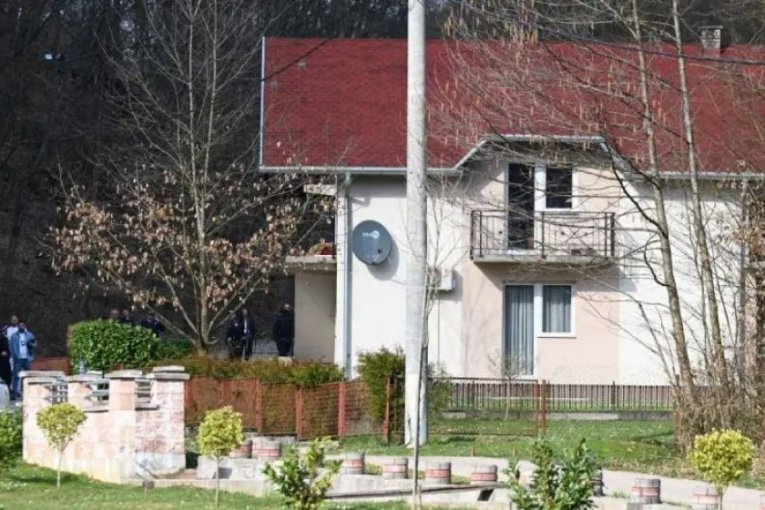
The coverage from both opposition and pro-government outlets agrees on the core facts that a father and son were found dead in a family home garage in the village of Šušnjari near Laktaši. The deceased are consistently identified as Nenad R., around 50–51 years old, and his son Ljubiša R., around 27–28 years old, with both bodies discovered next to a pistol and several spent shell casings. Police are treating the case as a suspected murder-suicide involving the use of a firearm, though formal forensic results on the exact cause, sequence, and time of death are still pending. Neighbors in all reports mention earlier loud noises or banging coming from the property, and it is repeatedly noted that the mother was away at work at the time of the tragedy and was not physically present during the shooting.
Both sides frame the event as a family tragedy rather than a broader public security incident, and they concur that the official investigation is led by local police and prosecutors in Laktaši, supported by judicial-medical experts. Media on both sides refer to the same preliminary investigative narrative: a prior argument between father and son, followed by gunfire in the garage that resulted in both of their deaths. There is agreement that the motive remains unknown and speculative, with journalists largely relying on police statements and anonymous neighbor testimony instead of asserting definitive causes. Both opposition and pro-government sources present the case as part of a pattern of isolated domestic incidents that rely on institutional procedures—crime scene processing, forensic analysis, and official confirmation—rather than as a trigger for immediate legal or political reforms.
Areas of disagreement
Framing of responsibility. Opposition-aligned outlets tend to link the case to broader failures in social services and gun control, hinting that institutions did not do enough to prevent domestic escalation or track firearm access, while still accepting the murder-suicide hypothesis. Pro-government outlets focus more narrowly on the alleged actions of Nenad as an individual, stressing the preliminary finding that he shot his son and then himself and portraying the event as an unforeseeable family dispute. Opposition pieces more readily embed the story in a narrative of systemic neglect, whereas pro-government reporting isolates responsibility at the level of personal tragedy and avoids implicating state structures.
Institutional performance and transparency. Opposition media emphasize delays or vagueness in official communication, implying that police and prosecutors are withholding information or moving too slowly, and they question whether past warning signs were ignored. Pro-government outlets highlight the swift response of authorities, the immediate opening of an investigation, and the commissioning of forensic examinations, presenting these as evidence that institutions function properly. Where opposition reports press for more detailed disclosures and potential accountability, pro-government coverage largely treats current official statements as sufficient and prudent pending the investigation’s completion.
Political and societal context. Opposition coverage tends to place the tragedy in a wider context of rising violence, economic pressure, and psychological stress in Republika Srpska, arguing that such conditions can fuel family breakdowns and fatal disputes. Pro-government sources, by contrast, generally avoid linking the case to socio-political trends and instead present it as an exceptional, deeply private misfortune that should not be politicized. The opposition angle uses the story to illustrate its critique of current governance and social policy, while pro-government outlets resist any framing that might suggest a systemic crisis linked to the ruling structures.
Use of emotive versus cautionary language. Opposition-aligned outlets are more inclined to use stark language about a preventable tragedy and to question whether this could have been avoided with better support systems, often quoting neighbors who hint at prior tensions. Pro-government coverage, while also using dramatic headlines and visuals, tends to pivot quickly to caution against speculation, stressing that only the investigation can confirm the sequence of events and motive. Opposition reports harness emotion to demand scrutiny and change, whereas pro-government reports use emotion mainly to underscore the human loss while calling for restraint in judgment.
In summary, opposition coverage tends to connect the Laktaši murder-suicide to systemic shortcomings in institutions, social policy, and public safety, while pro-government coverage tends to present it as an isolated family catastrophe handled appropriately by the existing authorities.
Story coverage