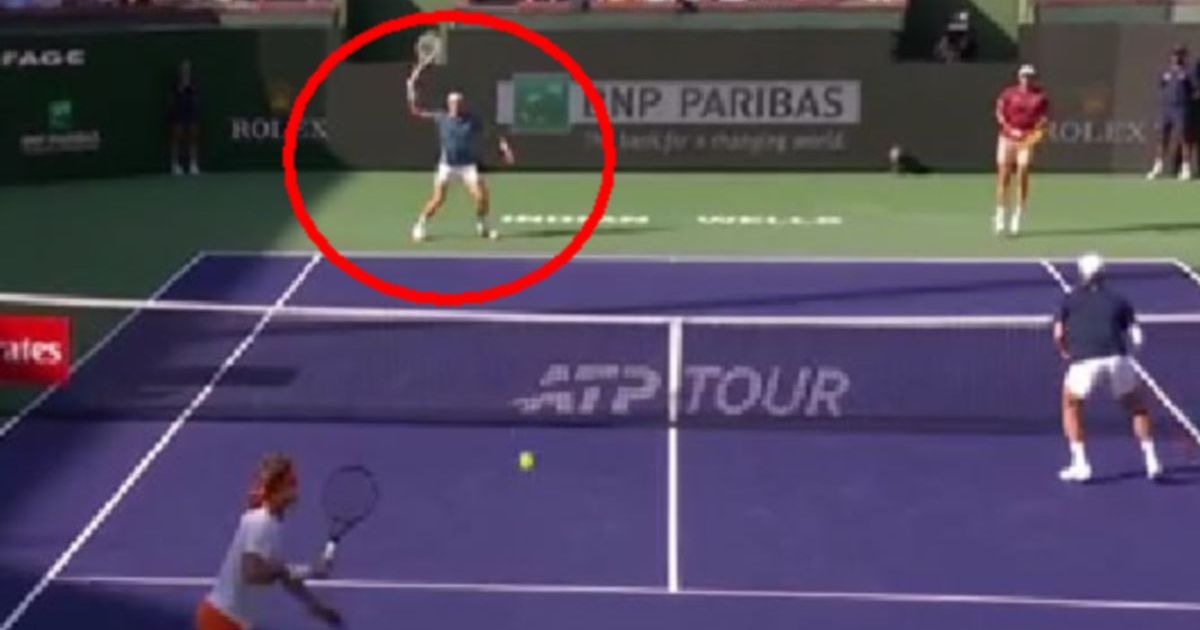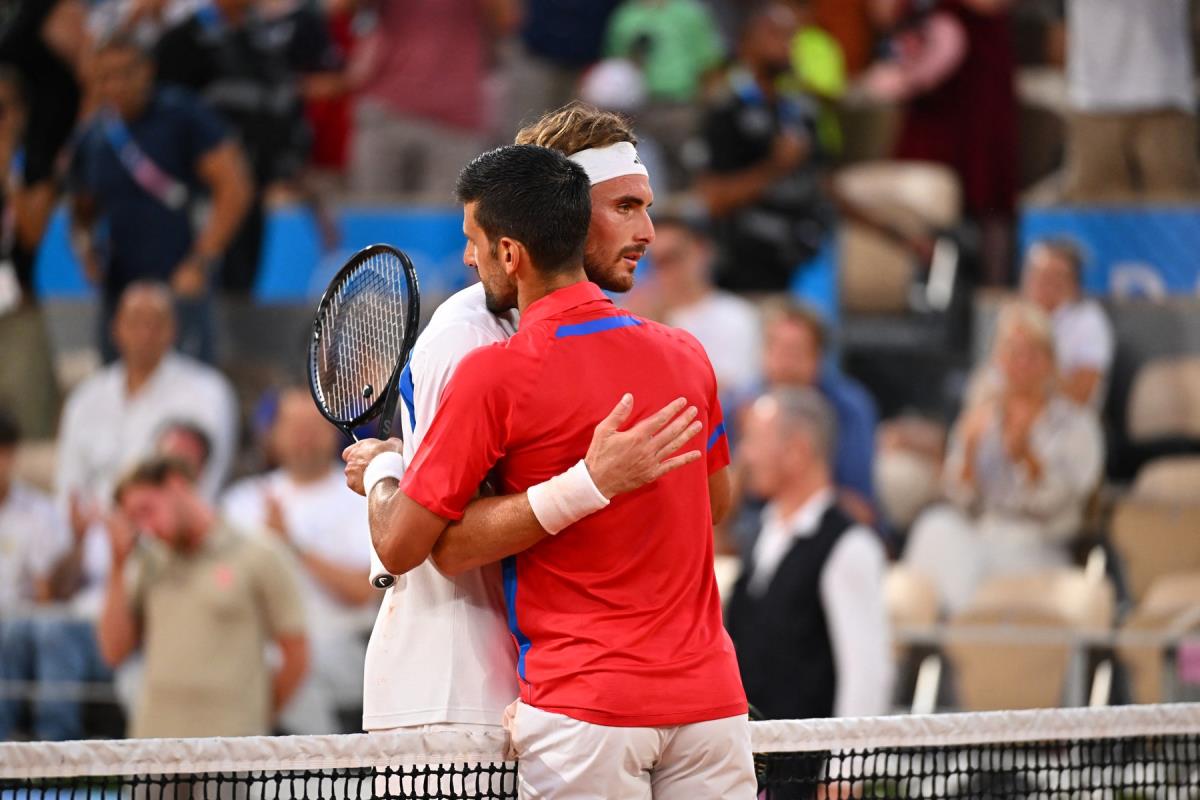

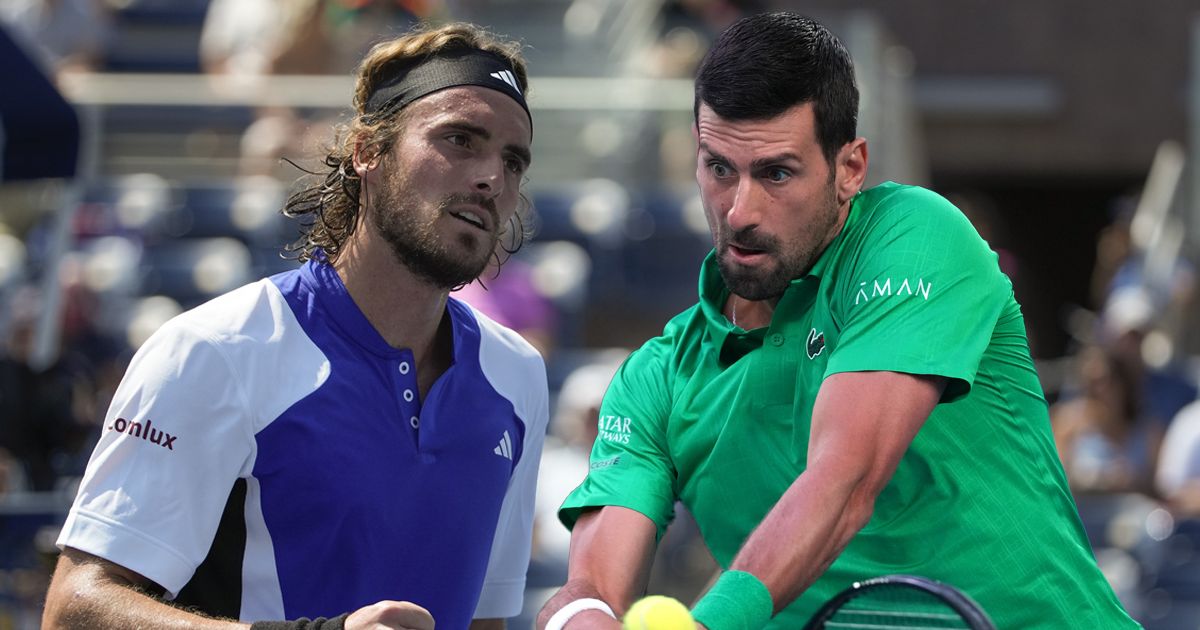
Novak Djokovic and Stefanos Tsitsipas paired up in men’s doubles at the Indian Wells Masters, drawing heavy attention because both are top singles players and not regular doubles partners. Both opposition and pro-government outlets agree that they produced a tight, competitive performance against the French-Monégasque team of Arthur Rinderknech and Valentin Vacherot, with the match featuring a first-set tie-break and high‑pressure moments on serve, including break points saved on both sides. Coverage converges on the key episode in which Djokovic challenged a point for hindrance after Rinderknech waved his racket near Tsitsipas during a shot; on slow‑motion review, the umpire reversed the initial call and awarded the point to Djokovic and Tsitsipas, a decision even the opponent accepted with a smile. All sides also emphasize that this doubles run followed an upset win over the third seeds in the previous round and that, on paper, the draw in their section looked relatively open.
The outlets broadly concur on the basic institutional and rule context around the so‑called hindrance: the chair umpire relied on video replay, which is permitted for such incidents at this level of ATP competition, and the decision turned on whether Rinderknech’s movement constituted a distraction under the code of conduct. Both camps place the match within the broader backdrop of Indian Wells as a prestigious Masters‑level event where big singles names often use doubles for extra match play and tactical variety. They acknowledge that Djokovic’s stature makes any rules‑based intervention highly visible and that the episode highlights how technology and officiating protocols are now embedded in tennis procedure, allowing unusual situations to be resolved in real time. There is also shared recognition that, regardless of the controversy, the incident did not overshadow the entire contest but rather became one symbolic moment in a tightly fought doubles campaign.
Areas of disagreement
Match narrative and outcome. Opposition outlets emphasize that Djokovic and Tsitsipas ultimately lost in the round of 16, highlighting the straight‑sets defeat by 7:6(4), 7:5 and the failure to convert a break advantage in the second set as the defining facts. Pro-government outlets, by contrast, foreground the earlier upset over the third seeds and repeatedly stress that the road to the quarterfinals was open, presenting the campaign as an opportunity rather than dwelling on elimination. While opposition coverage frames the story as a battle that ended in a missed chance and exit, pro-government coverage tends to treat the same match as part of an ongoing, almost open‑ended run, sometimes focusing more on the in‑progress tension than on the final scoreline.
Tone toward Djokovic and Tsitsipas. Opposition sources generally portray the pair as valiant but ultimately unsuccessful, stressing that even with their star power and a break lead, they could not finish the job, subtly underlining limits to Djokovic’s dominance in this format. Pro-government outlets adopt a protective and celebratory tone, praising the duo for a "great fight" and for knocking out higher‑ranked doubles specialists, and suggesting that their mere presence in doubles is a crowd‑pleasing bonus. Where opposition writing implies that not capitalizing on chances is a shortcoming, pro-government pieces tend to excuse the result as doubles experimentation and focus on their competitiveness and entertainment value.
Framing of the hindrance challenge. Opposition coverage, where mentioned, treats the hindrance call as an odd but secondary procedural episode in a match that still ended in defeat, downplaying any notion that it significantly altered the contest’s trajectory. Pro-government outlets elevate the moment into a near‑historic curiosity, describing it as something "never seen before," and casting Djokovic as a rules‑savvy figure who used slow‑motion replay to secure a just reversal. In that telling, Rinderknech’s laughter is framed as confirmation that Djokovic’s challenge was valid and even impressive, whereas opposition‑leaning narratives either omit those flourishes or avoid attributing special ingenuity to Djokovic.
Significance for broader narratives. Opposition outlets fold the result into a broader narrative that even all‑time greats face limits when stepping outside their primary domain, implying that high expectations around Djokovic’s every appearance are not always met. Pro-government sources instead integrate the doubles storyline into a longer arc of Djokovic’s continuing relevance and drawing power, using the incident and the upset win to reinforce his image as central to any tournament he enters. Where opposition reporting treats Indian Wells doubles as an interesting but ultimately minor detour that ended in a respectable loss, pro-government reporting uses it as further evidence of star quality and competitive hunger, regardless of the final outcome.
In summary, opposition coverage tends to stress the missed opportunities, the straight-sets defeat, and the modest competitive significance of Djokovic and Tsitsipas’s doubles run, while pro-government coverage tends to highlight their upset win, dramatize the hindrance challenge, and frame the campaign as an entertaining extension of Djokovic’s enduring star power.
Story coverage