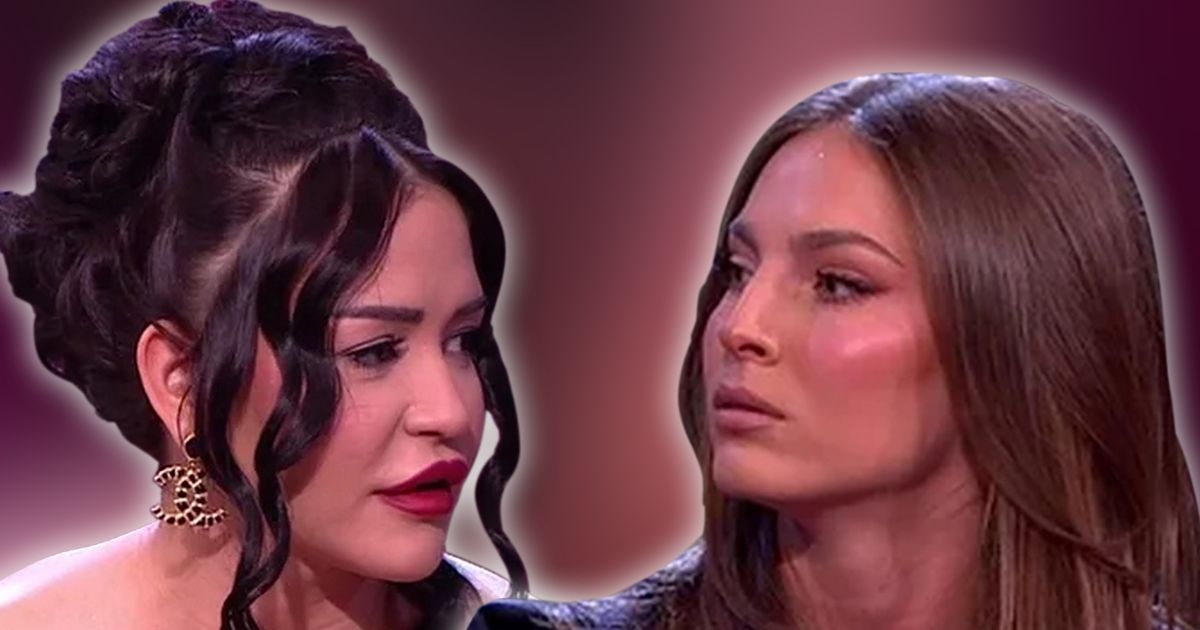



Singers Aleksandra Mladenović and Džejla Ramović clashed during a recent episode of the late‑night entertainment program “Amidži šou,” hosted by Ognjen Amidžić. Both opposition‑leaning and pro‑government outlets agree that the spark was Džejla’s remark that she carefully chooses what to share about her private life, posting only what makes her happy and preferring to keep most of her privacy away from the cameras. Aleksandra interpreted this as a slight toward colleagues whose lives are more exposed, responding in the studio that Džejla had “said that stupidly” and implying that not everyone is “hiding in other countries,” which produced an awkward atmosphere on set. All sides concur that the tension escalated further when Amidžić asked Aleksandra pointed questions about ex‑partners and to choose between fellow singers Uroš Živković and Isak Šabanović, prompting her to snap that the questions were “disgusting” and that everything was “ruined” for her because of the host.
Across the spectrum, coverage situates the clash within a broader, familiar showbiz context of sensationalist talk‑show formats and the constant media pressure on celebrities’ private lives. Outlets broadly agree that “Amidži šou” thrives on provocative questions and on‑air frictions between guests, and that both singers are part of a younger generation navigating how much of their relationships and personal habits to reveal on social networks and television. The background consensus is that social media, tabloid culture and competitive music‑industry expectations have blurred the line between professional promotion and personal exposure. Both sides acknowledge that the episode fits a pattern of reality‑style content in which conflict, emotional reactions and intimate revelations are used to maintain ratings and online engagement rather than to address any deeper industry reforms or institutional issues.
Areas of disagreement
Portrayal of the clash. Opposition‑aligned sources tend to frame the exchange as an orchestrated spectacle, suggesting that the show deliberately pushes guests into conflict to generate tabloid headlines and distract from more substantive political and social issues. Pro‑government outlets emphasize the spontaneity of Aleksandra’s and Džejla’s reactions, highlighting the “unpleasant scene” as authentic drama rather than manufactured controversy. While critical media often downplay the seriousness of the argument, treating it as a by‑product of a toxic media environment, pro‑government coverage leans into the moment‑by‑moment narrative, using emotive language like “the studio is burning” to keep the focus on entertainment value.
Responsibility for the incident. Opposition sources are more likely to place primary responsibility on the host and the format, stressing Amidžić’s intrusive questioning and calling attention to how producers create conditions for on‑air outbursts. Pro‑government outlets, by contrast, foreground Aleksandra’s sharp responses, quoting her lines about “disgusting” questions and presenting her temperament and sensitivity about ex‑partners as central to why the situation escalated. In the more critical framing, the host’s role is symptomatic of a broader editorial culture that rewards crossing personal boundaries, whereas supportive coverage treats the host as doing his job while the guests choose how far to go.
Sympathy and character framing. Opposition‑leaning coverage tends to distribute sympathy more evenly, portraying both Aleksandra and Džejla as caught in a media machine that exploits their private lives, and hinting that any harsh remarks are understandable under pressure. Pro‑government media more often present Džejla as composed and principled for wanting to protect her privacy, subtly casting her as the more mature participant, while depicting Aleksandra as volatile and easily provoked. Where critical outlets focus on the structural pressures facing young performers, loyalist outlets individualize the story by emphasizing personality traits and interpersonal friction.
Political and cultural subtext. Opposition outlets sometimes read the episode as part of a wider tabloidization of pro‑government television, implying that such content keeps audiences fixated on celebrity drama instead of governance or corruption. Pro‑government coverage generally strips the incident of political overtones, framing it purely as light entertainment and a reflection of contemporary celebrity culture in which viewers expect emotional openness from stars. The critical narrative links this style of programming to a broader cultural climate shaped by loyalist media, while supportive narratives insist it is merely harmless showbiz in line with global trends.
In summary, opposition coverage tends to treat the clash as a symptom of a manipulative, ratings‑driven media environment that shields power by saturating the public with celebrity conflicts, while pro‑government coverage tends to highlight the emotional spontaneity, personal choices and entertainment value of the singers’ on‑air outburst, avoiding deeper structural or political critique.
Story coverage