
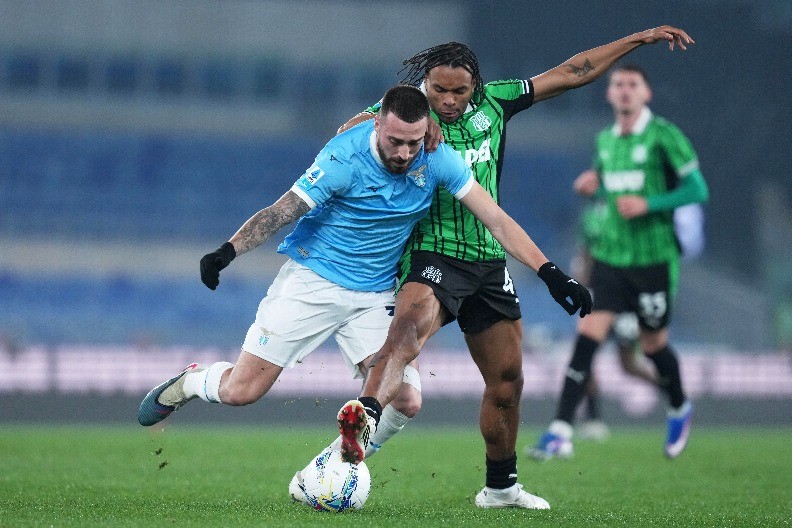
Lazio defeated Sassuolo 2-1 at the Stadio Olimpico in a late Serie A fixture, with Adam Marušić scoring the decisive goal in stoppage time after the teams had been level. All sides agree that the match was played in front of fewer than 5,000 spectators, an exceptionally low figure for Lazio’s home ground, and that this was Lazio’s first victory after a run of four consecutive defeats. Reports concur that the result allowed Lazio to move up to 10th place in the league table, easing immediate sporting pressure on the team while not fundamentally changing their broader mid‑table status.
Across both opposition and pro-government coverage, the fan boycott and protests are presented as a reaction to the club’s management and recent poor form rather than to the players themselves. There is common acknowledgment that organized supporter groups had called for a reduced presence at the stadium as a form of protest, and that the sparse stands were a deliberate signal of discontent with the ownership and sporting direction. Both sides also frame the win within a wider narrative of a troubled season in which institutional decisions, transfer policy, and coaching changes have contributed to instability, making this late victory more a momentary respite than a resolution of deeper structural tensions.
Areas of disagreement
Significance of the victory. Opposition-aligned outlets tend to portray the win as a narrow, almost accidental reprieve that does little to alter a disappointing season, emphasizing that one late goal cannot mask long-term mismanagement. Pro-government sources, by contrast, frame the result as a crucial turning point that can relaunch Lazio’s campaign, highlighting the climb to 10th place and the psychological value of breaking a four-game losing streak. While opposition coverage stresses that the performance on the pitch was uneven and overshadowed by the protests, pro-government pieces focus on the fighting spirit of the players and the drama of Marušić’s late winner.
Framing of the fan protests. Opposition media generally elevate the protests as a legitimate, powerful indictment of the club’s leadership, underscoring the symbolism of an almost empty Olimpico and linking it to longer-running grievances about ownership, investment, and ambition. Pro-government outlets acknowledge the boycott but often downplay its political weight, presenting it more as a temporary emotional reaction to recent bad results rather than a sustained movement. Where opposition coverage stresses the coordination and resolve of organized supporter groups, pro-government reports tend to stress that a strong showing on the pitch can eventually heal the rift and bring fans back.
Assessment of club management. Opposition-aligned sources are likely to connect the low attendance and unrest directly to what they describe as chronic mismanagement, citing poor transfer strategies, unstable technical planning, and a lack of clear long-term vision. Pro-government coverage, in contrast, tends to shield the leadership, framing current difficulties as part of cyclical sporting ups and downs and crediting the same management with assembling a squad capable of important wins like this. The opposition side uses the match as evidence that fans have lost trust in the hierarchy, whereas pro-government narratives emphasize that results on the field can restore confidence in the existing structure.
Impact on future relations with supporters. Opposition narratives commonly argue that the match underscores a widening and potentially lasting gulf between the board and the fan base, warning that, without reforms or dialogue, the stadium could remain half-empty even when results improve. Pro-government accounts, however, are more optimistic, suggesting that continued victories and a late-season recovery will naturally soften protest actions and encourage a return to normal attendance. For opposition outlets, the protest is a starting point for broader demands about governance and ambition; for pro-government media, it is an episodic tension that success on the pitch can gradually defuse.
In summary, opposition coverage tends to minimize the sporting redemption narrative and underscore the match as proof of a deep crisis of confidence in the club’s leadership, while pro-government coverage tends to spotlight the resilience of the team, present the victory as a potential turning point, and frame the protests as a manageable, transient expression of fan frustration.