

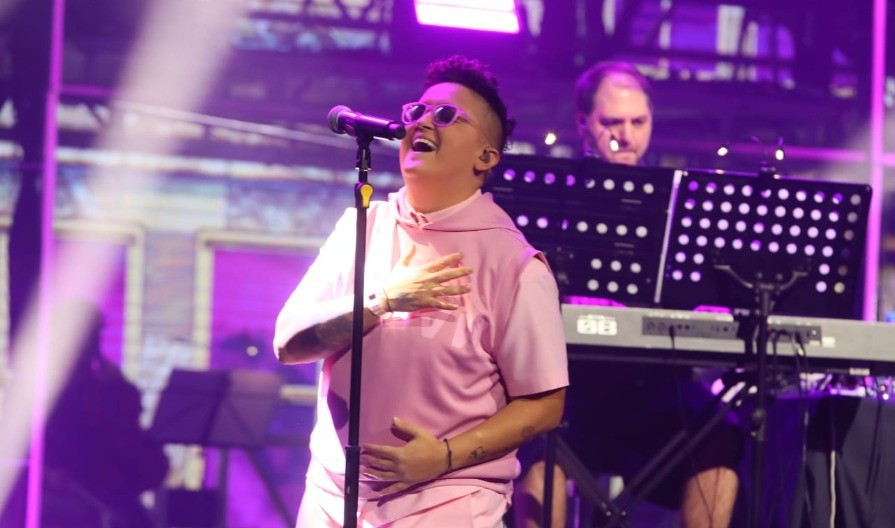
Marija Šerifović held a large Women's Day concert in Belgrade on March 8, framed as an emotionally charged, celebratory event centered on her role as a mother and beloved performer. Coverage consistently notes that the most moving moment came when a video message from her young son Mario appeared on the big screen, showing him holding a rose and wishing her a happy March 8, which left the singer visibly on the verge of tears. Media also agree that numerous celebrities, including well‑known singers, presenters, and figures from wealthy business families, attended the concert, and that the show blended musical performance with intimate family visuals and messages.
Across the spectrum, outlets describe the concert as part of the broader tradition of marking International Women's Day in Serbia with high‑profile cultural events that celebrate women, motherhood, and family ties. Reports emphasize Marija Šerifović's public image as a powerful vocalist whose personal life, especially the recent experience of motherhood, has reshaped her outlook and stage narrative. The presence of prominent guests linked to influential business and cultural circles is treated as evidence of her status in mainstream entertainment, while the recurring focus on her mother and son situates the concert within a familiar cultural script of strong matriarchal figures and intergenerational support.
Areas of disagreement
Framing of the event. Opposition‑aligned outlets tend to frame the concert as another example of celebrity spectacle in a country facing serious social and political problems, sometimes implying that such mass entertainment is used to distract from governance controversies. Pro‑government media, by contrast, present it as a unifying cultural moment that brings together different generations and social groups around a positive celebration of Women's Day. While opposition coverage may highlight the disconnect between glamorous concert imagery and everyday hardships, pro‑government reporting accentuates the emotional authenticity of the performance and positions it as part of a healthy cultural life.
Celebrities and elites. Opposition sources are more likely to underscore that many attendees come from ultra‑wealthy business families or politically connected circles, using the guest list as a symbol of entrenched elites and social stratification. Pro‑government outlets instead spotlight these same figures as proof of the concert's prestige and Marija Šerifović's broad appeal, focusing on fashion, relationships, and social intrigue rather than class gaps. Where opposition reporting reads the presence of tycoons’ relatives as a subtle reminder of oligarchic influence, pro‑government coverage normalizes it as typical of major showbiz events and avoids linking it to power structures.
Political subtext and symbolism. Opposition‑aligned coverage is more inclined to search for political subtext in the concert, questioning whether the highly emotional portrayal of motherhood and family on a state‑celebrated holiday dovetails with government narratives about traditional values. Pro‑government media downplay or ignore any political angle, treating references to strong mothers and family bonds as culturally neutral and universally relatable themes. As a result, opposition outlets may read the show as softly reinforcing official value frameworks, while pro‑government outlets depict it as purely personal and apolitical.
Role of entertainment in public life. For opposition media, the prominence of such concerts on March 8 can be criticized as a shallow commercialization of Women's Day that overshadows discussions of women's rights, labor conditions, and institutional reforms. Pro‑government coverage instead casts entertainment spectacles as a legitimate and even primary way to honor women, arguing implicitly that joy, recognition, and emotional tribute are central to the holiday. Thus, while opposition reporting may lament the absence of structural critique alongside the concert, pro‑government outlets celebrate the emotional uplift and escapism as socially beneficial.
In summary, opposition coverage tends to treat Marija Šerifović's Women's Day concert as a glitzy, elite‑laden spectacle that conveniently sidelines deeper political and social issues, while pro-government coverage tends to present it as a heartfelt, unifying cultural celebration of motherhood, family, and women's contributions that is largely free of political implications.
Story coverage