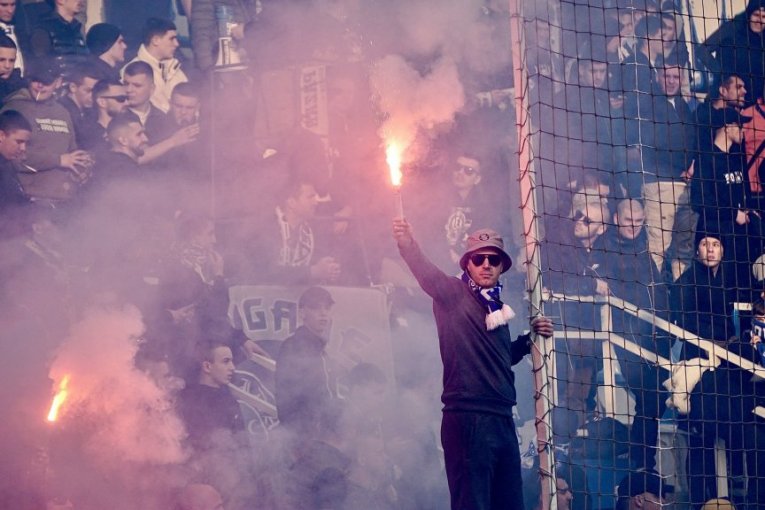

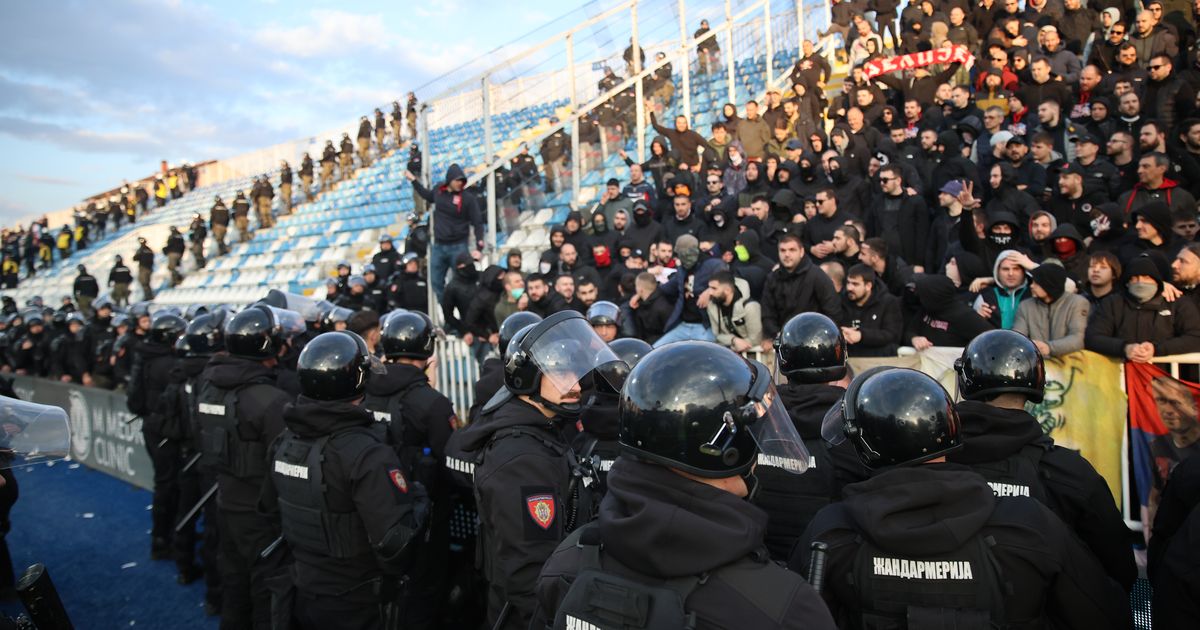
Police and both sets of media report that three male fans were arrested in Novi Pazar after a violent incident during the Novi Pazar–Red Star football match, with the assault taking place on the north stand. The victim, described simply as a fellow citizen or man in the stands, sustained serious bodily injuries, and police say the arrested suspects have been detained and will be brought before the Higher Public Prosecutor's Office. All accounts agree that the violence was linked to football hooliganism surrounding the match, that several police officers and gendarmes were injured in the broader unrest, and that six buses were damaged after the game. There is also consensus that the Ministry of Internal Affairs publicly commented on the incident and that an investigation is ongoing to identify additional perpetrators.
Across the political spectrum, coverage situates the incident within a familiar pattern of football-related hooliganism in Serbia and emphasizes the institutional framework for responding to such violence. Both opposition and pro-government outlets refer to the role of the Ministry of Internal Affairs, local police in Novi Pazar, and the Higher Public Prosecutor's Office in handling the case, highlighting arrest, detention, and prosecutorial oversight as standard steps. They also converge on the idea that crowd control at high-risk matches involves gendarmes as well as regular police, and that property damage to buses and injuries to officers are treated as aggravating elements. Shared context includes the recognition that major fixtures involving Red Star carry heightened security risks, and that authorities are under pressure to demonstrate capacity to identify all participants in the violence and to deter future hooliganism.
Areas of disagreement
Framing of the incident. Opposition-aligned outlets tend to frame the Novi Pazar violence as symptomatic of deeper structural problems in policing football matches and in the state’s relationship with organized fan groups, hinting that this is not an isolated case. Pro-government media, by contrast, present the incident mainly as a contained act of hooliganism by a small group, stressing that three specific individuals were arrested. While opposition coverage is more likely to raise questions about whether this reflects chronic mismanagement or tacit tolerance of violent fan subcultures, pro-government reporting treats it as a disruption swiftly neutralized by the authorities. The result is that the same facts are either used to illustrate systemic failure or to underline effective crisis response.
Responsibility and blame. Opposition sources often broaden the scope of responsibility beyond the three arrested fans, pointing to policing strategies, intelligence failures, or political links between ruling circles and certain fan groups as contributing factors. Pro-government outlets, however, focus blame squarely on the identified "hooligans" and anonymous others still being sought, emphasizing individual criminal culpability rather than institutional accountability. Where opposition coverage might question why known risks at a high-tension match were not better mitigated, pro-government reporting underscores that officers themselves were injured and buses damaged, portraying the state mainly as a victim of fan violence. This divergence shifts the narrative from a potentially shared burden of responsibility to a more one-sided condemnation of offenders.
Portrayal of police and institutions. Opposition-aligned media are inclined to scrutinize whether the Ministry of Internal Affairs and local police acted promptly and proportionately, sometimes suggesting selective enforcement or double standards in how different fan groups are treated. Pro-government outlets instead highlight the speed and professionalism of the police operation, stressing that suspects were quickly detained, that the prosecutor’s office is engaged, and that work continues to identify all involved. In opposition narratives, the same institutional actions may be cast as reactive damage control after a preventable failure, while pro-government narratives cast them as proof that institutions are functioning and protecting public order. This leads to sharply different public impressions of trustworthiness and competence.
Wider political context. Opposition coverage tends to situate the incident within broader critiques of the ruling party, suggesting that entrenched ties between political elites and certain ultras groups undermine consistent enforcement against hooliganism. Pro-government media generally avoid linking the violence to politics, treating it instead as a criminal matter detached from party structures or governance issues. Where opposition outlets may argue that recurring stadium violence reflects the erosion of rule of law and politicization of security services, pro-government outlets depict it as an apolitical security challenge being responsibly managed. Thus, the same match-day chaos becomes either evidence of systemic politicization or merely another test of routine law enforcement.
In summary, opposition coverage tends to use the Novi Pazar incident to question institutional capacity and political entanglements around fan violence, while pro-government coverage tends to emphasize swift police action, individual culpability, and the apolitical, routine functioning of state security bodies.
Story coverage