

Real Madrid defeated Virtus Bologna 92-84 in a EuroLeague round 30 game, with both sides agreeing that the Spanish club controlled the key moments to close out the win. Reports converge that Mario Hezonja led Real Madrid with 19 points, supported by strong contributions from Walter Tavares and Facundo Campazzo, while Carsen Edwards was the standout for Virtus with 32 points, backed by Luka Vildoza and Derrick Alston. Coverage also aligns that this was an important late-regular-season matchup, that Real’s deeper rotation and physical presence in the paint made the difference, and that Virtus stayed competitive but could not overturn Real’s advantage in the closing minutes.
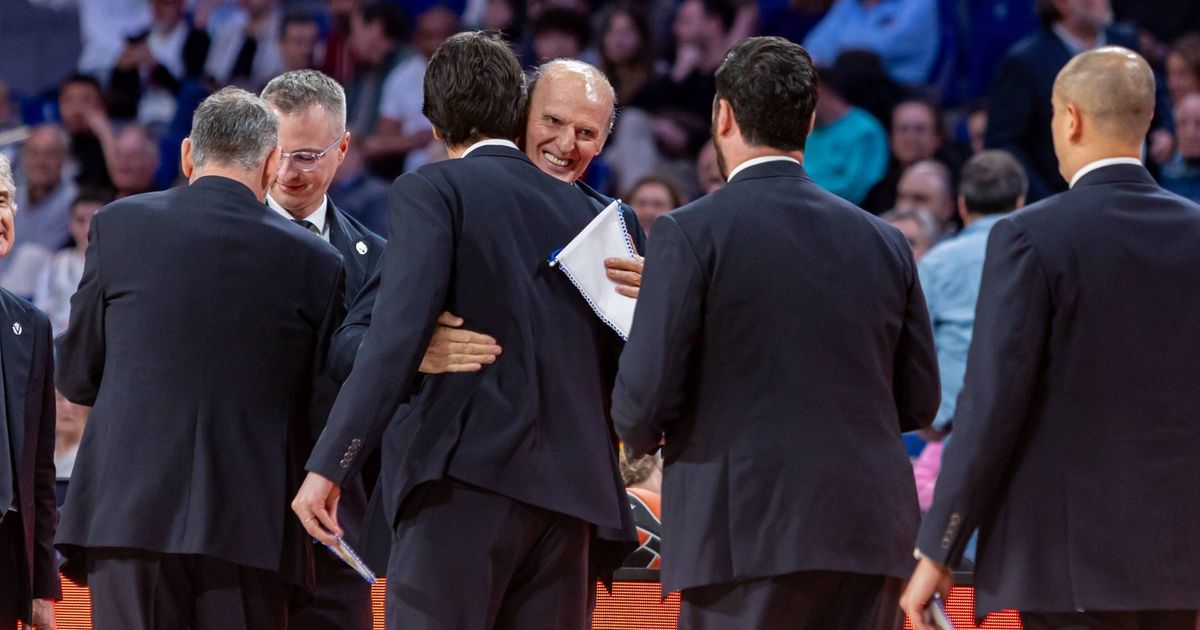
Across outlets, there is shared recognition of the symbolic subplot involving the coaching duel in which Duško Ivanović, head coach of Virtus, faced his son Stefan Ivanović, who serves as an assistant on Real Madrid’s bench. Both sides place the game within the wider EuroLeague playoff race, agreeing that Real fortified its position in the upper part of the standings while Virtus remains in a more precarious hunt for postseason qualification. It is also commonly noted that the result indirectly affects other regional clubs such as Crvena zvezda by tightening the competition around the play-in and playoff spots, and that Real Madrid continues to show the consistency and experience that have made it one of the competition’s dominant institutions.
Areas of disagreement
Framing of the result. Opposition-aligned sources tend to portray the 92-84 scoreline as evidence that Virtus competed on nearly equal terms and that the match could be read as a missed opportunity or a moral victory, while pro-government outlets emphasize that Real’s win was expected and present it under headlines like “no surprise” to underscore the Spanish club’s superiority. Pro-government narratives highlight Real’s control and maturity to normalize the outcome as the natural order in EuroLeague hierarchy, whereas opposition voices are more likely to spotlight Virtus’s resistance and Edwards’s 32 points to question how inevitable Real’s dominance really was.
Focus on regional implications. Opposition coverage generally magnifies how Real’s win complicates the situation for teams like Crvena zvezda, stressing that the result tightens competition and may hurt local clubs’ playoff scenarios. Pro-government outlets acknowledge the impact on Zvezda but frame it more as a neutral mathematical consequence of the standings rather than a damaging blow, and they more quickly pivot back to praising Real’s performance. Where opposition media might connect the loss to broader concerns about regional clubs’ roster planning and competitiveness, pro-government media largely avoid critical extrapolations.
Narrative around Duško Ivanović. Opposition sources are inclined to dramatize the storyline of Duško Ivanović being “defeated by his son,” using it as a hook to question Virtus’s tactical preparation or to lament the coach’s recent trajectory. Pro-government coverage treats the father–son angle as an emotional or historic curiosity but stops short of harsh judgment, typically stressing Real’s collective strength rather than pinning blame on Duško Ivanović. In doing so, opposition media personalize the setback and hint at coaching limitations, while pro-government outlets diffuse responsibility across the natural strength gap between the two teams.
Assessment of Virtus’s performance. Opposition outlets are more likely to underline that a 32-point display from Edwards and solid roles from Vildoza and Alston should have yielded more, implying underperformance in execution or rotations and suggesting that Virtus let a chance slip away. Pro-government coverage instead underscores that, even with Edwards’s outburst, Virtus was still facing a deeper, more experienced Real squad, so the loss is framed as respectable rather than wasteful. Thus, opposition narratives lean toward highlighting squandered potential and structural issues, whereas pro-government narratives stress the respectability of the effort against a continental powerhouse.
In summary, opposition coverage tends to stress Virtus’s missed opportunity, personalize the defeat around Duško Ivanović, and accentuate the negative implications for regional clubs, while pro-government coverage tends to normalize Real Madrid’s win as expected, highlight the historic and emotional elements without heavy criticism, and frame Virtus’s effort as respectable given the quality gap.