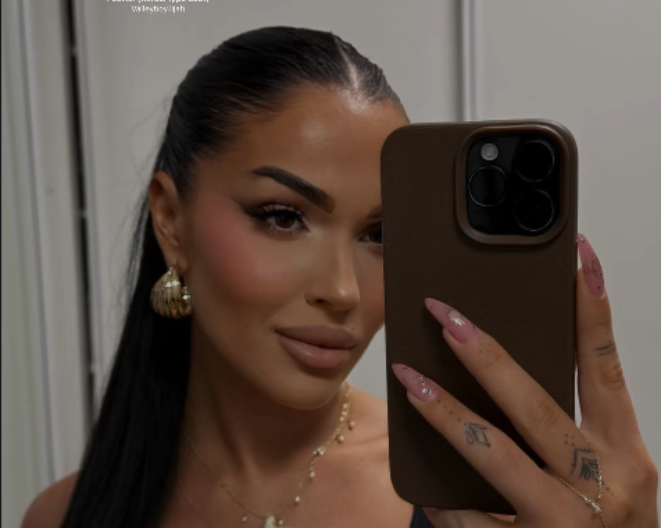

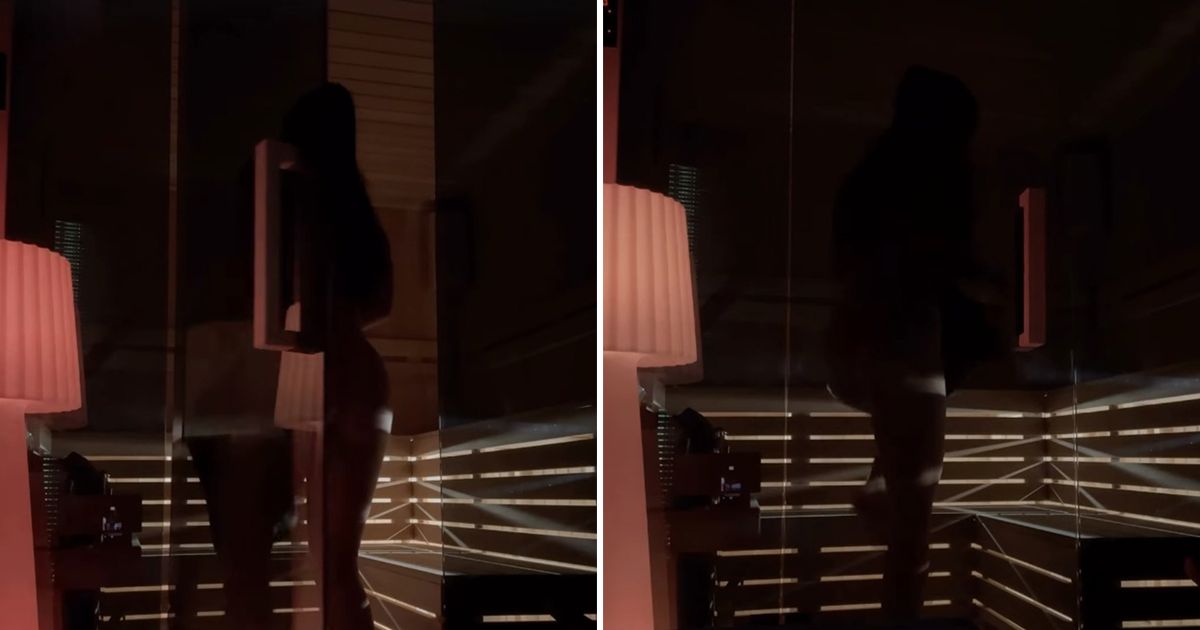
Teodora Džehverović, a popular Serbian singer and influencer, posted a short sauna video to her social media in which she enters a glass sauna cabin with a black towel and then appears in very dim light wearing a minimal bikini. The clip quickly went viral across regional platforms, with the combination of shadows, steam, and low lighting creating the impression for many viewers that she was naked or that only the upper part of her swimwear was visible. Both opposition-leaning and pro-government outlets note that the video itself was deliberately shared by Džehverović rather than secretly recorded, that no explicit nudity is actually confirmed in the footage, and that the online reaction has been intense, ranging from admiration and support to outrage and moral criticism, turning it into a trending topic and click‑driving "scandal" for tabloids and portals.
Across the spectrum, outlets agree that Džehverović is already well known for provocative fashion choices and a carefully curated public image rooted in reality TV and pop music fame, so the sauna video fits an established pattern rather than an out‑of‑character incident. Media from both sides contextualize the clip within a broader social media culture where celebrities regularly push the boundaries of sensual self‑presentation to keep attention and engagement high, and where ambiguous visuals, such as strategic lighting and silhouettes, are used to generate viral debate without necessarily crossing legal limits on explicit content. There is also a shared understanding that the uproar reflects ongoing tensions in Serbian society over online morality, youth role models, and the commercialization of sexuality, with this incident serving as a fresh flashpoint rather than a fundamentally new phenomenon.
Areas of disagreement
Framing of the scandal. Opposition‑aligned sources tend to treat the sauna video primarily as a symptom of a broader tabloidization of public life, using it to criticize a media environment they say is encouraged or tolerated by the ruling establishment. Pro‑government outlets, by contrast, frame it as a routine entertainment story, emphasizing its viral and sensational aspects without questioning systemic media dynamics. While opposition coverage portrays the incident as emblematic of a degraded public sphere, pro‑government coverage presents it as just another titillating but ultimately harmless celebrity moment.
Moral and cultural implications. Opposition media are more likely to link Džehverović's video with concerns about declining cultural standards and the hypersexualization of young audiences, sometimes suggesting that celebrity behavior reflects a deeper value crisis under current governance. Pro‑government outlets stress individual choice and audience responsibility, often focusing on the technical details of the illusion created by light and shadows rather than moral judgment. In their telling, the clip is provocative but falls within acceptable norms of pop‑culture self‑promotion, and the outrage is framed as overblown.
Responsibility and agency. Opposition coverage often shifts the spotlight from Džehverović herself to media owners and state‑aligned tabloids, arguing that they amplify such content to distract from economic or political issues and normalize voyeuristic consumption. Pro‑government coverage places responsibility squarely on personal branding strategies and the singer's own decision to post intimate material, portraying the media as merely responding to audience interest. Thus, for the opposition, the episode is structured by power and editorial choices, while for pro‑government outlets it is driven by celebrity agency and market demand.
Political subtext. Some opposition‑oriented commentators read implicit political meaning into the incident, suggesting that the disproportionate attention given to Džehverović's sauna video illustrates how trivial stories crowd out serious debate in a media scene they view as captured by the ruling party. Pro‑government sources usually avoid any political angle, presenting the story strictly as lifestyle or showbiz news and omitting macro‑level critiques of media priorities. Where opposition narratives hint that such scandals serve a diversionary role, pro‑government narratives deny or ignore any intentional political function.
In summary, opposition coverage tends to treat Džehverović's sauna video as a revealing symptom of a degraded, distraction‑oriented media ecosystem with political dimensions, while pro‑government coverage tends to package it as a standard, morally ambivalent but fundamentally apolitical celebrity provocation driven by audience interest and personal branding.