
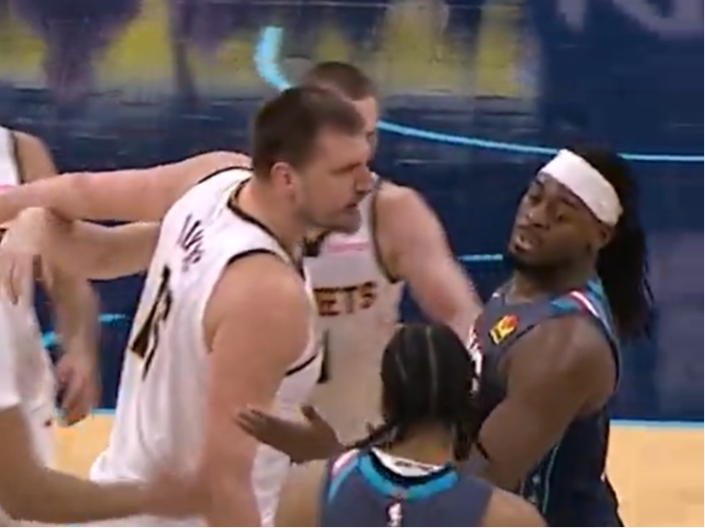
Oklahoma guard Luguentz Dort has publicly expressed regret for tripping Denver star Nikola Jokic during a recent game, an incident that led to Dort’s ejection. Both opposition and pro-government-leaning coverage agree that the contact was unnecessary, happened during live play as Dort was defending Jokic, and was immediately penalized by the referees under existing rules. They also concur that in his postgame comments Dort clearly stated, in variations of the phrase “I shouldn’t have done that,” that the move was over the line, and that he framed the episode as a mistake rather than a deliberate attempt to injure.
Across outlets, Dort is quoted emphasizing that he plays hard, tough, and competitively, but insists he aims to stay within the rules, with both sides reporting that he rejected the “dirty player” label. Coverage notes that he accepted the consequences of the ejection as “paying the price” and that he acknowledged media narratives are beyond his control. Both perspectives situate the incident within the broader context of physical, high-stakes professional basketball, where defensive intensity can occasionally cross into rule violations, and they agree that this was an isolated flashpoint in an otherwise robust, physical style of play rather than a long-running feud between Dort and Jokic.
Areas of disagreement
Responsibility and blame. Opposition-aligned sources tend to frame the trip as a reckless or borderline unsportsmanlike act that deserved stronger condemnation, sometimes emphasizing the potential risk to Jokic more than Dort’s apology. Pro-government outlets, by contrast, stress Dort’s immediate admission of fault and his explicit regret, using his quote “I shouldn’t have done that” to underline his acceptance of responsibility and to argue that the matter should be considered closed.
Player reputation and intent. Opposition coverage is more likely to question Dort’s claim that he is not a dirty player, sometimes linking this incident to a pattern of overly physical defense and suggesting his intent may not have been entirely accidental. Pro-government reporting highlights his insistence that he competes within the rules and portrays the trip as an isolated misjudgment in the heat of competition, presenting his overall career as evidence that he is tough but fundamentally fair.
Media narratives and public perception. Opposition-leaning outlets often reinforce or dwell on the “dirty player” narrative, giving space to critics and commentators who argue that such actions harm the league’s image and demand closer scrutiny from officials. Pro-government sources echo Dort’s contention that he cannot control what the media says and tend to cast the harsher criticism as overblown, stressing that high-intensity defense often gets unfairly labeled in a media environment hungry for controversy.
Consequences and broader implications. Opposition coverage is more inclined to argue that the ejection alone may not be sufficient, raising questions about whether league discipline or stronger deterrents are needed to prevent similar incidents. Pro-government reports focus on the ejection as an appropriate, proportionate punishment, emphasizing that Dort “paid the price” on the spot and that his public remorse helps defuse calls for further sanctions.
In summary, opposition coverage tends to highlight the dangerous nature of the trip and question Dort’s reputation and the adequacy of existing responses, while pro-government coverage tends to foreground his apology, stress his tough-but-clean self-image, and argue that the incident has been responsibly addressed within the current system.