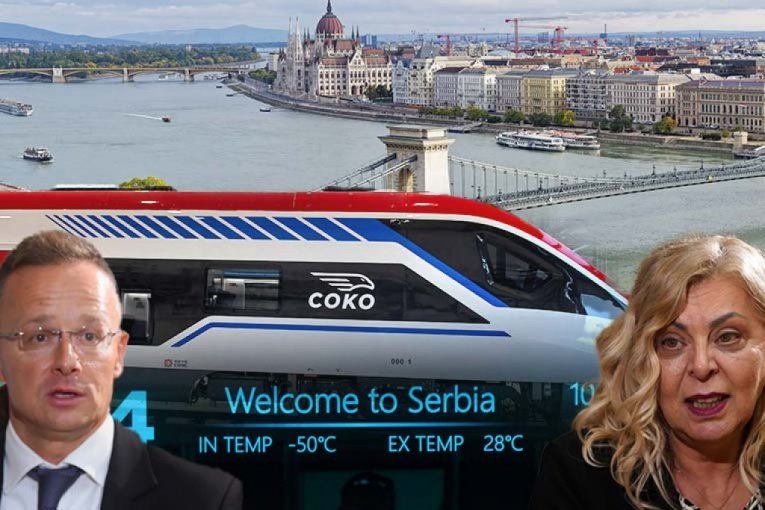

Passenger rail service between Belgrade and Budapest is scheduled to launch on March 27, with both opposition and pro-government outlets agreeing on the basic timeline, route, and overall framework of the project. Coverage across the spectrum notes that the line is designed to cut travel time between the two capitals to roughly three hours, using modern electric trains operating on newly built or upgraded track. Reports also align that ticket prices for a one-way journey are expected to be around, or slightly under, 25 euros, and that the initial phase focuses on passenger services following the earlier start of freight traffic. Both sides acknowledge that the project is a joint Serbian-Hungarian endeavor, inaugurated and publicly promoted by officials from both governments.
Shared context in both opposition and pro-government reporting situates the line within broader regional transport integration and long-planned rail modernization between Serbia and Hungary. Both sides emphasize that the railway has been redesigned to handle high-speed services and that it forms part of a longer corridor linking the Western Balkans more tightly with Central Europe and EU markets. Coverage also converges on the role of state institutions, particularly Serbia’s Ministry of Construction, Transport and Infrastructure and the relevant Hungarian authorities, in coordinating investment, technical standards, and border procedures, including efforts to streamline border checks so that high-speed operations are not undermined by long stops. There is broad agreement that the project is intended to boost trade, tourism, and mobility, and that it represents a strategic infrastructure link in which both states have committed significant resources.
Areas of disagreement
Economic framing and benefits. Pro-government outlets highlight the project as a major economic success story, stressing lower-than-expected ticket prices, fast travel time, and anticipated surges in trade, tourism, and cross-border commuting. Opposition-aligned sources, while not disputing that faster travel could bring benefits, are more likely to question whether projected passenger numbers and economic gains justify the total investment and financing terms. They tend to probe whether the cost-per-kilometer and future maintenance burdens will fall disproportionately on Serbian taxpayers, contrasting this with government narratives of a cost-effective modernization.
Financing, transparency, and contracts. Opposition coverage focuses on the opacity of contract details, loan conditions, and procurement processes behind the line’s construction, asking whether tenders were competitive and whether debt and interest terms are sustainable. Pro-government outlets typically present the financing as a strategic, state-led investment and either downplay or omit detailed discussion of loan structures, instead emphasizing timely completion and foreign partnership. This leads opposition media to frame the project as an example of non-transparent governance, while pro-government outlets treat it as proof that strong political ties and centralized decision-making can deliver infrastructure quickly.
Political symbolism and alignment. Pro-government sources portray the Belgrade–Budapest line as a symbol of successful regional cooperation and the personal diplomatic achievements of current leaders in Serbia and Hungary, often tying it to Serbia’s modernization and growing international stature. Opposition media tend to interpret the same symbolism more critically, suggesting the project underscores political alignment with Budapest and other non-EU partners in ways that may complicate Serbia’s EU path or entrench illiberal governance models. Thus, where pro-government narratives celebrate ribbon-cuttings and leader-centric imagery, opposition pieces cast these as political spectacle masking deeper governance and alignment concerns.
User experience and social impact. Pro-government reports focus on comfort, speed, and modernity—highlighting new trains, reduced travel time, and the prestige of joining the club of high-speed rail countries. Opposition outlets, while acknowledging technological improvements, are more inclined to contrast this flagship project with underfunded regional and commuter lines, questioning whether everyday passengers outside the Belgrade–Budapest corridor will see tangible benefits. They also raise concerns about affordability for average incomes, whereas pro-government narratives frame the approximately 25-euro fare as attractive and competitive relative to bus or car travel.
In summary, opposition coverage tends to treat the Belgrade–Budapest high-speed line as a politically charged, debt-heavy prestige project whose benefits and governance need closer scrutiny, while pro-government coverage tends to present it as a flagship modernization success, emphasizing economic gains, regional integration, and the government’s ability to deliver major infrastructure on time.