
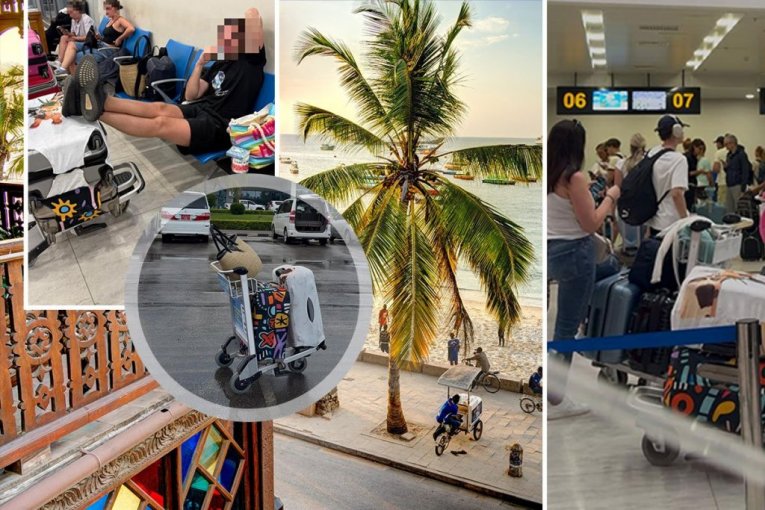
Seventeen Serbian tourists have been stranded in Zanzibar after a FlyDubai flight connecting them onward to Serbia was canceled, leaving them stuck at the airport without a clear return plan. Both opposition and pro-government outlets report that the passengers, many of whom brought only a few hundred euros for a short vacation, quickly exhausted their funds and struggled to cover basic needs such as food, water, and accommodation, with some reportedly waiting for long periods at or near the airport. Coverage on both sides notes that families in Serbia have been contacting the travel agency and Serbian diplomatic missions in the region, that alternative flights are significantly more expensive than the original tickets, and that the group has appealed publicly for help to return home.
Across the spectrum, media agree that the flight disruption is linked to wider instability and air traffic disruptions associated with conflict in the broader Middle East region, which has affected certain carriers and routes. Both opposition and pro-government reporting describe the case as highlighting vulnerabilities in how Serbian tourists are protected when crises or cancellations occur abroad, drawing attention to the roles of airlines, travel agencies, and state institutions in crisis response. Outlets concur that diplomatic channels, including the Serbian embassy responsible for the area, have been contacted and that the case raises questions about what regulatory safeguards, contingency plans, and consular support mechanisms exist when group-package tourists are suddenly left without transport or funds.
Areas of disagreement
Responsibility and blame. Opposition-aligned outlets tend to frame the episode as a failure of the Serbian authorities and regulatory system, emphasizing that state institutions and the responsible ministry should have intervened faster and more decisively to secure the tourists’ return. Pro-government outlets instead foreground the airline’s operational decision and the broader Middle East security situation, suggesting the Serbian state is limited in what it can do when a foreign carrier cancels flights for safety reasons. While opposition coverage stresses that the state should compel agencies and airlines to honor obligations, pro-government coverage presents the state more as a mediator offering consular help in an unpredictable international environment.
Role of the travel agency. Opposition media generally portray the travel agency as either unprepared or negligent, accusing it of abandoning clients and failing to provide emergency funds, accommodation, or rerouting options once the original flight was canceled. Pro-government sources acknowledge passenger frustration but more often describe the agency as being in contact with the group and "seeking solutions," portraying its limitations as stemming from airline decisions and force majeure circumstances. The opposition narrative underscores contractual and moral duties the agency allegedly did not meet, whereas pro-government outlets soften this by implying the agency is also a victim of sudden geopolitical disruptions.
Portrayal of state response. Opposition coverage typically questions why the foreign ministry, tourism authorities, or national crisis bodies did not quickly arrange collective repatriation or financial guarantees, using the story as an example of systemic bureaucratic inertia and weak protection for citizens abroad. Pro-government outlets, in contrast, highlight any steps taken by embassies or consular offices, such as maintaining contact with the travelers and exploring alternative routes, and present these as evidence of a functioning support system under difficult conditions. Where opposition reports stress delays and uncertainty for the tourists, pro-government reports emphasize that procedures take time and that the state cannot instantly override commercial and security constraints on international flights.
Framing of broader implications. Opposition-aligned media often draw a wider lesson about chronic mismanagement in the tourism and transport sectors, linking this incident to previous scandals and arguing that reforms have been promised but not delivered. Pro-government outlets downplay systemic criticism and instead frame the case as an unfortunate but exceptional incident caused by external crises, suggesting that, overall, Serbian tourists travel safely and that the system works in normal times. Thus, opposition coverage uses the Zanzibar case as a political symbol of state weakness, while pro-government coverage presents it as a humanitarian challenge within an otherwise stable framework.
In summary, opposition coverage tends to use the Zanzibar incident to highlight alleged state and agency failures and to argue for deeper systemic reforms, while pro-government coverage tends to attribute the problem to external geopolitical shocks and emphasize that Serbian institutions and private actors are doing what they reasonably can under extraordinary circumstances.