
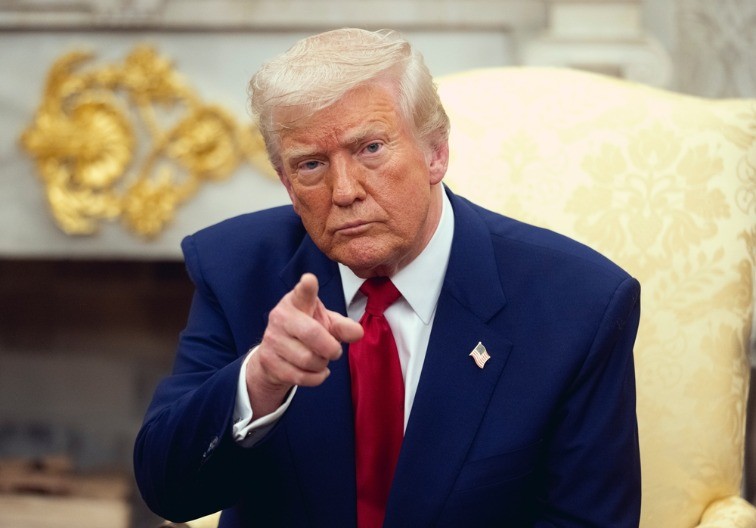
Opposition and pro-government sources converge on several basic facts: the Trump administration, following pressure from the Pentagon, has ordered federal agencies to halt the use of AI technology from Anthropic, the maker of the Claude model. Both sides report that this directive applies across the federal government, including the Department of Defense, and that it includes a phase-out period of roughly six months to remove Anthropic products from government and military systems. They agree that the precipitating issue is a dispute over Anthropic’s limits on military applications of its AI and that the Pentagon had warned that Anthropic could be deemed a supply chain risk, potentially blacklisting it from government use. Coverage from both camps also notes that rival AI providers such as xAI, Google, and OpenAI are being mentioned as likely beneficiaries if Anthropic is fully excluded from federal systems.
Across outlets, there is broad agreement that this confrontation reflects tensions over how advanced AI should be governed in sensitive national security domains, especially when private firms impose their own usage restrictions. Both opposition and pro-government reporting situate the episode within a wider struggle among US institutions—the executive branch, the military, and large technology companies—over control of strategic AI infrastructure. They concur that the Pentagon is seeking more unrestricted, legally compliant use of AI for defense purposes, while Anthropic has sought to maintain guardrails and internal policies that limit certain forms of military deployment. There is also consensus that the dispute could trigger longer-term realignments in federal AI procurement, with policy, ethical, and security standards for AI systems becoming a central point of negotiation between the government and leading AI labs.
Areas of disagreement
Motives and framing of the order. Opposition-aligned sources portray the Trump administration’s halt as politically driven and ideologically motivated, framing it as an attempt to punish a tech firm perceived as insufficiently compliant with aggressive military aims. Pro-government outlets instead emphasize national security imperatives, casting the decision as a necessary response to an unreliable supplier in a critical domain. Opposition outlets stress fears of political interference in procurement and retaliation against a company over ethical constraints, whereas pro-government narratives highlight the need for a unified chain of command over AI tools used in defense.
Characterization of Anthropic. Opposition coverage tends to depict Anthropic as a responsible actor trying to uphold safety norms and ethical limits on the wartime use of AI, warning that forcing compliance could chill responsible innovation. Pro-government coverage more often portrays Anthropic as inflexible or naïve about security realities, suggesting its refusal to fully align with Pentagon requirements creates unacceptable operational risk. While opposition outlets stress the company’s safety culture and research orientation, pro-government sources emphasize its role as a contractor that must adapt to government standards in exchange for access to public contracts.
Implications for civil-military and tech governance. Opposition sources frame the episode as a troubling expansion of military and executive influence over private AI governance, warning that it erodes independent guardrails and sets a precedent for compelled co‑optation of civilian technology for warfare. Pro-government outlets instead argue that the dispute underscores the need for clearer, more centralized authority over AI used in government, positioning the order as a corrective to fragmented and corporate-led rulemaking. The former voice concerns about the chilling effect on companies adopting strong safety policies, while the latter focus on preventing fragmented standards that could undermine operational readiness and security.
Market and competitive effects. Opposition coverage raises alarms that the order will distort the AI market by steering government business toward politically favored or more pliant vendors, potentially sacrificing quality or safety for loyalty. Pro-government narratives largely welcome the prospect of competitors like xAI, Google, or OpenAI stepping in, framing this as healthy competition and an opportunity to partner with firms more aligned with US strategic objectives. Opposition outlets are more likely to describe the shift as a warning shot to other labs to relax their restrictions, whereas pro-government outlets underscore that vendors must simply meet clear contractual and security requirements.
In summary, opposition coverage tends to frame the halt as a politically charged overreach that punishes a safety-conscious AI firm and concentrates military control over emerging technologies, while pro-government coverage tends to justify the move as a necessary assertion of national security priorities and procurement discipline that will redirect contracts toward more compliant and strategically aligned providers.