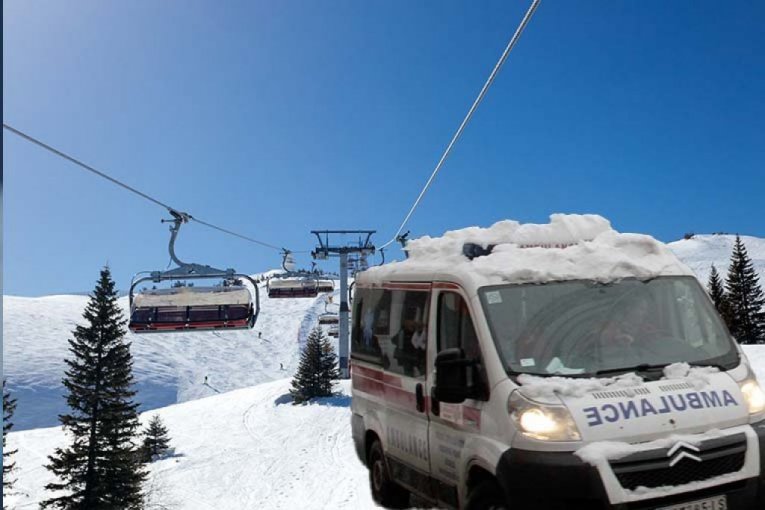

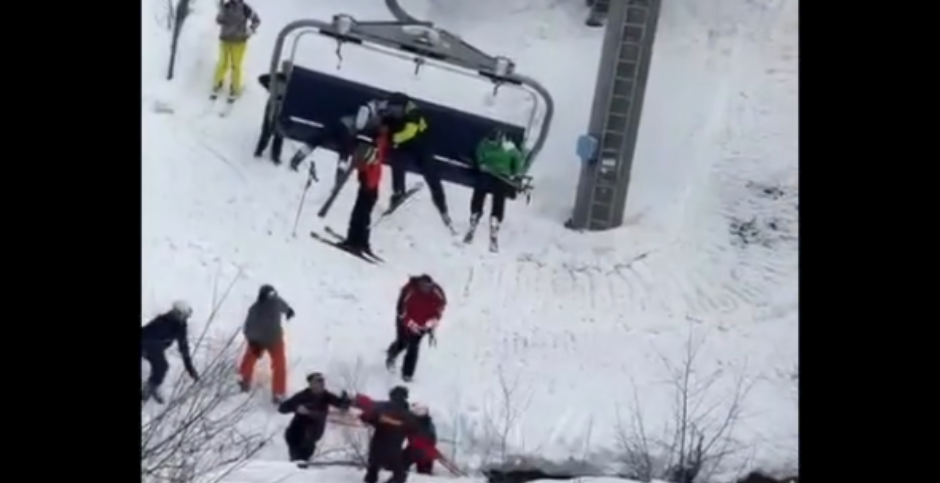
A child was filmed hanging from a cable car at the Jahorina ski resort, prompting an immediate rescue effort by bystanders and resort personnel. Both opposition and pro-government outlets agree that the incident involved a young girl from Čačak, reportedly about nine years old, who slipped or fell from the gondola while accompanied by her grandmother. Coverage converges on the sequence that the car continued moving with the child dangling, people below coordinated to position some form of net or improvised cushioning, and a man identified as a well‑known former Serbian politician held the child from the gondola until she could be brought to relative safety. All sides acknowledge that the event was dramatic, was captured on video, and caused public shock, while early reports left uncertainty about the extent of the child’s injuries and the precise technical cause.
Common background across outlets situates the event as part of a broader pattern of safety scares and recent "horror" incidents on Jahorina’s cable systems, raising questions about resort management and regulatory oversight. Reporting from both sides outlines the institutional framework in which the resort operates, noting the roles of ski-center operators, local authorities, and inspection bodies responsible for certifying cable-car safety. There is shared emphasis on standard operating procedures such as regular technical checks, staff training, and emergency response protocols, alongside the notion that tourism development on Jahorina has expanded rapidly and put extra pressure on infrastructure. Both opposition and pro-government media invoke earlier cable-car mishaps to underline that, regardless of politics, there is a recognized need to reassess safety measures, communication with passengers, and the responsiveness of rescue teams in such high‑risk situations.
Areas of disagreement
Responsibility and blame. Opposition-aligned outlets typically frame the incident as evidence of systemic negligence, emphasizing possible failures in safety procedures, staff oversight, and political appointments linked to ruling parties. Pro-government outlets, by contrast, downplay systemic culpability and either omit or soften criticism of resort management and regulators, treating the event more as a tragic mishap than a governance failure. Whereas opposition media highlight patterns of prior incidents to argue that authorities have ignored warning signs, pro-government coverage tends to isolate this as a one-off episode and stresses that investigations are still pending.
Role of authorities and institutions. Opposition coverage often questions whether inspections, safety certifications, and crisis protocols were properly implemented, portraying institutions as reactive and politically captured. Pro-government outlets, however, foreground the idea that resort staff and relevant services responded quickly and professionally, and suggest that formal procedures functioned as intended under pressure. While opposition narratives demand accountability from ministries, regulators, and politically connected managers, pro-government narratives emphasize institutional competence and promise that any necessary review will occur within existing frameworks.
Framing of the rescue and individuals involved. Opposition media tend to treat the rescue as a collective effort by ordinary citizens and staff, sometimes criticizing attempts to spotlight a single public figure, and they are more likely to question whether the incident is being spun to distract from safety issues. Pro-government outlets prominently highlight the "heroic" role of the well-known former Serbian politician who held the child, using emotive language and personalized storytelling that cast him, and by extension the broader system, in a positive light. While opposition narratives worry about sensationalism overshadowing structural problems, pro-government reporting leans into the human-interest angle and celebratory coverage of individual bravery.
Interpretation of causes and future reforms. Opposition sources generally imply that the root causes lie in chronic underinvestment, mismanagement linked to the ruling establishment, and lax enforcement of safety rules, and they call for deep structural reforms and possibly personnel changes. Pro-government media are more inclined to attribute the episode to a tragic combination of circumstances, passenger behavior, or unforeseeable factors, framing potential changes as technical improvements rather than political issues. Thus, opposition coverage uses the incident to argue that the current governance model of Jahorina and similar resorts must be overhauled, whereas pro-government outlets depict any forthcoming measures as fine-tuning an essentially sound system.
In summary, opposition coverage tends to portray the Jahorina cable-car incident as a symptom of systemic negligence and politicized management requiring structural accountability, while pro-government coverage tends to present it as an isolated tragedy that showcased effective response and individual heroism within largely functioning institutions.