
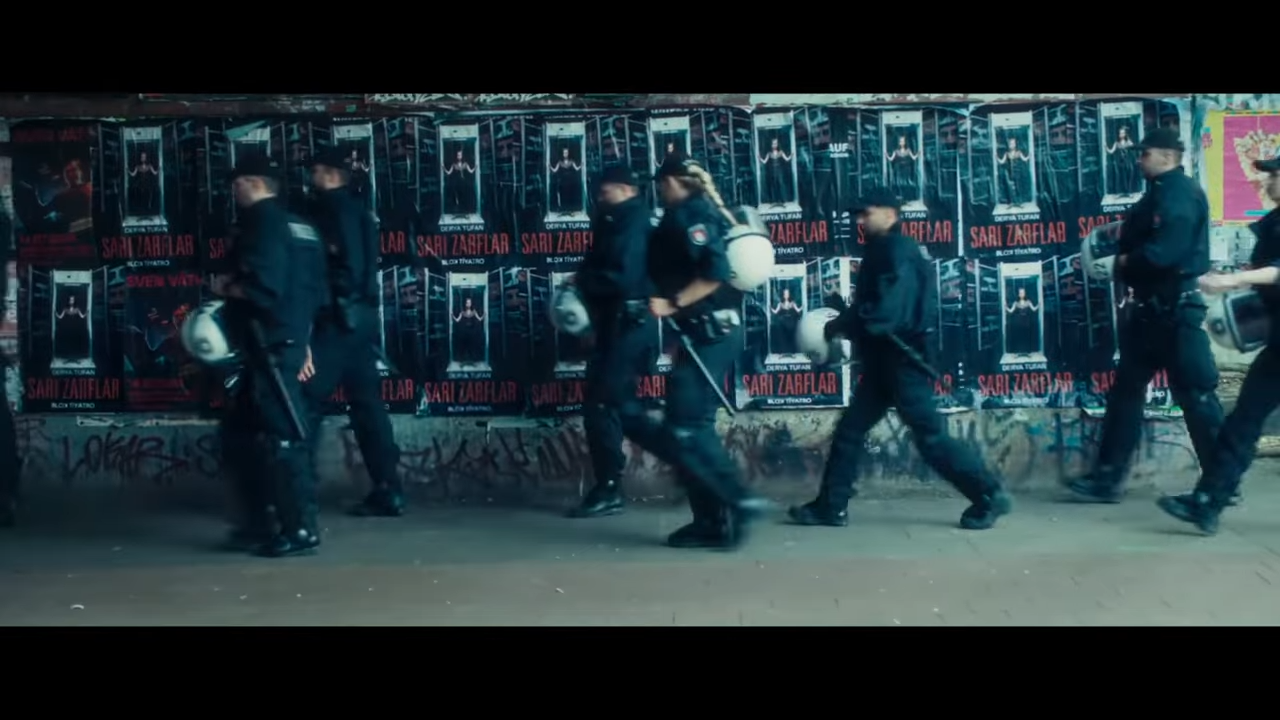
The Teachers' Lounge, also referred to in some coverage as Yellow Letters, is reported by all sides to have won the Golden Bear for best film at the 76th Berlin International Film Festival (Berlinale), with German director Ilker Çatak receiving the top prize. Across outlets, there is agreement that German actress Sandra Hüller was honored with a Silver Bear for best acting, and that the festival’s closing ceremony had a distinctly political tone, with jurors and speakers referencing current global conflicts and the role of cinema in addressing them. Both opposition and pro-government sources situate the award within the wider context of contemporary European cinema, emphasizing the film’s focus on ethical dilemmas and the pressures faced by individuals in politicized or conflict-laden environments.
There is also shared acknowledgment that the Berlinale continues to serve as a major international platform where political and social issues intersect with film, and that this year’s edition unfolded against a backdrop of heightened global tensions. Coverage from both camps notes the centrality of themes such as political persecution, censorship, and social conflict in the festival’s highlighted works, and agrees that the jury and organizers presented the prizes as a statement about the importance of artistic expression in difficult times. The festival is universally described as a space where debates on war, repression, and civil liberties are reflected through cinematic narratives, underscoring its role as both a cultural and political institution.
Areas of disagreement
Nature of the winning film. Opposition-aligned outlets largely frame the Golden Bear winner under the title Yellow Letters and describe it as a story about a Turkish director and his actress wife banned from working due to their political views, emphasizing persecution in Turkey and broader echoes in places like Belgrade. Pro-government coverage, by contrast, consistently uses the international title The Teachers' Lounge and foregrounds its setting in a German school and its more universal ethical and institutional tensions. While the opposition narrative positions the film squarely as a parable of political repression, pro-government reports treat it as an art-house drama whose politics are present but more implicit and less nationally targeted.
Political framing of the festival. Opposition media highlight Berlinale as a battleground over Gaza and free expression, citing campaigns like Films Workers for Palestine and accusing the festival of silence and soft censorship in the face of calls for solidarity. Pro-government outlets acknowledge that the closing ceremony was political but stress broad themes such as artistic freedom, international conflicts, and social issues without dwelling on specific accusations against the festival. In doing so, opposition sources present the awards as occurring within a contested, polarized event, whereas pro-government sources depict a more controlled, institutionally managed engagement with politics.
Implications for Turkey and regional politics. Opposition coverage links the film’s narrative and the success of Turkish directors Ilker Çatak and Emin Alper to contemporary political conditions in Turkey and, by analogy, to authoritarian tendencies and ethnic conflicts across the region, including echoes of the Yugoslav Wars. Pro-government coverage does not foreground these parallels and instead treats the win as a cultural achievement for a Turkish-origin filmmaker working in Germany, highlighting prestige and soft power rather than systemic criticism. As a result, opposition outlets interpret the prizes as an indirect international indictment of repression, while pro-government outlets frame them as recognition of national talent within a global film industry.
Role of cinema in dissent. Opposition sources emphasize cinema as an instrument of resistance, arguing that works like Yellow Letters and Salvation/Kurtuluş expose injustice, censorship, and conflict, and suggesting that festivals too should more openly side with oppressed groups. Pro-government coverage accepts the idea that art can respond to turbulent times but tends to present this in abstract terms, focusing on jurors’ comments about creativity under pressure rather than on explicit political advocacy. This leads opposition outlets to call for more confrontational, movement-aligned filmmaking and programming, while pro-government sources prefer a narrative of dignified, institutionally sanctioned engagement with difficult themes.
In summary, opposition coverage tends to treat the Golden Bear win as a politically charged victory for cinema of dissent that directly reflects and critiques repression and conflict, while pro-government coverage tends to present it as a prestigious cultural milestone where political themes are acknowledged but kept within a more universal, less confrontational artistic frame.
Story coverage